
Vang: Granite Harbour and Coastal Paths
Accommodation in Vang
Vang is a coastal town whose granite history is closely linked to Vang Harbour. Today, the harbour is mainly used for tourism and leisure. A coastal path, the beach by the pier and the surrounding landscape each add their own character. When choosing where to stay on Bornholm, you can weigh up whether harbour history or nature and coastal paths matter more to your trip.
Harbour History and Granite
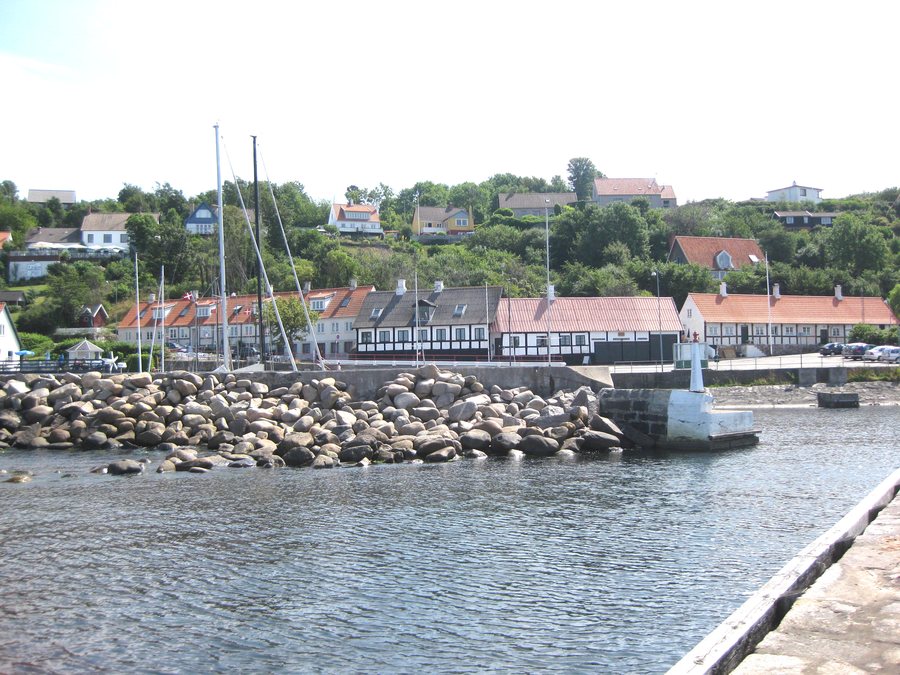
The first records of a harbour in Vang date back to the 16th century. In the 18th century, Vang Harbour flourished during the intensive herring fishing in the Baltic Sea. Later, granite shaped the harbour: in 1887, Vang Harbour was expanded specifically to transport granite. After a granite quarry opened in 1898, the modern harbour was built, and Vang became a transshipment point for stone.
Granite from Vang was shipped to Copenhagen to build Københavns Rådhus and rebuild Christiansborg Palace. In the 1930s, around 200 people worked in the quarry—this period is considered the town’s heyday. In 1944, a southwestern pier was added at Vang Harbour. The granite quarry near Vang closed in 1996. Monuments around the harbour commemorate the stonemasons’ often unpaid work.
Harbour, Pier and Beach
Today, Vang Harbour is mainly used for tourism and leisure, while preserving its heritage of quarrying and fishing. The harbour offers visiting sailors up to 20 berths and also has a slipway for launching boats. South of Vang Harbour, a newly created sandy beach lies by the pier. It has diving platforms at heights of 1, 2 and 3 metres, as well as good fishing spots. If you plan to use the berths, slipway or diving platforms, check the latest information in advance.
Coastal Path and Surrounding Landscape
The green Ringebakkerne walking route starts at the car park in Vang. It follows a gravel path south along the coast to Vang Pier, giving your coastal walk a clear destination.
Ringebakkerne, near Vang, offers coastal paths and a wild, rugged natural landscape. The stream Pissebækken flows there and is said to be the site of Denmark’s highest waterfall. During warm, dry summers on Bornholm, the stream can dry up for weeks at a time. Vang Vandmølle is also close to the town, in a valley on Bornholm’s west coast. These examples offer different possibilities for planning your trip: experience the coast on foot, or explore the landscape and a building nearby. If you plan to use the walking route, check the current route before setting off.
Getting to Bornholm
You can travel to Bornholm by ferry, plane, bus or train. The ferry crossing from Ystad in Sweden to Bornholm takes one hour and 20 minutes. Check the timetables for your travel dates in advance. This information relates to travel to Bornholm; when choosing accommodation in Vang, the granite and harbour history and the nearby coastal paths may appeal to different interests.
Discover more destinations: Gudhjem, Vester Sømarken, Snogebæk, Arnager, Årsdale, Boderne, Nexø.
Back to the main travel overview: Bornholm.
More about the destination
Useful information for planning your trip:

