
Väröbacka between agricultural landscapes and history
Accommodation in Väröbacka
Väröbacka lies in an extensive agricultural landscape between the sea, coastal meadows and small areas of woodland. Wide views across the agricultural landscape are characteristic of the area. If, when choosing a destination, you want to consider open landscapes and local history as well as the coast, you’ll find a range of options here—from the Kattegattleden to historic buildings and a local heritage museum.
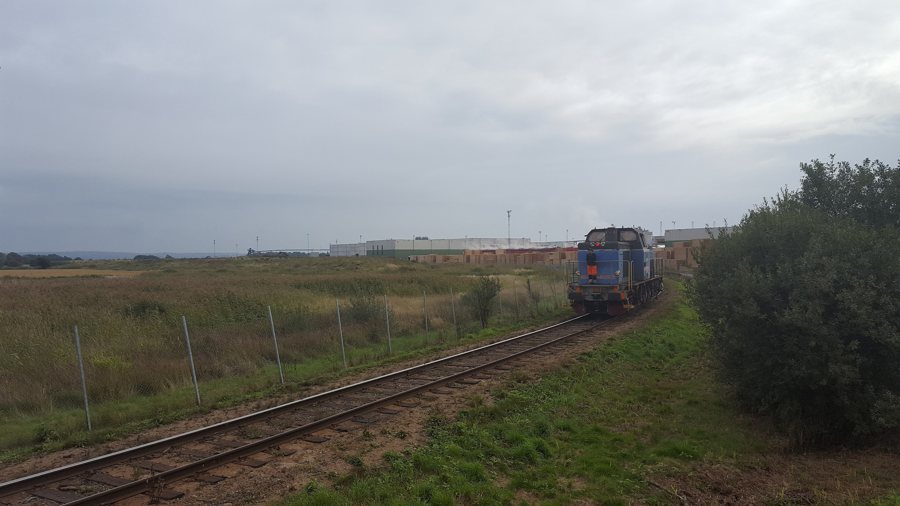
Landscape between open spaces and rock
A striking geological feature adds to this open landscape: near Väröbacka is Borrås skåra, a fissure about 100 metres long and 0.5 to 1.5 metres wide. Its distinctive shape gives it significant recreational value. Its dimensions make its elongated, narrow form easy to picture and set this natural feature apart from the open agricultural landscape. Visitors interested in nature can therefore experience two contrasting perspectives: broad agricultural fields and a narrow geological formation. Värö kyrka is also to remain surrounded by open farmland in the future.
Cycling, walking and winter ice
The national cycle route Kattegattleden passes through the built-up area of Väröbacka. There is also a lit fitness and walking trail beside Sjöaremossens isbana. The options differ in terms of activity and location: the Kattegattleden runs through the built-up area, while the walking and fitness trail is next to the ice rink. Sjöaremossens isbana is an outdoor ice rink; it is open seasonally from November through February, weather permitting. Public skating is available to everyone. Check current opening information before your visit.
History at the church and museum
The history of Värö kyrka’s construction spans several stages. The bell tower was built in 1826, and the present-day church was added to it in 1855. A smaller church previously stood on the same site and probably dated from the Middle Ages. Väröbacka itself has roots reaching back to the Middle Ages. The area’s history therefore encompasses both broader medieval development and the cautious dating of an earlier church building.
Väröbacka gästgiveri is classified as Class B in the building inventory; its buildings are considered to be of very high cultural-historical value and to have both identity value and social-historical value. The local heritage museum Limagården in Väröbacka includes a courtroom, a shoemaker’s workshop, a village shop, a carpenter’s workshop and a school section. The workshops sit alongside themes of law, trade and education. Check the opening arrangements before visiting. The two sites offer different historical perspectives: at the Gästgiveri, the cultural-historical significance of the buildings takes centre stage, while the local heritage museum Limagården highlights the diversity of its themes, from law and crafts to trade and education.
Where to stay in Väröbacka
You can stay at a hostel at Väröbacka Wärdshus.
Discover more destinations: Stråvalla, Åskloster, Stamnared, Folkared, Kungsäter, Åkraberg, Trönningenäs, Tvååker
Go to the regional travel overview: Varberg.

