
Mühlen Eichsen – Stepenitz, Village Church and Manor House
Accommodation in Mühlen Eichsen
The Stepenitz flows through Mühlen Eichsen and, together with the village church and manor house, shapes the character of the town. In several places, the river has been dammed to form lakes, where there is also a bathing area. If you would like to plan your stay around the waterside landscape and local history, these different features offer specific points to consider when making your choice.
The Stepenitz and the bathing area
When exploring Mühlen Eichsen, you can make this waterside landscape a focus in its own right, alongside the historic buildings. No information is provided here about opening hours or other facilities at the bathing area; check these details separately if needed.
Village church and manor house
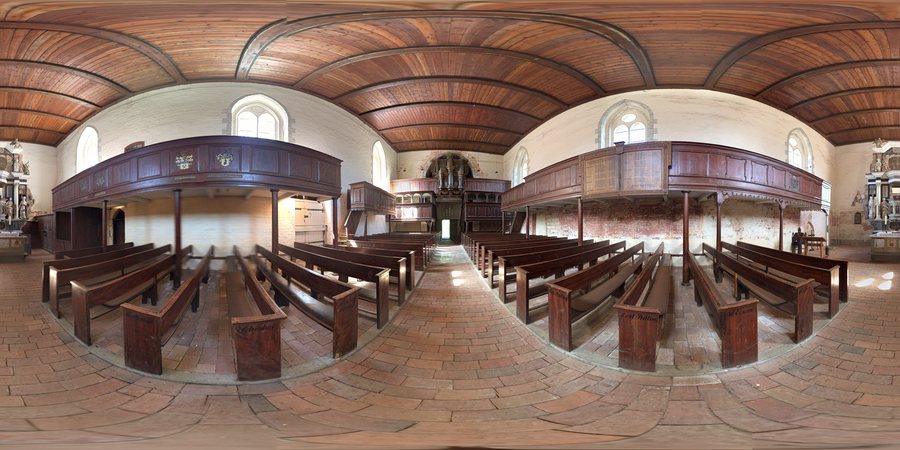
Mühlen Eichsen village church is a simple 14th-century Evangelical Lutheran church built in the Brick Gothic style. It stands on a steep hill above the Stepenitz and the former watermill. Its massive, square, late-Gothic west tower with a hipped roof makes a striking architectural statement. Those interested in church architecture and historic townscapes will find several different features in one building: Brick Gothic, the later tower style and its position above the river and mill site.
Opposite the church stands the Mühlen Eichsen manor house, usually called the “castle” locally. It is surrounded by an old park. The manor house at Am Park 6 and the park belonging to it are each listed in the heritage register of the Nordwestmecklenburg district. “Castle” is therefore the local name for the manor house; its position opposite the church remains a specific point of reference. The listings of the house and park make them distinct parts of the local heritage.
Milestone and milling history
At the entrance to the town from the direction of Gadebusch, a milestone stands at Gadebuscher Straße 15, on the northwest side of the road. It is a full-mile obelisk. Its precise location and design distinguish it from the buildings around the church and manor house, making it another notable feature of the townscape.
The former watermill in Mühlen Eichsen is now used solely as a residential building; the milling equipment has not been preserved. The building at Gadebuscher Straße 1 is listed in the heritage register of the Nordwestmecklenburg district. Its former use and current condition should be distinguished: the mill site is part of the town’s history, but the equipment is no longer there.
A glimpse into prehistory
South of Mühlen Eichsen, in the surrounding area, there is a cremation burial ground with around 5,000 burials. They date from approximately 600 BC to 100 AD. The burial ground is one of the most significant in the core area of the Jastorf culture. This means that the history associated with Mühlen Eichsen extends far beyond the architectural history of the church and the former mill. For your visit, it offers a distinct thematic perspective: the townscape and buildings contrast with an archaeological site from a much earlier period.
Getting around and other places to visit
Federal highway B 208 runs through the area of the municipality of Mühlen Eichsen. It leads from Ratzeburg via Gadebusch to Wismar.
If you would like to include other destinations in your travel plans, you can also visit Krembz, Dragun, Kneese, Rögnitz, Roggendorf and Veelböken.
For the broader travel overview: Amt Gadebusch.

