
Wedendorfersee – Lake, Hiking Trails and Cultural Landscape
Accommodation in Wedendorf
At Wedendorfersee, water, reed-lined shores and paths through the landscape shape your stay. If you enjoy exploring on foot, you can walk around the lake on a dedicated hiking trail; other hiking and walking paths lead through the “Köchelsdorfer Mühle including Wedendorfer See” landscape conservation area. A bike ride through historic agricultural land is another of the options described. You can plan your trip around whether you’d like to experience the lake on foot, along longer trails or by bike.
Lakeshore and protected landscape
Wedendorfer See covers about 24 hectares. Its natural-looking shoreline is characterised by an almost continuous belt of reeds. The lake is part of the “Köchelsdorfer Mühle including Wedendorfer See” landscape conservation area, whose hiking and walking trails offer a way to explore the landscape on foot. When planning your day, you can distinguish between the hiking route that specifically goes around the lake and the other trails in the conservation area.
The Tiene rises on the western shore, where it flows out of Wedendorfer See. North of the state road, it meanders gently through a narrow erosion valley with a pronounced steep slope. Alder and ash gallery forests line the stream as far as the impounded millpond of the former Köchelstorfer Mill. Here, the focus is on a natural watercourse, a deeply incised valley and a former mill site. If you are interested in different types of landscape, this gives you another described natural area to explore alongside the lakeshore.
Exploring on foot or by bike
Funded by LEADER, the hiking trail allows you to walk around Wedendorfer See. It is particularly suited to travellers who want to combine time by the water with a hike. The landscape conservation area is also well served by hiking and walking trails. The information distinguishes between the route around the lake and the network of trails in the conservation area; you can take both into account when choosing your outings without treating them as the same route.
A bike ride follows quiet, secluded paths through historic agricultural land and today’s Köchelsdorfer Mühle landscape conservation area, reaching the shores of Wedendorfer See. It has a different focus from the walking loop: the emphasis is on the routes through the agricultural landscape and the conservation area, with the lake as the destination of the described ride. The trees along the hiking trail to Wedendorfer Castle are another natural feature in their own right: the belt of deciduous woodland includes attractive old trees, especially beeches and oaks.
Castle and village church
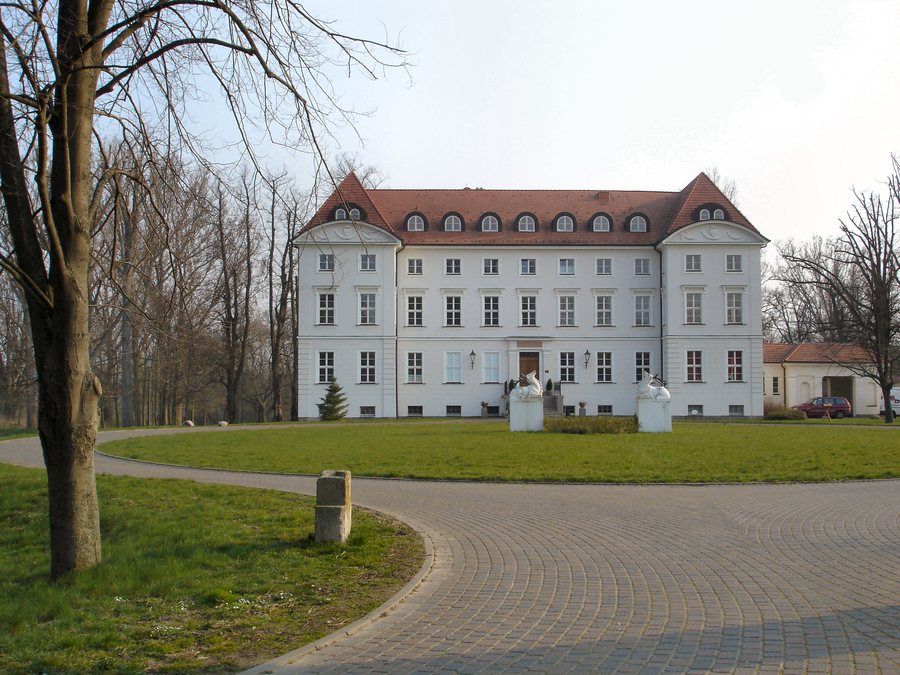
Wedendorf Castle brings together two clearly dated building phases. It was built as a Baroque castle in 1697 and remodelled in the Neoclassical style in the early 19th century. Anyone interested in architectural history can see this development as a transition from Baroque to Neoclassicism. The two styles belong to different periods in the castle’s history; they do not describe the same state of the building.
Kirch Grambow village church also offers cultural and historical details. Its organ was built in 1864 by Friedrich Friese (Friese III). Beneath the church is a crypt containing the coffins of the von Bülow and von Plessen patronage families. The organ and the crypt represent different aspects of the church’s history: one is an instrument with a stated year of construction and organ builder; the other is a crypt associated with two family names. These details offer a distinct cultural focus alongside the lake’s trails and landscapes.
If you’d like to explore other destinations at the same level, you can find Amt Klützer Winkel, Amt Dorf Mecklenburg-Bad Kleinen, Dassow-Tankenhagen, Demern, Amt Lützow-Lübstorf, Wohlenberg, Groß Schwansee and Hohen Wieschendorf here.
For the broader travel overview: Northwest Mecklenburg.

