
Zurow – Lakeside Scenery and Village History
Accommodation in Zurow
Zurow combines a village history shaped by lakes with rural sights and a cycle route from Wismar. In terms of its natural geography, the municipality lies both in the Northwest Mecklenburg Hill Country with Wismar Bay and in the Warin Basin within the West Mecklenburg Lake District. Anyone planning a trip to inland Mecklenburg will find a range of points of interest here: landscapes, architectural history and routes, each of which can be explored individually.
Lakes and Village History
Zurow began as a Slavic village settlement on a sandy spit between two lakes. Lake Sellin and Hofsee still remain today as remnants of the lake between which the settlement developed. This history gives the village a tangible connection to the water, although the municipality should not therefore be thought of as a coastal town. The Neukloster See–Wariner See Landscape Protection Area is also important for understanding the landscape: it includes the Zurow districts of Nakenstorf and Klein Warin.
Several landscape features thus come together in Zurow: the Warin Basin, the West Mecklenburg Lake District and the two surviving lakes. The village’s history can be explored not only through its landscape but also through its older buildings. Those interested in rural settlement history can see the different places and their respective architectural landmarks as distinct aspects of the municipality.
Village Church and Historic Buildings
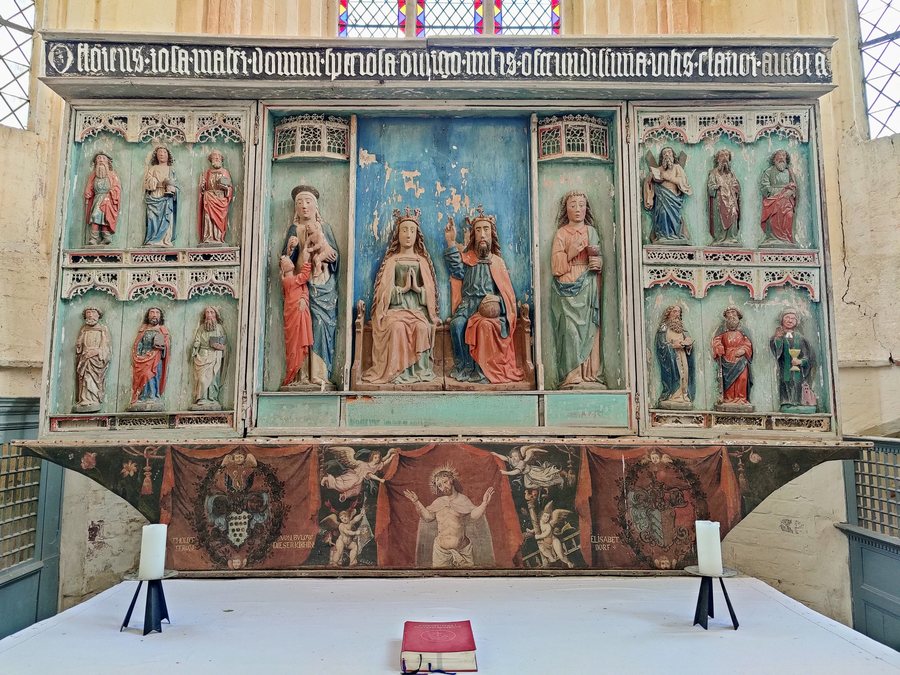
The Zurow village church is a brick building dating from around 1380 and shows the influence of Wismar’s parish churches. Until 1541/42, it was a place of pilgrimage, home to a famous image of the Virgin Mary. Its architecture and religious history are closely tied to the village’s identity: the building reflects the medieval brick tradition, while the pilgrimage speaks to its former importance as a religious destination. If you would like to visit the church, please arrange this in advance or ask the neighbours.
Listed sites are also part of the streetscape along the main road. These include a church, a cemetery, a fieldstone wall and a mortuary. In Reinstorf, a thatched Lower Saxon three-sided farmstead is one of the municipality’s sights. In Kahlenberg, the sights include former manor houses; in Fahren, parts of a former manor estate remain, including the Old Stable. There is also an old thatched house in the direction of Fahren. These examples represent different historic building types and connections to the local area—from farmsteads and former manor buildings to the sites along the main road.
By Bike and on Horseback
The Wismar–Zurow cycle route passes Lake Sellin, goes under the A20 and then follows a well-maintained cycle path to Zurow. This makes the route a practical option to include in your travel plans if you are arriving by bicycle.
Horse-riding trails are also available in the municipality: trails were designated and signposted in Klein Warin in cooperation with the forestry office. A riding centre was also established there. If you are interested in exploring the rural surroundings on horseback, you can consider both of these when choosing your destinations; they describe designated trails as well as the district’s connection with horse riding.
If you would like to explore more places in the same overview, you can also find Bibow, Warin, Glasin, Lübberstorf, Passee, Züsow and Jesendorf here.
For the wider travel overview: Amt Neukloster-Warin.

