
Raben Steinfeld
Accommodation in Raben Steinfeld
Raben Steinfeld is located between Lake Schwerin and Lake Pinnow. You can choose from a range of themes to help plan your trip: trails through nature and landscape conservation areas, distinctive shorelines, geological features, and the history of the castle and park. This makes it easy to tailor your stay to the topics that interest you most.
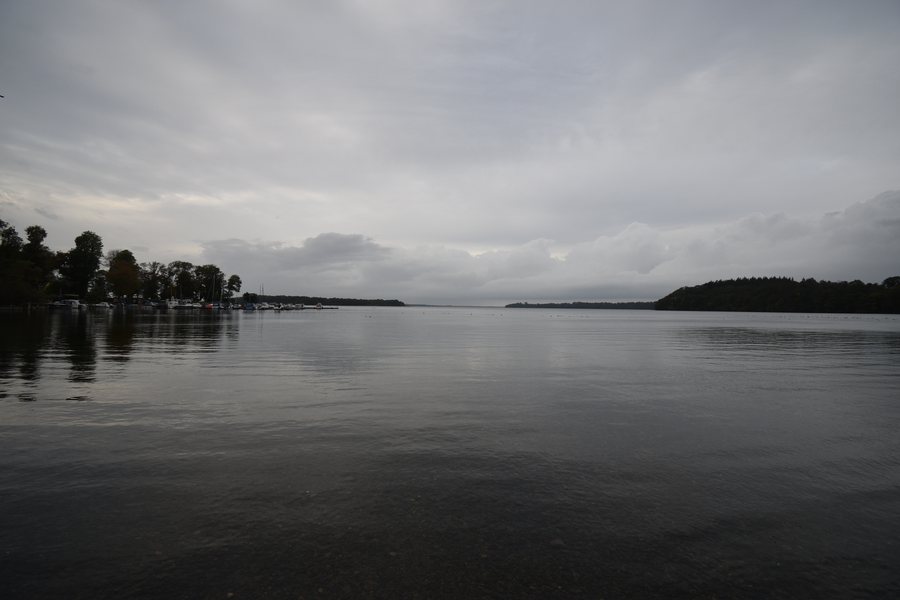 File:Schweriner Innersee an Raben Steinfeld af Erik Værbak 2019.jpg
Photo: Dansk kulturarv via Wikimedia Commons, CC BY-SA 4.0
Nature Trails and Lakeshore Landscape
Raben Steinfeld’s nature and landscape conservation areas can be explored via a well-developed network of hiking, cycling and horse-riding trails. If you want to discover the landscape on foot, the “Görslower Ufer” nature reserve also has a hiking trail that runs directly along the shore. The area is a lakeside zone about 10 kilometres long on the eastern shore of Schweriner Innensee.
One of the area’s defining landforms is its steep cliff slope. It is about 10 to 15 metres high and was formed by deposits of soil sediments along the main ice-margin positions of the Weichselian glaciation. The lakeside trail, the lakeside zone and the cliff each describe a different aspect of this natural area: the route of a trail directly beside the water, the extent of the conservation area and the geological formation of the slope.
Oaks and Park History
The park adjoining Raben Steinfeld Castle includes 34 so-called “Raben Steinfeld oaks”. As a group, these 34 trees are the oldest oaks; they are between 300 and 650 years old. They are designated natural monuments. The largest oak has a circumference of 7.40 metres. Both the trees’ great age and their exceptional size define the group.
The park’s creation is also part of the town’s history: the landscaped park around Raben Steinfeld Castle was laid out in 1851 by Theodor Klett, court gardener to the Grand Duke of Mecklenburg-Schwerin. The park and the oaks thus represent different layers of the town’s history.
The Castle and Its Historical Connections
Raben Steinfeld Castle was converted into a grand-ducal summer residence at the end of the 19th century. Later, it served as the dower residence of Marie of Schwarzburg-Rudolstadt. In its location and sightlines, the castle is closely connected to the UNESCO World Heritage Site “Schwerin Residence Ensemble – The Art of Historicism”. This connection makes architectural and residential history a distinct theme alongside nature experiences.
The stud keepers’ houses are also part of Raben Steinfeld’s architectural history: between 1863 and 1869, they were built for twelve families, following an English model. Apart from a few uncharacteristic alterations, the houses are relatively well preserved to this day. Their construction dates, purpose and architectural model give these buildings a different historical context from the later history of the castle.
Erratic Boulders and Rocks
The Raben Steinfeld erratic boulder garden displays 138 selected boulders from the region. They are considered evidence of the Weichselian glaciation and represent the diverse rocks of Scandinavia and the Baltic Sea floor. Those interested in geological history will find this a distinct theme alongside the landforms of Görslower Ufer.
The 30-million-year-old Sternberg rock is a particular feature of the Raben Steinfeld Geological Museum. It is also known colloquially as “Sternberg cake” and is described as the most fossil-rich rock in northern Germany, containing more than 520 species. The region’s erratic boulders and Sternberg rock thus represent different geological contexts.
Places of Remembrance
At the Stör Canal, the “Die Mutter” memorial, inaugurated in 1975, commemorates the end of the death march and the suffering of 18,000 Sachsenhausen concentration camp prisoners on 2 May 1945. This place of remembrance adds a sombre historical note to the various themes that shape Raben Steinfeld.
More local pages: Cambs, Langen Brütz, Leezen, Dobin am See, Pinnow, Gneven.
For the broader travel overview: Amt Ostufer Schweriner See.

