
Discover Ugoszcz
Accommodation in Ugoszcz
If you want to take historic churches and a specific cycling route into account when choosing a destination, you can explore Ugoszcz through two themes: the architecture and furnishings of its churches, and a 7.0 km cycle route to Czarna Dąbrowa. There is also a reference to the medieval village layout. This combination offers different starting points for planning a trip, without letting a single theme define how you see the place.
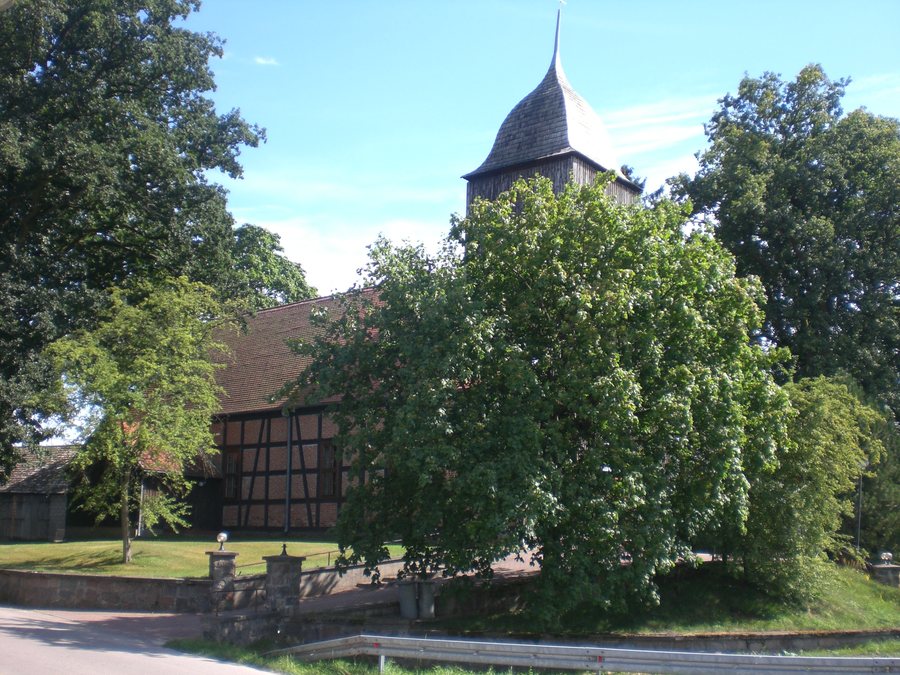
Two churches, two construction dates
St. Mary Magdalene Church was built in 1822, and Our Lady of the Scapular Church in 1897. The two dates provide different historical reference points. St. Mary Magdalene follows traditions of regional architecture similar to those of the church in Sominy; comparing the churches can therefore also help orient visitors interested in regional building styles. Our Lady of the Scapular Church adds another 19th-century building to this picture.
St. Mary Magdalene is also worth visiting for its furnishings. The main altar is a Rococo altar from the second half of the 18th century. The painting it contains depicts the Virgin Mary with the Christ Child and was painted by T. Render in 1868. There are also two side altars from the second half of the 18th century in the folk Baroque style. The altar and painting thus point to different dates of origin: the main altar is older than the church, while the painting was created after the church was built. Together with the two side altars, they create a layered picture of the church’s furnishings.
Half-timbering and the setting of St. Mary Magdalene
The church stands on a small hill. Its rectangular ground plan, stone base and half-timbered construction with brick infill give the architecture distinctive features. Its orientation is another: the chancel is on the east side. Visitors interested in architectural history will find several specific details here that help describe the building’s form, rather than classifying it solely by its construction date. Along with its Rococo furnishings, the church offers two different points of interest: its construction, and its historic altars and painting.
A medieval village layout
Ugoszcz is one of the villages that originated in the medieval period and whose oval layout can still be reconstructed, although it has been substantially blurred and altered. The settlement pattern adds another layer to the history of the churches: alongside individual buildings, the historic layout of the village can also be considered. There is an important qualification: the oval outline has not been preserved unchanged and can now only be reconstructed. Visitors interested in local history can therefore focus on both architectural details and the form of the settlement.
Cycling as another reason to visit
The Ugoszcz–Czarna Dąbrowa cycle route is 7.0 km long and passes through Ugoszcz. Its length gives the ride a clear framework for planning your day. If you want to combine cycling with historical interests, you can consider the route as a separate reason to visit, alongside the churches and village layout. The information about the buildings and the named route offer different points of focus: history and architecture on the one hand, and a route with clearly stated endpoints and length on the other. Before setting off, it may be useful to check the current route conditions; the length alone says nothing about the state of the route. You can thus explore Ugoszcz according to your own interests in architectural history, settlement patterns or cycling, without combining them into a single attraction.
Discover more destinations: Bytów, Świeszynko, Kołczygłowy, Łupawsko, Sominy, Brzeźno Szlacheckie, Piaszczyna, Borowy Mlyn.
For the broader travel overview: Bütow.

.jpg)