
Discover Wiślina
Accommodation in Wiślina
Wiślina combines a municipal kayaking route on the Motława with traces of local history. A wooden bell tower dating from 1792 stands in a cemetery. Visitors interested in river landscapes, time on the water and historical details will find several points of interest in Wiślina to help plan their trip.
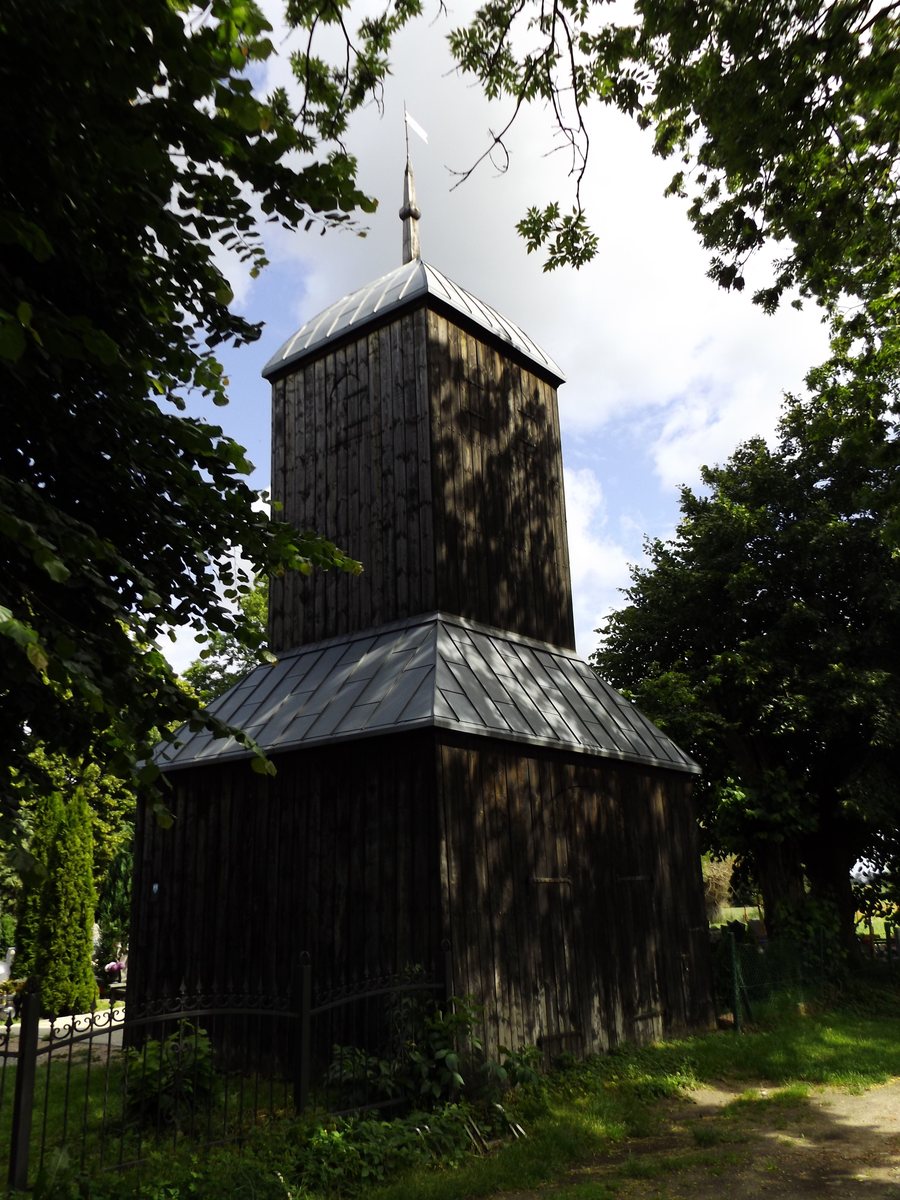 File:Zabytkowa dzwonnica na cmentarzu we wsi Wiślina - panoramio.jpg
Photo: Krzysztof Rakowski via Wikimedia Commons, CC BY-SA 3.0
Bell tower, cemetery gate and local history
The bell tower stands in a cemetery that was once associated with a Gothic church. The church no longer survives. The cemetery gate and the “Brama do Raju” bell tower led to a Mennonite cemetery, which is now a parish cemetery. The tower also recalls the Olęder settlement in this area. Several historical connections therefore come together at this site: the former church, the Mennonite cemetery and the memory of the Olęder settlement.
The inscriptions on the gate are particularly tangible. Well-preserved carved texts can be seen on its four supporting posts. They include a foundation inscription by the village head of Dziewięć Włók, references to the church wardens, and the name of the builder, Jakub Jentzen, along with the date 1792. Those interested in architectural history can therefore look not only at the wooden bell tower, but also at the inscriptions on each gatepost. The builder’s name and the date add to the information about when the structure was built.
Kayaking on the Motława and riverside routes
The municipal kayaking route on the Motława passes through Wiślina. Its slow current makes it suitable for beginners, and it can be paddled in either direction. This makes it an option for visitors who would like to include a river trip in their plans. The route through Wiślina should be distinguished from another recommended kayaking trip on the Motława in the region: that route runs from Gdańsk to Wróblewo and is 15 km one way, or 30 km for the round trip.
The Mennonite Trail also follows the Motława. From the junction in Wiślina, it runs along a route described as peaceful and scenic to Bystra and Lędowo in the municipality of Pruszcz Gdański, and onward to the neighbouring municipality of Cedry Wielkie. Trip plans can therefore include a riverside route without conflating it with the kayaking route. When choosing between paddling and a route on land, the different ways of travelling and destinations are the main points of interest here.
Landscape and regional orientation
The kayaking route on the Motława passes through the flat, agricultural areas of the Żuławy Gdańskie. This landscape differs from a trip focused on the coast or an island: in Wiślina, the river landscape and local history take centre stage. A route from Pruszcz Gdański leads through Rokitnica to Wiślina, providing another geographical reference point for exploring the region.
The municipality also includes the Wojewódzki Bieg Żuławski, a run along the Wiślina–Lędowo route that it lists as one of its regular sporting events. The race is another point of interest for visitors interested in sporting events in the area. No specific event date is given here, so the route described and the event’s recurring nature are the main considerations when planning a trip.
If you would like to explore other local pages in addition to Wiślina, you can also find Ząbrsko Górne, Swibno, Buszkowy Górne, Postołowo, Otomin, Kleszczewo, Warcz and Miłowo here.
For the broader travel overview: Gdańsk.

