
Sulmin – History and Landscape of a Kashubian Village
Accommodation in Sulmin
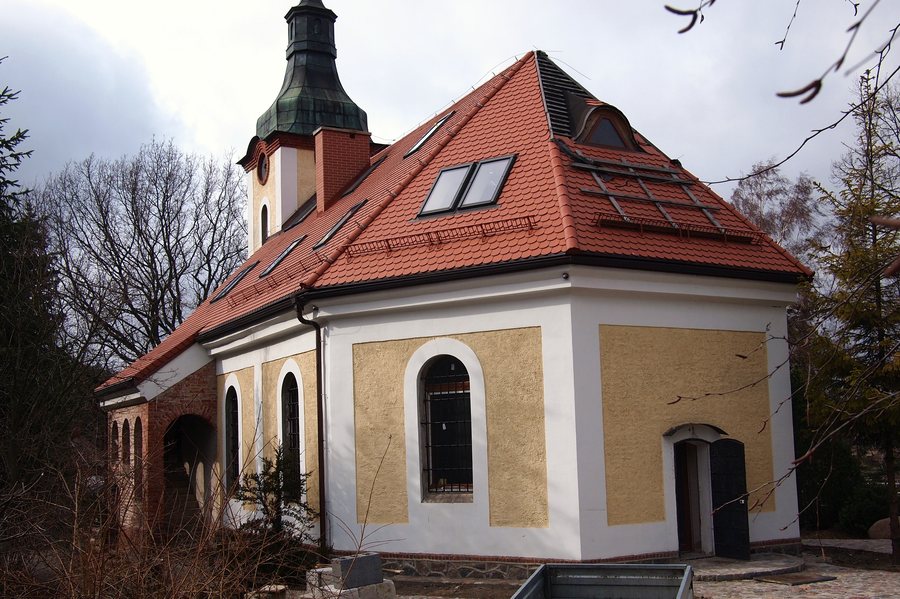 File:Sulmin kościół.JPG
Photo: tomasz przechlewski from Sopot, Poland via Wikimedia Commons, CC BY 2.0
File:Sulmin kościół.JPG
Photo: tomasz przechlewski from Sopot, Poland via Wikimedia Commons, CC BY 2.0
Sulmin is considered a typical Kashubian village and combines a clearly dated local history with historical traces in its townscape. Sulmin was first mentioned in 1340. In 1808, Carl Friedrich Gralath had a manor house built there. These two key dates mark the chronological framework of the village’s documented history.
Setting and Surroundings
Sulmin is located in the municipality of Żukowo, in Kartuzy County and the Pomeranian Voivodeship. Stroma Góra and wzgorza nad Leznem are in the nearby surroundings. Gdańsk - Centralne Morskie and Wyspa Holm are located in the surrounding area. The wider regional surroundings include Muzeum Emigracji, Akwarium Gdyńskie MIR and Gora Donas. Thus, the closer landscape features are followed by destinations in the surrounding area and then by facilities located farther away in the region.
This spatial gradation connects different points of reference: the two aforementioned elevations are near Sulmin, Gdańsk - Centralne Morskie and Wyspa Holm are located in the surrounding area, while Muzeum Emigracji, Akwarium Gdyńskie MIR and Gora Donas are assigned to the wider regional surroundings. This keeps the names and geographical levels clearly separate from one another. For spatial orientation, these levels should be read separately: the two nearby elevations belong to the immediate surroundings, while the aforementioned facilities in the surrounding or wider regional area represent different levels of reference.
Culture and History
The former Protestant church in Sulmin was restored between 1980 and 1985 and established as a private art gallery under the name Galeria Sulmin. Old lime trees and oaks have been preserved in the manor house park. There is also a tomb of the Gralath family at the end of the garden. The church, gallery, park and tomb thus represent different historical traces within the village’s history.
The manor house built in 1808 and the tomb of the Gralath family point to Sulmin’s connection with the Gralath family. The later restoration of the former Protestant church and its conversion into Galeria Sulmin adds a cultural use to this historical context. Together with the trees in the manor house park, this creates a picture in which architectural history, family history and an art gallery stand side by side. The focal points are clearly distinct: Sulmin’s historical traces range from the manor house park to Galeria Sulmin, while the landscape references and transport information provide other ways of approaching the village.
Mobility and Route Connections
Bus connections run via Żukowo to Kartuzy; Sulmin can be reached from Gdańsk by a ZTM bus. The village is also located on the Szlak Kartuski tourist trail. Public transport and a named tourist route thus represent two different points of reference for the village.
When choosing a hotel for Sulmin, travel dates, room category and cancellation conditions can be considered together. The three details mark different decision points: they relate to the period, the type of accommodation and the conditions of the respective offer.
Other places from the same overarching context include Lapalice, Zukowo, Łączyno, Puzdrowo, Miechucino, Pierszczewo, Miszewko and Suleczyno.
For the overarching travel overview: Karthaus.

