
Kwidzyn: Brick History and Trails
Accommodation in Kwidzyn
Kwidzyn combines medieval brick architecture with routes for hiking and cycling. This gives you two distinct priorities to consider when planning your trip: visiting the castle and cathedral, or spending active time on routes that begin in or pass through Kwidzyn. If you’re looking for a hotel, you can first decide which of these areas you’d like to shape your stay.
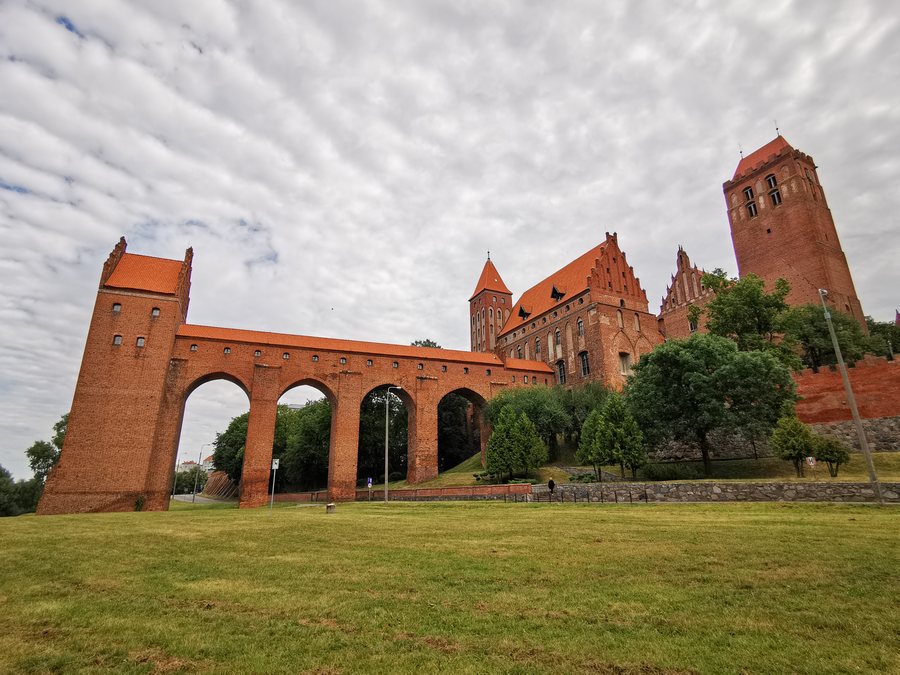
The Castle, Cathedral and Building History
The castle of the Pomesanian cathedral canons in Kwidzyn was built of brick between 1320 and 1340. It includes the historic sanitary tower, known as the Gdanisko, dating from 1393. The cathedral was built between 1310 and 1360 as a Gothic brick pseudo-basilica. Brick is one of the defining materials of both buildings; the term “pseudo-basilica” also identifies the cathedral’s specific architectural form. The cathedral and castle complex was recognized as a Monument of History (“Pomnik Historii”).
The castle houses the Castle Museum. A medieval mosaic in the cathedral depicts Saint John the Evangelist and a kneeling bishop. The mosaic dates from 1380; it is considered likely that it was created by artists from Venice. Guided tours of the cathedral take place daily from 9:00 a.m. to 5:00 p.m. Check the times before your visit so you can fit the tour into your day’s plans.
Hiking and Cycling Routes
The red Copernicus Trail passes through Kwidzyn on the Gardeja–Kwidzyn–Ryjewo–Biała Góra section. The green Napoleonic Trail begins at Kwidzyn railway station. For cycling, you can start the Rowerowa Pętla Wisły in Kwidzyn; the Dolina Dolnej Wisły cycle route also passes through the town. The routes therefore have different connections to the town: one passes through Kwidzyn, one begins at the railway station, and a cycling loop can be started here. Check the local condition of the Napoleonic Trail in advance.
The landscape of Miłosna adds a distinctive feature alongside the historic buildings. Miłosna in Kwidzyn has officially been recognized as a priority landscape; its extensive forests, ravines and glacial hills define the area. If you’re interested in nature as well as architectural history, this provides another point of interest to consider when planning your trip.
Marienwerder in Regional Context
The broader travel destination of Marienwerder offers a historical perspective that extends beyond the Middle Ages: the Fermor Palace in Kwidzyn was built between 1758 and 1763 for Russian governor General Wilhelm Fermor. The Castle Museum in Kwidzyn also displays ethnographic collections on the material culture of the Dolne Powiśle region. The cathedral and its crypt are accessible to wheelchair users if the need is announced at least one day before the visit. Check this requirement in advance.
The historic Miłosna equestrian complex, whose history dates back to 1788, is also part of the regional context. Riding lessons are offered there for children, teenagers and adults—from their first encounter with a horse to riding in the countryside. There are two modern, safe playgrounds on the grounds; carriage, wagon and sleigh rides are also offered. Check availability before your trip, especially for seasonal outings. For more ways to explore Kwidzyn, a walking tour starts at the railway station in the town center on Kościuszki Street; a cycling trip runs from the station to Mareza. The banks of the Liwa have areas for walking, as well as sports and tennis courts.
Discover more destinations: Otoczyn, Licze, Borowy Młyn, Rodowo, Grodziec, Grabówko, Rodowo Male, Sadlinki.
Go to the main travel overview: Marienwerder.
Compare hotels and holiday rentals in Kwidzyn by price and availability for your travel dates.
Advertisement · We may receive a commission if you book.
