
Starnice: Manor House, Estate History and Cemetery Traces
Accommodation in Starnice
Starnice brings together several historical themes: a late Baroque manor house, the history of the estate, traces in the village cemetery, and a historic landscape park. These span different periods and show various forms of local and cultural heritage. The manor house dates back to the late 18th century; the cemetery and park complement the architectural history with their own historical points of reference.
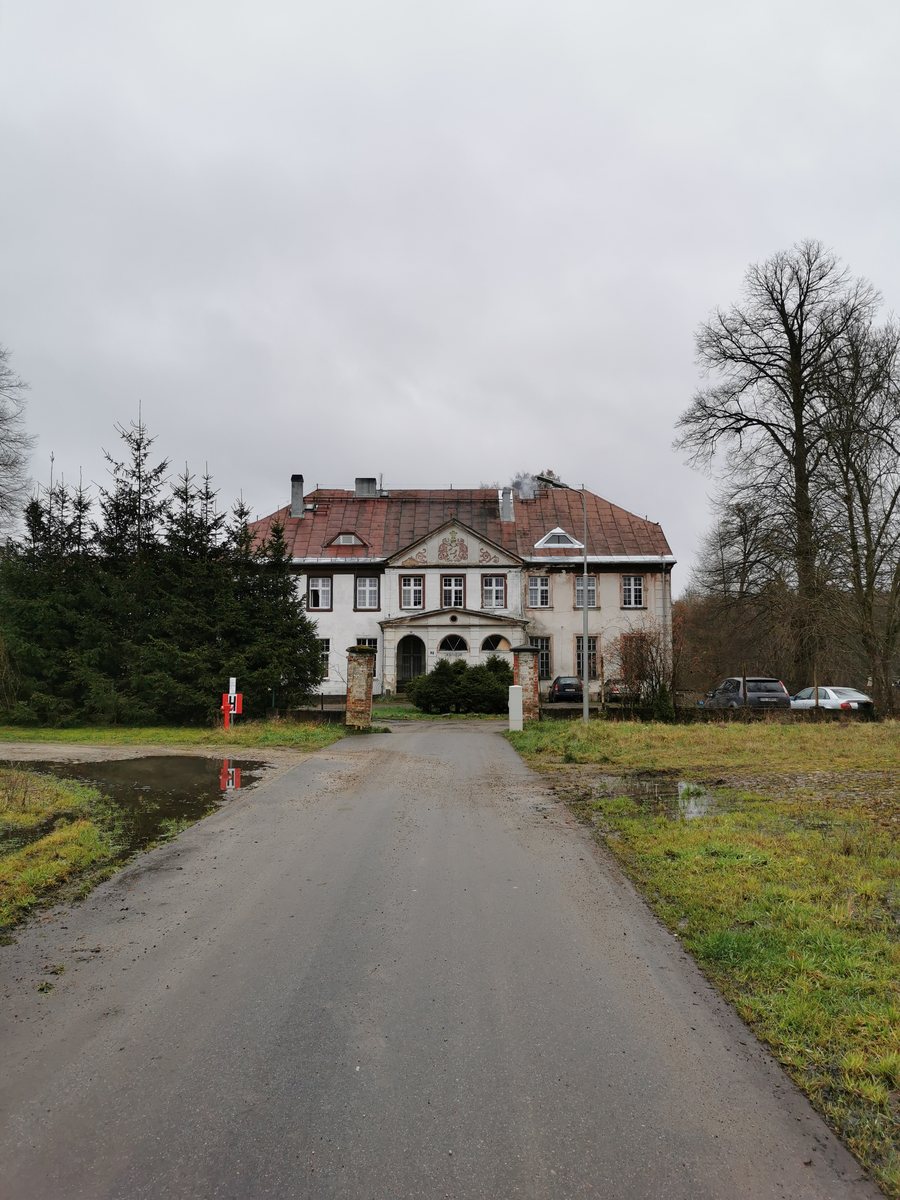
Manor House and Estate History
The manor house in Starnice was built in the late 18th century by the von Gottberg family. It is a two-storey late Baroque building with nine bays. Late Baroque describes the style, two-storey the arrangement over two levels, and the nine bays the layout of the façade. In architecture, a bay is a vertical division of a building’s front. These terms provide different points of reference: historical style, vertical arrangement, and façade layout. This makes it possible to place the manor house in its historical context and describe its architectural form.
The Starnice estate belonged to the von Gottberg family from 1753 to 1945. The late 18th century, when the manor house was built, falls within this longer period of ownership; however, the construction period and the period of ownership refer to different aspects. In the early 1940s, Starnice also had a mill and distillery belonging to the estate. These two businesses add a later period to the estate’s history and broaden the picture beyond the manor house.
Cemetery and Historical Traces
The original spruce plantings along the boundary of the village cemetery in Starnice have been preserved. Fragments of grave monuments can also be found there, pointing to burials from the late 19th and early 20th centuries. An iron cross marks a grave from 1894. These details provide different points of reference in time: the spruce plantings describe the cemetery boundary, the fragments point to broader periods, and the cross identifies the year of an individual grave. The year 1894 falls in the late 19th century and thus pinpoints a date within the broader period indicated by the fragments, without limiting those fragments to that year.
A map from 1935 links a second burial ground northeast of Starnice with a chapel. This places two different historical points of reference side by side: features preserved at the village cemetery, and the connection between the northeastern burial ground and a chapel, dated to 1935.
Landscape History
Starnice also has a historic landscape park, though its layout and features have been destroyed. It therefore represents a different form of local and cultural heritage from the manor house and cemetery. The destroyed elements make the contrast with the surviving cemetery features clear. For those choosing a destination with an interest in landscape history, the park offers a distinct focus alongside architectural and burial history.
Discover more destinations: Kluki, Smoldzino, Komiłowo, Wrzeście, Stara Dabrowa K Slupska, Retowo, Słupsk, Witkowo
For the wider travel overview: Słupsk.

