
Widzino between the stream, village history and cycling route
Accommodation in Widzino
Widzino can be understood through three specific features: the Kamieniec stream, a long village history and a 40 km cycling route. Together, these connect the village with a named watercourse, traces of the past and a route that passes through Widzino. If you are choosing between an active outing and a cultural-historical focus, these themes offer different ways to explore the area: the cycling route covers 40 kilometres, while the village’s history spans several much earlier periods.
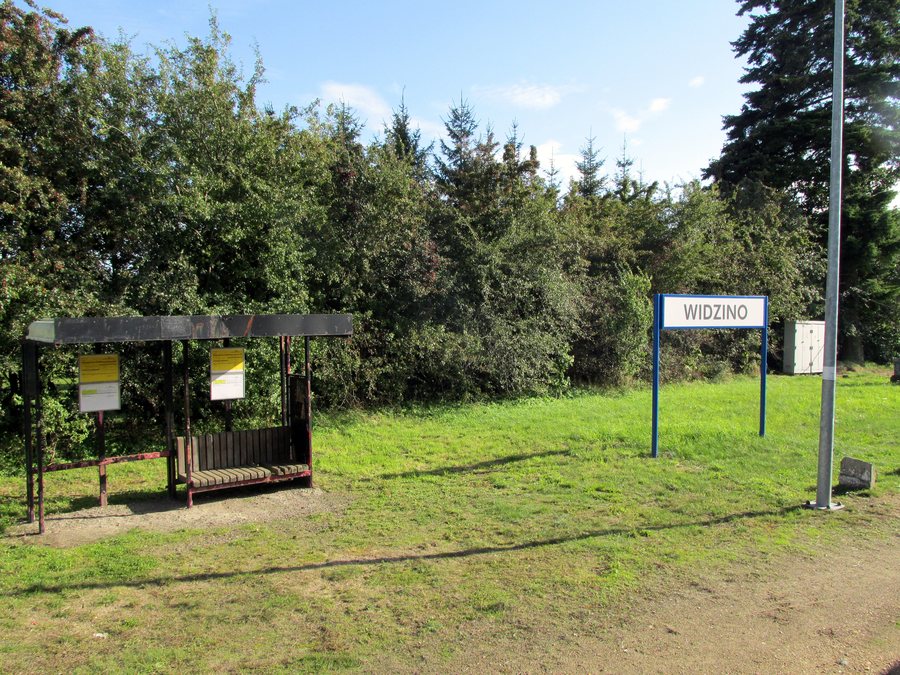 File:Widzino PL 2014 ubt.JPG
Photo: Tomasz Sienicki [user: tsca , mail: tomasz.sienicki at gmail.com] via Wikimedia Commons, CC BY 3.0
The stream and the village’s history
Widzino lies on the Kamieniec stream. The watercourse is also part of the historic settlement pattern: from the earliest times, farms stood on both sides of the stream flowing through the village. The stream and the village’s history can therefore be considered together. The Kamieniec is not merely a geographical reference point, but also part of the historical account of how the village developed on both sides of the water. For travellers interested in rural settlement history, it is precisely this connection that makes the place tangible: the stream shapes both the description of the village and a recorded detail about the arrangement of the farms.
Medieval context and archaeological traces
One precisely dated episode in the village’s history takes us back to 1281: Duke Mszczuj granted the village of Vidino as an endowment to the Norbertine convent in Słupsk. Widzino is considered one of the oldest villages in the Słupsk region. These details offer different perspectives: 1281 marks the specific act of transfer, while the description of Widzino as one of the oldest villages provides a broader historical context. Together, they give visitors interested in culture both a point of reference in time and a wider understanding of the village’s history.
Another layer of history can be explored at the Widzino 8 archaeological site. Finds documented there include a settlement of the Pomeranian culture, a craft-based settlement of the Wielbark culture, and evidence from the Early Middle Ages. These settlement remains broaden the focus beyond the medieval transfer to encompass several different periods. For anyone exploring Widzino, the archaeological finds add a distinct perspective to the village’s historical context.
Cycling route, railway and surroundings
A 40 km cycling route passes through Zagórki, Łosino, Lubuń, Żelkówko, Kruszyna, Lulemino, Zagórki, Zbyszewo, Korzybie, Ścięgnica, Wrząca, Giełdoń, Kuleszewo, Kończewo, Sierakowo and Widzino, before reaching Kobylnica. Widzino is therefore part of a longer route. The stated total distance helps you assess the length of the route when planning your trip. If you are planning to follow it, check its current course and condition before setting out.
The Widzino railway stop on the Słupsk–Szczecinek line is another useful local reference point. If you are considering travelling by train, it is a good idea to check the current timetable in advance.
A small lake near Widzino is leased to the Koło PZW „Plasmet” Widzino angling club. The lake also hosts numerous fishing competitions. Its lease and the competitions give it a clear connection to organised angling. The water features are in different locations: the stream is in Widzino itself, while the lake is nearby. This distinction helps set apart features of the village from points of interest in the surrounding area.
Discover more destinations: Słupsk, Stara Dabrowa K Slupska, Retowo, Kluki, Pobłocie, Łokciowe, Debnica Kaszubska, Osowa.
For the main travel overview: Stolp.

