
Pianki: Natural Monuments, Local History and Historic Routes
Accommodation in Pianki
Pianki can be understood through three specific themes: six small-leaved lime trees designated as natural monuments, a former 19th-century Protestant cemetery with a war cemetery from the First World War, and two historic cycling routes that passed through the village. Nature, local history and the history of cycling routes stand side by side. If you are considering Pianki as a possible place to stay, think about which of these connections will most shape your travel plans.
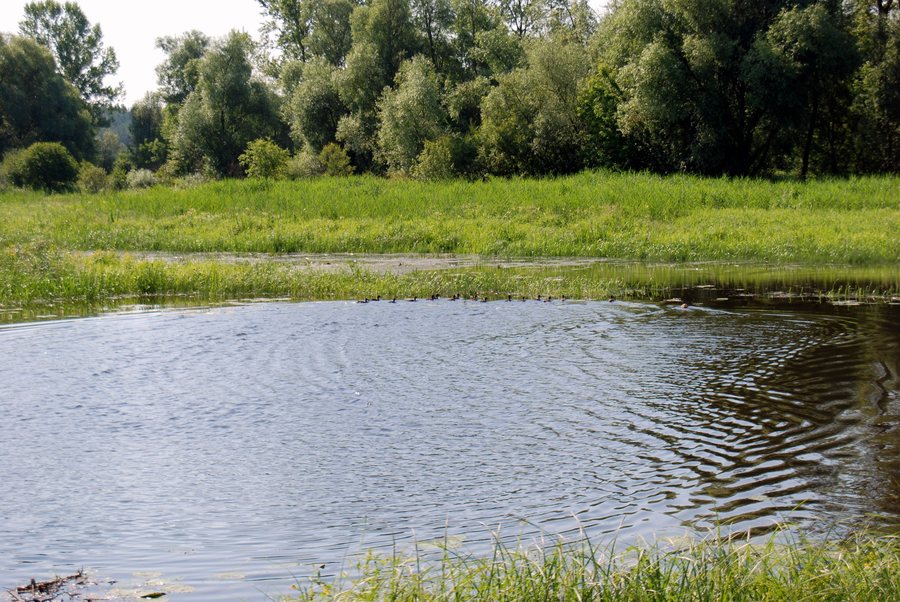 File:Pianki -kaczki na starorzeczu "Krzywa Noga" - panoramio.jpg
Photo: jangol2 via Wikimedia Commons, CC BY-SA 3.0
Local History and Remembrance
The former Protestant cemetery is a point of cultural and historical interest in Pianki. It dates from the 19th century and includes a war cemetery from the First World War. Two clearly distinct periods therefore come together in the village’s history: the 19th-century cemetery and remembrance of the First World War. For travelers who want to understand local history through a specific historic site, this connection offers a point of reference. It complements interests in nature and routes with the question of what historical memories are associated with a destination.
Small-Leaved Lime Trees as Natural Monuments
Six small-leaved lime trees in Pianki are designated as natural monuments. Both the number and the tree species are specified, as is the trees’ status. This gives travelers a connection to nature that differs from the cemetery’s history of remembrance. Those who include nature and culture in their travel plans can consider these themes separately: the lime trees as designated natural monuments, and the cemetery as a historic site with a war cemetery. These offer two distinct points of interest that appeal to different priorities when choosing a destination.
Historic Cycling Routes Through Pianki
Two historic cycling routes passed through Pianki. The black route, “Szlakiem Jezior Rynnowych,” was 22.0 kilometers long. It ran from Orzysz via Kolonia Grądy Podmiejskie, Pianki, Ublik, Cierzpięty, Mataszczyki, Tyrkło and Wężewo to Okartowo. The yellow route, “Szlak Rodzinny,” covered 19.4 kilometers and ran from Orzysz via Grądy, Odoje and Sumki to Pianki, then continued to Mikosze. Both routes started in Orzysz and passed through Pianki; they ended in different places.
The stated difference in length is 2.6 kilometers; the black route was longer. The sequence of places also distinguishes the two historic routes. One continued beyond Pianki to Okartowo, while the other went as far as Mikosze. This makes it easy to understand Pianki’s role on the former routes: the village was an intermediate stop on both, not the stated starting point. If you are planning a cycling trip today, please check the current route and markings in advance.
Choosing Pianki as a Place to Stay
When looking for a hotel in Pianki, the local points of interest can help you make a more informed choice. Consider whether you are mainly interested in the cemetery’s history, the six designated small-leaved lime trees or the historic routes. These themes offer different points of reference when choosing a destination: the history of remembrance, natural monuments or former cycling routes. This lets you choose where to stay according to your travel interests without treating the different themes as interchangeable.
Discover more destinations: Pisz, Jaśkowo, Niedzwiedzi Rog, Wygryny, Imionek, Wielki Las, Wejsuny, Szeroki Bór
View the broader travel overview: Piski.

