
Oldenburg in Holstein between Starigard and the Old Town
Oldenburg in Holstein is well suited to a cultural outing that spans early medieval settlement history and the later development of a small town. The Wall Museum focuses on Starigard, while the rampart, St. John’s Church and Old Town bring the site and its history into view in the landscape and the modern townscape. Start at the museum if you would like to use the exhibits as a guide for your walk.
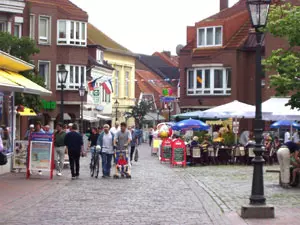 Oldenburg in Holstein
Photo: © KulTour Oldenburg in Holstein GmbH
Oldenburg in Holstein at a glance
- Historical name: Starigard, an important early medieval Slavic settlement.
- Main attractions: Oldenburg Wall Museum, rampart, St. John’s Church and Old Town.
- The Wall Museum has its own seasonal opening schedule; indoor areas are not open all year round.
- You can get there by road and bus; no trains currently stop in Oldenburg.
Starigard and the rampart
Starigard is the early medieval name of the settlement site on which modern-day Oldenburg stands. The Wall Museum places finds and reconstructions in the context of trade, crafts, agriculture, fishing and rulership. The rampart helps you understand how the former settlement was situated within a larger fortification. It is a visible trace of the historic defensive structure.
A good way to begin your walk is to consider which parts of the site can be explained in the museum and which remain visible in the landscape. The museum exhibition presents archaeological and historical context, while the outdoor paths show how the settlement fits into its surroundings. In dry weather, you can plan a short walk along the rampart before or after your museum visit. Actual access depends on visitor guidance and signposted paths.
The Wall Museum as the main attraction
The Oldenburg Wall Museum is the main place to visit for learning about the history of Starigard. It uses archaeological finds and reconstructions to bring everyday life in an early medieval settlement to life. Topics such as crafts, food supplies, trade and rulership add more depth to the visit than a simple account of a castle. If you are visiting with children, models and engaging objects offer an introduction to archaeological questions; the exhibits convey history through artefacts and reconstructions.
The museum is open seasonally from April to October and closed in winter. Opening days and events vary during the season. The website lists nearby bus stops and notes that no trains currently stop in Oldenburg; replacement service X85 serves the ZOB/bus station. Connections to the museum depend on the timetable for your travel date. Plan your visit around the museum’s opening calendar first, then choose the right bus or road connection. This helps avoid arriving to find the indoor areas closed outside the visiting season.
Old Town and St. John’s Church
A walk through the Old Town complements the story of the archaeological site and settlement with a look at the town today. St. John’s Church is a prominent landmark; the surrounding streets and squares show the town’s character in contrast to the archaeological museum site. A short stroll through the town centre makes a good addition after the museum if you would like your outing to cover more than the early medieval period. Access to the church interior may be affected by services or events, so checking current local information is enough for reliable planning.
Half a day is enough for the Wall Museum, rampart and a short town walk; allow more time if you plan a longer museum visit or an additional stop on the coast. Weißenhäuser Strand is nearby and offers a striking coastal contrast, but it is another destination with a separate journey. If you only have a few hours, stay in Oldenburg and add the Old Town rather than making a rushed detour to the beach.
Day trips and accommodation
Weißenhäuser Strand adds a dune-lined coast and holiday park to your visit. Lütjenburg and Hohwacht combine a historic town with a beach on Hohwacht Bay. Kellenhusen offers a promenade and woodland. Accommodation in Oldenburg can be compared by proximity to the museum, town centre and bus connections.
Frequently asked questions about Oldenburg in Holstein
What does the Wall Museum show?
Finds and reconstructions illustrate Starigard’s trade, crafts, agriculture, fishing and rulership. The museum is the main destination for learning about the town’s early medieval history.
Can I travel there by train?
No trains currently stop in Oldenburg. The museum lists bus connections and replacement service X85 to the ZOB/bus station; the timetable for your travel date provides the specific connection.
