
Latvia
History – a pawn of foreign powers
Like the neighboring coastal regions of the Baltic Sea, Latvia was settled by Baltic tribes during the Migration Period. One of them, the Curonians, soon gained a reputation as a warlike tribe, with conquests extending as far as Denmark. The eastern part of the country is still called Courland today. Together with Livonia, which borders it to the northeast, the region was subsequently fought over by Germans, Swedes, and Poles, before what is now Latvia came under Russian rule in the 18th century. Between 1920 and 1940, and again since 1991, Latvia has been a sovereign state.
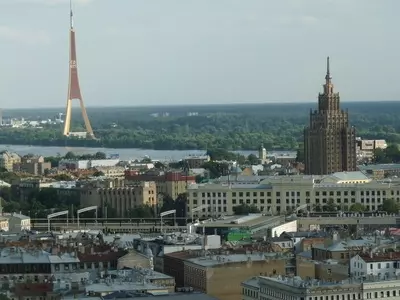 Modernes Riga
Photo: © Dieter Schütz / pixelio.de
Modernes Riga
Photo: © Dieter Schütz / pixelio.de
A mediator in the Baltic region
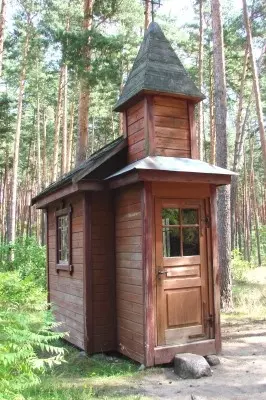 Some 2.2 million people live in an area of about 65,000 square kilometers. The capital, Riga, is the largest city in the Baltic states, with a population of over 700,000. Situated on the Gulf of Riga, from which it takes its name, and on the Daugava River, Riga long served as a link between northern and southern, western and eastern Europe. Today, Riga still blends tradition and modernity. The former Hanseatic city is now a UNESCO World Heritage Site, with numerous Art Nouveau buildings as well as churches and wooden houses. Its proximity to the Baltic Sea and the elegant seaside resort of Jurmala also makes Riga a great base for an eventful beach holiday.
Rich culture
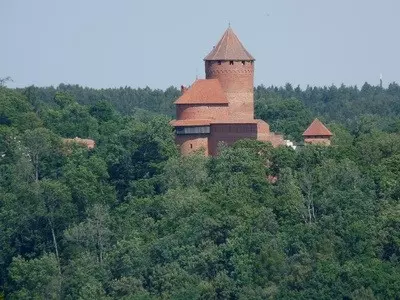 As a meeting place for many centuries, Latvia has preserved traces of a range of cultures. Even pagan customs dating back to pre-Christian times are still alive today. Folklore traditions have endured, along with old farmhouses and manor houses, as well as places of worship belonging to different religions. As in other Baltic countries, the singing tradition is particularly vibrant.
Unique nature
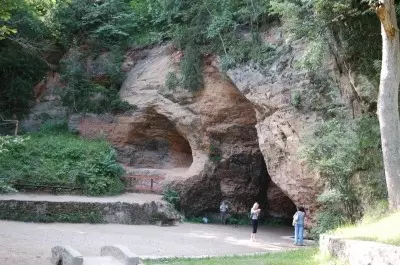 Almost half of the country is covered by largely untouched forest. Other natural features that might not be expected in this region also attract many visitors. These include Gauja National Park, northeast of Riga and not far from the Baltic Sea, with its sandstone formations and caves. There are also unique remnants from more recent times, such as military bunkers, some of which can also be visited. The coastal Salacgriva nature reserve offers impressive cliffs that are still changing over time.
The Baltic coast
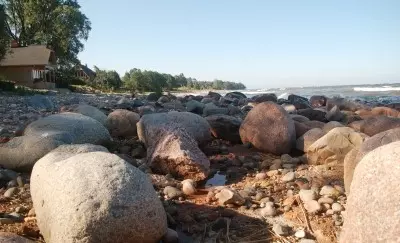 Along Latvia’s 500-kilometer Baltic coastline, old fishing villages alternate with modern seaside resorts. Latvians speak of two seas: the open Baltic Sea to the west, off the region of Courland, and the broad Gulf of Riga in the north of the country. While the west coast is dominated by unspoiled nature and was a restricted military zone for a long time, the seaside resort of Jurmala is the main attraction on the Gulf of Riga. The two “seas” meet spectacularly at Cape Kolka.
Photos (top to bottom):
Dieter Schütz / pixelio.de
christiaaane / pixelio.de
Dieter Schütz / pixelio.de
bretagne_32 / pixelio.de (2)
