
Rīga: UNESCO Old Town, Art Nouveau and the Daugava
Rīga brings together a medieval Old Town, Art Nouveau streets, museums, markets and the Daugava River. Its historic centre has been a UNESCO World Heritage Site since 1997. For a first visit, the city is easy to explore by neighbourhood and interest.
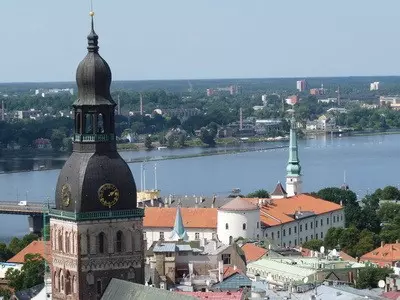 Blick auf Riga
Photo: © Dieter Schütz / pixelio.de
Rīga at a glance
- Cityscape: Medieval buildings, Art Nouveau façades and wooden houses in various neighbourhoods stand alongside modern architecture.
- World Heritage: Rīga’s historic centre was added to the UNESCO World Heritage List in 1997.
- Art Nouveau: Around a third of the buildings in the city centre are examples of Art Nouveau architecture.
- Art and history: The Latvian National Museum of Art and the Museum of the History of Riga and Navigation are housed in historic buildings in the city centre.
- City life: The Central Market, National Opera and Daugava promenade offer different perspectives beyond the Old Town.
Old Town and the Daugava: the historic heart of the city
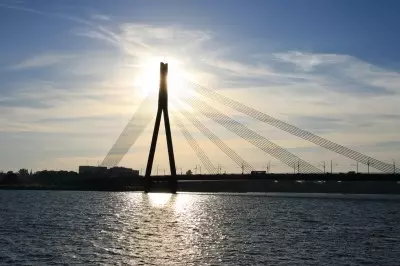
The Old Town is a compact introduction to Rīga’s history. Its buildings span styles from Romanesque and Gothic to Baroque. Churches, squares and medieval houses recall the city’s development as a Baltic trading centre. The Old Town sits on the right bank of the Daugava; opposite, on the left bank, stands the Latvian National Library, a striking modern building. As early as the 12th century, merchants from Gotland came to the region; Rīga later grew into an important centre of Baltic trade and a member of the Hanseatic League. A walk along the river offers an easy way to take in this contrast between the historic core and contemporary architecture.
One of the most prominent landmarks in the centre is St Peter’s Church, whose origins date back to the 13th century. The Freedom Monument is another important historical point of reference: the 42.7-metre column of granite and copper symbolises the desire for independence and freedom. Together, the two landmarks offer different perspectives on a city walk—sacred architecture and the medieval city on one hand, national memory on the other.
Art Nouveau and wooden architecture
Rīga is especially well known for its Art Nouveau façades. Alberta iela is an especially impressive place to see this style. Around a third of the buildings in the centre are Art Nouveau. A stroll through this neighbourhood complements rather than repeats a visit to the Old Town: ornate façades and early 20th-century architecture tell the story of another period of growth and urban identity.
Wooden houses are also part of the Latvian capital’s architectural character. They can be found, among other places, on the left bank of the Daugava in the Kalnciems neighbourhood, as well as in Grīziņkalns and the Moscow Suburb. These districts reveal a more intimate, residential side of the city. If you’re spending several days in Rīga, you can pair a walk through the Old Town with a visit to the wooden-house neighbourhoods and compare different scales of urban development.
Museums, art and performance
The Latvian National Museum of Art offers an overview of Latvian art from the 19th and 20th centuries. The museum building was purpose-built to house art collections and was constructed between 1903 and 1905. A visit combines the collection with an architectural landmark. For an insight into the city’s history, visit the Museum of the History of Riga and Navigation. Its collection includes a 13th-century ship, and the museum is part of the Riga Cathedral complex.
The Latvian National Opera and Ballet is another option for an evening of culture. Smaller galleries and independent cultural venues add to the choice. When planning, it’s best not to squeeze a museum visit, a walk and an evening performance into too tight a schedule: Rīga can be explored through its collections as well as its streets and public squares.
Central Market, parks and riverside paths
The Central Market is close to the Daugava, in converted former zeppelin hangars. Its five pavilions bring together Latvian foods and specialities, including smoked fish and rye bread. The market offers a lively contrast to the historic façades. If you’d like to discover local cuisine, it’s an ideal starting point—and easy to combine with a stroll along the river or through the Old Town.
Green spaces and paths offer other perspectives on the city. Bastejkalns Park features narrow walking paths, a rock garden and a cascade of water. A promenade runs along the right bank of the Daugava from the Old Town to Ķengarags. Seasonal boat trips are available on the city canal and the Daugava. That makes it easy to combine the compact Old Town with a park and a longer riverside walk in a single day.
Rīga as a base for exploring Latvia
To combine a city break with time on the coast, add Jūrmala, a seaside resort on the Gulf of Riga. For the rocky landscapes of Vidzeme, continue to Northern Latvia and Gauja National Park. In the west of the country, Ventspils and Northern Kurzeme offer harbour and coastal scenery; farther south, Liepāja combines urban history with a Baltic beach. Where you stay shapes your sightseeing: in the Old Town, you’re close to medieval landmarks; the Quiet Centre pairs Art Nouveau streets with a short walk to the Old Town. Around the Central Market and main railway station, the market and rail connections are conveniently close together. Accommodation in Rīga is spread across these different parts of the city.
Getting to Rīga and getting around
Bus 22 runs from the airport to the city centre. In Rīga, trams and trolleybuses complement the bus network and connect the various neighbourhoods. The main railway station is so centrally located that the Old Town is about a five-minute walk away. For accommodation close to the sights, choose the Old Town; the Quiet Centre is a good base for walks through the Art Nouveau district. Staying around the Central Market and main railway station makes it especially easy to combine a market visit with a train journey.
Frequently asked questions about Rīga
How can I experience Rīga’s architecture in a day?
Combine the medieval Old Town with a walk through the Art Nouveau district, especially along Alberta iela. If you have time, the wooden houses in Kalnciems or Grīziņkalns offer another perspective on the city’s architectural history.
Which museums are good for exploring history and art?
The Museum of the History of Riga and Navigation explores Rīga’s maritime past. The Latvian National Museum of Art focuses on Latvian art from the 19th and 20th centuries and is itself a museum building purpose-built for that use.
Where can I combine sightseeing with nature and exercise?
Bastejkalns Park and the promenade along the right bank of the Daugava offer walking routes within the city.
