
Gedser on Falster
Gedser connects Denmark’s southernmost coastal point with an active ferry port on Falster. At Gedser Odde, wind, Baltic Sea waves and pale clay cliffs meet; Sydstenen marks the headland. The lighthouse, bird observatory and ferry give the town its maritime character.
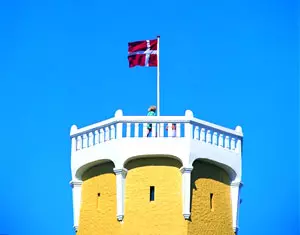 Gelber Turm mit 'Dannebrog' in Gedser auf Falster
Photo: © Cees van Roeden/VisitDenmark
Gedser at a glance
- Location: at the southern end of the Danish island of Falster.
- Gedser Odde: Denmark’s southernmost point; Sydstenen marks the tip.
- Nature: exposed Baltic coast with clay cliffs, wind and strong waves.
- Attractions: Gedser Lighthouse, bird observatory, geology exhibition and local museums.
- Ferry: Gedser–Rostock, around 52 kilometres and about two hours crossing time; check-in is required at least 15 minutes before departure.
Gedser Odde and Sydstenen
Falster’s southernmost extension ends at Gedser Odde. Here, the coast faces open water: wind and waves shape the pale clay cliffs, making the headland a vivid place to see the dynamics of the Baltic coast. Sydstenen, the Southern Stone, marks Denmark’s southernmost point. A visit to Gedser combines this geographical highlight of the island with views out across the open sea.
The landscape is best enjoyed when you allow time to spend outdoors. Along the exposed coast, weather and wave conditions shape the experience; on windy days, the surf is especially striking. Gedser Odde is ideal for a coastal visit focused on nature and scenery. Sydstenen, the cliffs and the views across the Baltic belong together as stops on an excursion to the southern tip of the island.
Lighthouse, bird migration and geology
The Gedser Lighthouse and Gedser Bird Observatory are located near the headland. The Danish Ornithological Society counts birds there throughout the year, and one of Denmark’s major bird migration routes passes through Gedser. The area therefore offers a reason to look up from the sea at different times of year. Binoculars are useful if you want to observe birds from a distance.
A visitor centre provides information about Gedser and the geology of the isthmus, and hosts changing art exhibitions. The Det Sorte Geomuseum also explores the region’s geology. If you would like to visit several places, the town is also home to the water tower, Gedser Church and Gedser Remise, which offers historic train rides. These attractions offer different perspectives: coastal nature, geological history, and the history of technology and transport can all be part of the same outing.
Gedser–Rostock ferry port
The port connects Gedser with Rostock, making the town an important link between Falster and northern Germany. The route is around 52 kilometres long, and the crossing takes approximately two hours, according to Scandlines. When travelling to the port, allow at least 15 minutes for check-in before departure. As weather conditions can affect the crossing time, it is worth building some extra time into your travel plans.
On the German side, the ferry goes to Rostock. Gedser works both as a destination during a stay on Falster and as a starting or finishing point for a trip across the Baltic. The island overview Lolland, Falster and Møn places Gedser in the context of its neighbouring landscapes and destinations. For a change of pace with a city visit, consider Nykøbing Falster.
Planning Gedser into a trip to Falster
You can shape a visit to Gedser around your interests: if you want to experience the coast, focus on Gedser Odde and Sydstenen; if you’re interested in nature, combine the headland with the lighthouse and bird observatory. The visitor centre and Geomuseum add geological context to your outing, while Gedser Remise, the water tower and the church offer further insights into the town. The ferry crossing to Rostock can link your stay with a route across the southern Baltic.
If you’re planning to spend several days on Falster, you could also consider Nykøbing Falster as a place to stay. Find an overview of accommodation in Nykøbing Falster here. This lets you plan your accommodation separately from a day trip to Gedser, while keeping both places part of the same island trip.
Frequently asked questions about Gedser
What does Sydstenen mark?
Sydstenen marks Gedser Odde, Denmark’s southernmost point. The stone represents the geographical appeal of the headland; nearby clay cliffs and open views across the Baltic shape the landscape.
How long does the ferry from Gedser to Rostock take?
The crossing, which covers around 52 kilometres, takes approximately two hours. Allow at least 15 minutes for check-in before departure, and bear in mind that weather can affect the crossing time.
What attractions are near Gedser Odde?
The Gedser Lighthouse and bird observatory are nearby. A visitor centre with information about geology and changing art exhibitions, as well as the Det Sorte Geomuseum, make a visit focused on nature even more varied.
