
Nykøbing Falster: History and experiences by the Guldborgsund
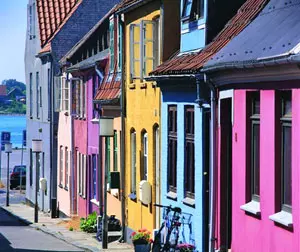 Nykøbing auf der Insel Falster
Photo: © Ted Fahn/VisitDenmark
Nykøbing Falster at a glance
- Location: The town is on Falster, beside the Guldborgsund, and is the island’s largest settlement.
- History: The town’s royal past is closely associated with Queen Sophie; a self-guided walk takes you to places connected with the city’s history.
- Middelaldercentret: The open-air museum features Sundkøbing, a reconstructed Danish town from the 15th century.
- Town life: The pedestrian zone, cafés and restaurants complement the museum visits.
By the Guldborgsund: town centre and waterfront
Its location on the Guldborgsund gives Nykøbing Falster a maritime backdrop, while the town centre—with its shops, cafés and restaurants—has a character all its own. You can start your walk by the water and continue through the pedestrian zone. The paths along the sound are close to the busier streets, and the cafés and restaurants in the centre are ideal for a break.
The town’s history is especially associated with Queen Sophie, who lived in Nykøbing Castle and was known as one of the wealthiest women of her time. The self-guided walk “In the Footsteps of Queen Sophie” links several places around town to this period. It is ideal for visitors who want to explore history outdoors and at their own pace. To bring the past to life, you can add a visit to Middelaldercentret to your walk around town.
Sundkøbing: a medieval day out
Middelaldercentret is located in Nykøbing Falster at Ved Hamborgskoven 2. At its heart is Sundkøbing, a reconstructed Danish town from the 15th century. Craftspeople work in their workshops, merchants and residents bring the streets to life, and demonstrations explain medieval technology and crafts. Highlights include jousting tournaments and demonstrations of medieval weapons and the large trebuchet.
A visit is a good choice if you want to set aside several hours for an immersive historical experience. Children and adults alike can get a close-up look at everyday life in a late medieval town; between demonstrations, there is time to explore the workshops and harbour area. Since the programme brings together specific demonstrations and activities, the centre makes a good main focus for the day. The operator publishes current opening days and the daily programme; these details vary by season.
Museum Obscurum and local history
Museum Obscurum, at Færgestræde 1A, offers a different perspective. The museum invites visitors to consider how to distinguish real objects and stories from fictional creatures. It adds a curious, storytelling perspective to a historical walk around town.
For a shorter visit, you can combine the museum with the pedestrian zone; add Middelaldercentret for a longer outing. If royal history is your main interest, start with the walk devoted to Queen Sophie and then choose one of the museums. This lets you tailor your visit to your interests and explore the town’s history in the way that suits you best.
Nykøbing Falster as a base for exploring Falster
As the island’s largest town, Nykøbing Falster makes a good base for exploring further afield. To the south lies Gedser, with its ferry port for services to Rostock; from there, the route runs north across Falster.
You can reach Nykøbing Falster station by train; from there, bus 702 goes to Middelaldercentret. The bus ride makes the journey from the station to the open-air museum a separate leg of the trip, alongside a walk through the town centre. Departure times depend on the day of travel and can be checked for your visit date using Rejseplanen.
For a comparison between a town visit and a harbour town, the article about Gedser offers more guidance. On the neighbouring island, Nakskov combines a harbour town with a fjord landscape. The broader overview of Lolland, Falster and Møn puts the islands into a shared travel itinerary.
If you are looking for somewhere to stay locally, see the dedicated overview of accommodation in Nykøbing Falster. This makes it easy to combine a day in town with a stay on Falster and add excursions focused on history, town life or coastal scenery. If you are staying for several days, you can set aside a day for Middelaldercentret and explore the town centre and the sound separately. This leaves time to experience both sides of the destination: its historic town and the waterside landscape.
Frequently asked questions about Nykøbing Falster
What can I do in Nykøbing Falster in one day?
A day in town can include a walk along the Guldborgsund, time in the pedestrian zone and a museum visit. Allow several hours for Middelaldercentret; Museum Obscurum works well as an addition to a stroll around the centre.
What can I see at Middelaldercentret?
Middelaldercentret recreates a 15th-century Danish town called Sundkøbing. Workshops, depictions of medieval daily life, jousting tournaments and demonstrations of historical weapons are among the main highlights.
What is Queen Sophie’s connection to Nykøbing Falster?
Queen Sophie lived in Nykøbing Castle and helped shape the town’s royal history. A self-guided walk links places around town to her lifetime and complements the museums with historical stops outdoors.
