
Piteå: Town, Coast and Archipelago
Piteå combines Swedish urban history with an extensive coastal landscape along the Gulf of Bothnia. By combining the town center, offshore islands and the beach at Pite Havsbad, visitors can experience three distinct sides of northern Sweden.
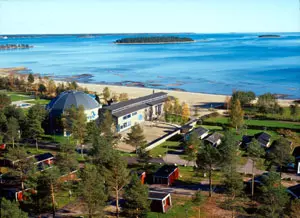 Piteå, Blick auf die Küste
Photo: © Wikipedia / Ricborge
Piteå at a glance
- Piteå lies at the mouth of the Piteälv River, where it flows into the Gulf of Bothnia.
- King Gustav II Adolf founded the town in 1621 at what is now Öjebyn.
- After a fire in 1666, Piteå was relocated to its present site.
- The municipality describes an archipelago with around 550 islands.
- Stenskär combines a long sandy beach with birdlife, historic stone labyrinths and red-painted fishing huts.
- Pite Havsbad brings together a beach, leisure activities and year-round facilities south of the town center.
Öjebyn tells the story of the town’s early history
The present-day town is not where it was originally founded. Piteå was established in Öjebyn in 1621, a settlement that had already become the area’s religious center in the 15th century. A major fire destroyed parts of the settlement around the church in 1666. Following disputes over rebuilding, the town moved to its current coastal location. A trip to Öjebyn therefore adds the older settlement to a visit to the town center.
The wider history is also closely connected to the river and the Baltic Sea. The Piteälv flows into the gulf by the town; trade, shipping and, later, timber processing shaped the region’s economic development. The naturalist Daniel Solander was born in Öjebyn in 1733. He studied under Carl Linnaeus and joined James Cook’s voyage aboard the Endeavour in 1768. His birthplace connects Piteå’s local history with 18th-century European natural science.
The town center and archipelago as two parts of a trip
The town center is well suited to a relaxed walk, with cafés, restaurants and cultural events. The municipal tourism information also highlights the long summer days and winter activities on the frozen sea. The season therefore changes the character of a stay: in summer, the waterfront, islands and long evenings outdoors take center stage, while snow and ice shape the landscape experience in winter.
Off the coast lies an archipelago of numerous islands and sheltered coves. The local tourism information describes opportunities for boating and kayaking, as well as former fishing settlements. Stenskär is a striking destination for both nature and coastal history: its island landscape includes a long sandy beach, birdlife, old stone labyrinths and red-painted fishing huts. A seasonal excursion cruise runs from Piteå to the island and back to the town’s southern harbor; crossings are offered on selected dates in summer, and visitors spend about two hours ashore. Stenskär is part of the Bondöfjärden Nature Reserve, so the area combines swimming and nature experiences with a glimpse into the islands’ former uses.
If you are planning a day on the water, you can make the archipelago a separate part of your itinerary, apart from your visit to town. This leaves time to enjoy an island and its coastal landscape, rather than trying to fit several far-flung destinations into a short stay. Piteå lies south of Luleå; comparing the two towns can help when planning a longer route along the northern Swedish coast. The overview of Norrland and its Baltic Sea towns places Piteå in the region around the Gulf of Bothnia.
Pite Havsbad and a beach getaway
South of town, Pite Havsbad has a long sandy beach and a large leisure and conference complex. The municipal tourism information lists a water park, amusement attractions, golf and beach activities, among other offerings. The water park has pools, slides, whirlpools and a sauna; children under 12 must be accompanied by an adult. This makes the area particularly suitable for a stay that combines swimming with other leisure activities in one place.
The choice between the town center and the beach area depends on your plans for the day. The center makes a good base for exploring local history, dining and events, while Pite Havsbad is the place to focus on the beach and leisure activities. For help planning your stay, see the Piteå accommodation guide for places in town and the surrounding area.
Getting there and getting around
Länstrafiken regional buses run from Piteå bus station to the town center, nearby communities and other municipalities. Local buses in Piteå connect Öjebyn with other parts of town. Pite Havsbad is around ten kilometers south of the center; taxis and rental cars offer flexible options for getting there directly. This makes it possible to plan Öjebyn, the town center and the beach area as separate destinations, rather than trying to link them in a short walk.
Choose the right season and excursions
In summer, island visits and the coastline are among the defining experiences. In Piteå, the bright nights last from late May to early August, allowing you to extend your time by the sea well into the evening. In winter, the focus shifts to the snow-covered coast. The town describes a seasonal ice track on Nördfjärden, with maintained routes for skating, skiing and walking. These ice activities depend on local conditions.
Piteå can also be combined with other stops in Norrbotten. To the north is Luleå, with its own archipelago; farther along the Swedish-Finnish border, Haparanda and Tornio form a cross-border twin town. These destinations differ considerably from Piteå in both history and location, and work well as separate stops on a longer drive along the Gulf of Bothnia.
Frequently asked questions about Piteå
Where was Piteå originally founded?
The town was founded in 1621 in what is now Öjebyn. After a devastating fire in 1666, Piteå moved to its current coastal location.
What makes Piteå’s archipelago special?
According to the municipal tourism information, the archipelago has around 550 islands. Stenskär offers a particularly vivid example of the mix of sandy beaches, birdlife, labyrinths and historic fishing huts.
Which season is best for a beach and island visit?
Summer is ideal for beach days and trips around the archipelago. In winter, snow and ice take center stage; seasonal activities on the sea depend on local ice conditions.
What is the difference between Piteå town center and Pite Havsbad?
The town center brings together local history, dining and culture. Pite Havsbad combines a beach with leisure activities such as a water park and golf, and lies south of the town center.
