
Horsens
Halfway between the cities of Vejle and Aarhus on the Baltic coast of Denmark’s Jutland peninsula lies the town of Horsens. It is situated at the end of the fjord of the same name, which gives the town’s harbour a sheltered position. Denmark’s fastest-growing municipality is increasingly becoming the centre of a varied holiday region around Horsens Fjord, which opens onto the network of islands and bays along Denmark’s Baltic coast.
Around the town are traces of the settlement’s ancient history. These include the passage grave known as “Giant’s Chamber,” believed to be 5,000 years old, and the remains of a castle belonging to Erik Menved, an early Danish king.
The church of the former Franciscan monastery in Horsens, dating from the 13th century, is an interesting destination for a day trip, as are several museums: the Motorcycle Museum, the Industrial Museum and the Horsens Museum, which documents the life of the explorer Vitus Bering, regarded as the town’s most illustrious son.
The annual European Medieval Festival and the children’s theatre festival attract thousands of visitors to this Baltic coastal town.
The countryside around Horsens is highly varied. From Denmark’s highest elevations, at around 170 metres, in the north to the peaceful island of Endelave in the east, the area offers a wealth of natural landscapes to suit holidaymakers’ different interests. Endelave’s beaches are particularly well known for their clean water and family-friendly atmosphere.
In and around Horsens, numerous holiday apartments, hotels, campsites and youth hostels invite visitors to enjoy an active yet relaxing holiday on Denmark’s Baltic coast.
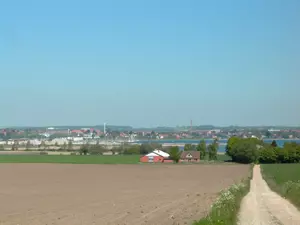 Blick auf Horsens
Photo: nordlicht verlag
Blick auf Horsens
Photo: nordlicht verlag
