
Hanseatic City of Greifswald
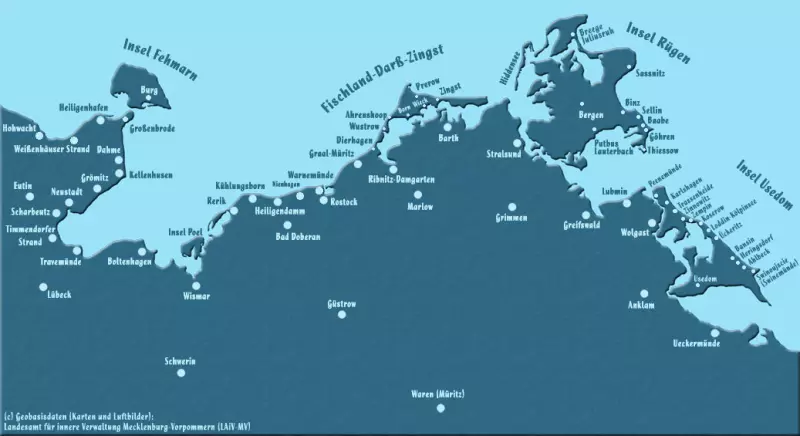
Greifswald lies on the River Ryck, which flows through the city to the Danish Wiek and into the Greifswald Bodden. A worthwhile visit combines the market square and brick churches with the Museum Harbour; Wieck and the Eldena Abbey ruins lie farther downstream and make up a separate part of the outing.
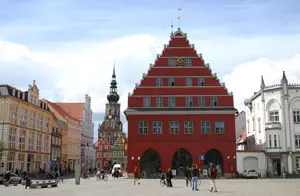 Marktplatz in Greifswald
Photo: © Fremdenverkehrsverein Greifswald
Greifswald at a glance
- Old Town: The market square, university and three large brick churches define the historic center.
- Caspar David Friedrich: The center named after the painter and the art trail lead to places associated with the artist, who was born in Greifswald.
- Ryck: The Museum Harbour is close to the city center; farther downstream are the fishing village of Wieck and the Eldena Abbey ruins.
- Planning: The market square and Museum Harbour can be combined in a city walk; Wieck and Eldena require extra time.
Market square, university and brick churches
Start at the market square. It is the heart of the Old Town and can be combined with a look at the surrounding lanes, the university and the three large churches: St. Nikolai, St. Marien and St. Jacobi. Their brick architecture gives the walk a clear theme, without requiring you to travel far across the city. Founded in 1456, the university continues to shape Greifswald as a university town.
A walk toward the Ryck takes you from the compact city center down to the water. Historic ships are moored along the quays at the Museum Harbour; it should not be confused with the seaward harbor at Wieck. This lets you experience the city’s maritime character on two scales: in the center, you see the river as part of the urban landscape; farther out, you reach its mouth at the Danish Wiek. If you have only half a day, stick to the market square, churches and Museum Harbour.
Greifswald is the birthplace of Caspar David Friedrich. The Caspar David Friedrich Center commemorates the painter and his circle, while a city art trail links 15 stops to motifs and places from his life. This offers a different way to structure your visit from a straightforward Old Town walk. You can incorporate individual stops into your city walk rather than treating the entire trail as a must-do route. To compare other Hanseatic cities on the coast, consider Stralsund, with its harbor island and maritime museums; to the south, Anklam lies on the River Peene.
The Ryck, Museum Harbour and the route to Wieck
The Ryck connects the city center with the Bodden. Follow the river downstream and the route to Wieck takes you from the city quays to a fishing village. Wieck lies where the Ryck flows into the Danish Wiek. Thatched fishermen’s houses and boats define the village, whose landmark is its historic wooden drawbridge. Its sections are still raised by hand when ships pass. The bridge is therefore not just a photo opportunity, but also part of the harbor’s day-to-day operation.
The Greifswald flood barrier is nearby. It protects the coast and marks another transition between river and Bodden. Wieck is ideal for a separate walk with views of fishing, boats and water; the Old Town is several kilometers away. Treat the journey between the city center and this district as extra distance rather than assuming both areas fit into a short walk.
Eldena Abbey ruins and Caspar David Friedrich
The ruins of the former Cistercian abbey of Eldena lie near Wieck harbor. The site is part of Greifswald’s early settlement history and became widely known through Friedrich’s paintings. You can explore the brick remains on a walk around the abbey grounds; the ruins are not in the city center, but on the eastern edge of the city near Wieck. It is best to combine them with the fishing village, rather than with a short stroll around the market square.
The Pomeranian State Museum, the CDF Center and the churches are other cultural attractions that may merit a visit indoors, depending on your interests. For a relaxed day, choose one museum and add an outdoor walk. If you would like to stay overnight in the city, the Greifswald accommodation selection offers a suitable base; for another excursion east of Greifswald, the ducal town of Wolgast on the Peenestrom offers its own city and harbor attractions.
Frequently asked questions about Greifswald
What can I see on a short walk around Greifswald?
Start at the market square and combine a visit to the university, the three brick churches and the Museum Harbour. Sites associated with Caspar David Friedrich add a cultural focus to the city center.
How do I get from the city center to Wieck?
Wieck is a separate district downstream, at the mouth of the Ryck where it flows into the Danish Wiek. Allow extra time for the journey between the city center and the fishing village.
What is there to see in Wieck?
The fishing village is known for its thatched fishermen’s houses, harbor and historic wooden drawbridge. The flood barrier and Eldena Abbey ruins are nearby.
What is Caspar David Friedrich’s connection to Greifswald?
Friedrich was born in Greifswald. The center named after him commemorates his life, and an art trail links 15 stops to Greifswald motifs and locations.
