
Vorpommern and the Szczecin Lagoon
Vorpommern’s mainland stretches from the Bodden landscape near Stralsund to the Szczecin Lagoon. Hanseatic towns, the Peene River and the lagoon coast bring together brick-built history, river landscapes, heathland and smaller seaside resorts; the best base depends on your planned day trips and how you get there.
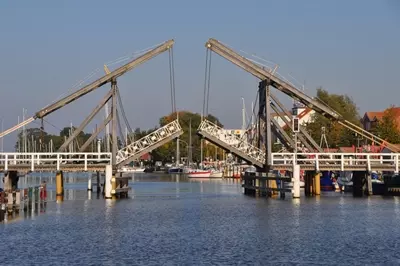 Holländer-Klappbrücke in Greifswald-Wieck
Vorpommern and the Szczecin Lagoon at a glance
- Stralsund lies on the Strelasund opposite Rügen; Greifswald is on the Greifswald Bodden.
- Anklam is a stop on the Peene and a gateway to the southern mainland.
- Ueckermünde combines an old town with a lagoon beach; Eggesin is home to the nature park visitor centre.
- Lubmin is on the Greifswald Bodden, while Wolgast lies on the Peenestrom.
- Rügen and Usedom, as well as Fischland-Darß-Zingst, have their own regional guides.
Mainland, islands and the historic region
The historic region of Pomerania extends across today’s German-Polish border. Today’s Vorpommern refers to the western part of the region in the German state of Mecklenburg-Western Pomerania; it did not emerge as a landscape only in 1945. The offshore islands and peninsulas of Fischland-Darß-Zingst, Rügen and Usedom have their own travel profiles and are therefore covered separately.
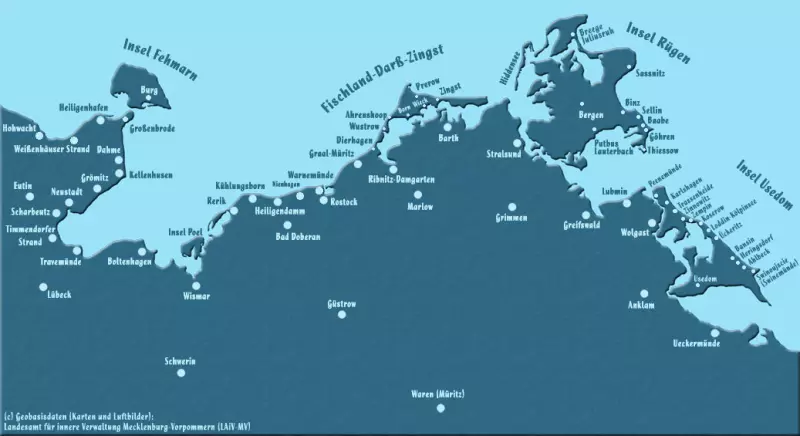
The mainland can be divided by landscape and type of city visit. In the northwest, Stralsund and Greifswald represent two distinct maritime settings: Stralsund lies on the Strelasund and combines an old town with views of Rügen; Greifswald is on the Bodden and has its own harbour village in Wieck. Bodden and coastal landscapes stretch between the towns, while farther southeast the Peene and lagoon shape the character of the region. The map shows where the main landscapes are located.
Stralsund and Greifswald: towns and the Bodden
Stralsund is a good choice for a visit combining the old town, harbour and a crossing to the island of Rügen. Its location on the Strelasund explains why the town is both a Hanseatic city and a starting point for trips to Rügen. Greifswald lies farther southeast, on the Greifswald Bodden. Here, the university, old town and Wieck district—with its distinctive maritime harbour setting—come together. The two destinations offer different city breaks: Stralsund provides a direct connection to the island, while Greifswald is close to the Bodden and Wieck harbour.
The town guides to Stralsund and Greifswald provide more detail on visiting each city. An overnight stay in a Hanseatic city is a good option if churches, museums and the harbour matter more than having a beach right outside your accommodation.
The Peene and Anklam
Anklam lies on the Peene and brings together local history and the river landscape. The harbour promenade, Peene Bridge and Stone Gate make for a compact town walk; the Otto Lilienthal Museum adds a focus on technology and regional history. If you are travelling by bike or boat, Anklam can serve as a stop between Greifswald and the lagoon. The Hanseatic town of Anklam is therefore a useful stopover rather than a classic beach base.
The Peene is also a landscape in its own right, quite different from the open shores of the Bodden and lagoon. Here, the focus is on exploring the river by water and enjoying views of its banks; Anklam is well suited to a short town visit before continuing south or on to the lagoon coast.
Ueckermünde and the nature park on the Szczecin Lagoon
The Szczecin Lagoon is a shallow coastal lagoon at the mouth of the Oder. On the German side, the scenery is shaped by shoreline meadows, small harbours and broad stretches of open water. Ueckermünde combines an old town, lagoon beach and harbour, making it a good base for a stay with beach outings and nature trips that do not require changing accommodation every day. The regional guide to Ueckermünde describes the town; accommodation in Ueckermünde offers a practical base for exploring the lagoon.
The nature park on the Szczecin Lagoon encompasses the shore, lagoon meadows, Ueckermünde Heath, the lowlands of the Uecker and Randow rivers, and the Brohmer Mountains inland. The nature park visitor centre at Eggesin station is a useful starting point before exploring these varied landscapes. A day on the open lagoon shore is quite different from a hike through heathland or wet meadows; choose your route and footwear to suit your destination.
Cycling routes, trains and stages
The Szczecin Lagoon Cycle Route links Ueckermünde, the lagoon meadows and Anklam and can be continued across the border. Stations in Ueckermünde and Anklam make it possible to combine sections of the route with train travel; connections and bike carriage depend on the travel date. If you are planning a longer cycling trip, you can link several stages with overnight stops in towns served by rail, rather than making a long return journey on the same day.
In the lagoon area, the Berlin–Usedom long-distance cycle route follows the Uecker through woodland and wetlands to Ueckermünde and onward towards the island. For a short ride, choose a single section along the shore; for a multi-day trip, Ueckermünde and Anklam make practical stops along the way. Trains can help make the itinerary manageable, but you should still check departure times and bike carriage.
Lubmin and Wolgast: the Bodden and Peenestrom
Lubmin lies on the Greifswald Bodden and offers a quieter coastal base than the larger island resorts. It is well suited to beach days and walks along the Bodden. The Lubmin town guide helps place this seaside resort within the coastal region.
Wolgast lies on the Peenestrom and marks a crossing to the island of Usedom. Its historic centre and harbour area give the town its own appeal, while its riverside location connects mainland and island excursions. The guide to the ducal town of Wolgast explores this connection to the town and river in more detail.
Group day trips by landscape and mode of transport
For a road trip, it makes sense to plan three separate day trips. One northern city day can combine Stralsund’s harbour and old town; another can be devoted to Greifswald and Wieck. Anklam works well as a stop on the Peene before continuing to the lagoon. Trying to fit every place into a single day means spending much of the trip on the road and having little time to experience the landscape.
If you are travelling without a car, use the stations along the route as fixed points: Stralsund and Greifswald are good starting points for city visits, while Anklam and Ueckermünde lie on the southern cycle route. From there, plan a walking or cycling itinerary in one part of the region. Eggesin is a good starting point for the nature park visitor centre; Ueckermünde is closer to the water for a day at the lagoon beach. Returning to the same place is convenient if you do not want to move your accommodation and gear every day.
Lagoon coast, heathland and riverbanks
The lagoon landscape is not one long stretch of sandy beach. Open water alternates with meadows, harbours and sections of coastline that can be explored on foot or by bike. By contrast, Ueckermünde Heath offers woodland paths inland, while the lowlands of the Uecker and Randow are characterised by wetlands. For a nature-focused day, it makes sense to choose one area and combine it with a visit to the visitor centre or a suitable route, rather than trying to fit several habitats into a brief detour.
Lubmin offers a different kind of coast on the Greifswald Bodden; the lagoon region lies farther southeast. Wolgast, meanwhile, is oriented towards the Peenestrom and the crossing to Usedom. These three waterfront settings are not interchangeable beach resorts: the Bodden, lagoon and river channel differ in both scenery and the kind of trip they offer. Choosing your base by the type of waterfront lets you weigh up a beach day, a harbour visit or a nature walk.
Choosing the right base for your stay
Stralsund is a good choice for its old town, harbour and crossing to Rügen; Greifswald combines city culture with the Bodden. Anklam offers a compact stop on the Peene. Ueckermünde is a practical choice if the lagoon, heathland and cycle routes are your main focus. Lubmin adds a beach stay on the Bodden to the options, while Wolgast is a mainland base close to Usedom.
For a short trip, it is practical to focus on one thing: a city break, a base by the lagoon or a seaside resort. A longer tour can combine two bases, such as Stralsund for the northwest and Ueckermünde for the southern lagoon area. This keeps travel between the subregions manageable and leaves time in each day for the visits themselves.
Frequently asked questions about Vorpommern and the Szczecin Lagoon
Which base is best for the lagoon and nature park?
Ueckermünde is close to the lagoon beach and the nature park’s excursion areas. Eggesin, with its visitor centre at the station, is a good starting point for exploring the landscape.
Where can I combine cycling and train travel?
Ueckermünde and Anklam are on the Szczecin Lagoon Cycle Route and have rail connections. The section you choose and your return journey depend on the timetable and bike carriage on your travel date.
Which towns are best for a cultural stay?
Stralsund and Greifswald offer more extensive old-town and harbour attractions. Anklam is more compact and works well as a stop on the Peene.
How does the lagoon differ from the outer coast?
The lagoon is a shallow coastal lagoon with broad stretches of open water, meadows and smaller harbours. The outer coast and islands are more strongly shaped by the open Baltic Sea and bathing beaches.
© nordlicht verlag
