
Doberan Minster
Doberan Minster is the well-preserved part of a former Cistercian monastery founded as early as around 1171. After it was destroyed, it was rebuilt a few years later nearby. Construction of the present complex began around 1280, and the minster was consecrated in 1368. In the Middle Ages, Doberan Cistercian Monastery became the largest monastery in Mecklenburg and the principal burial place of Mecklenburg's rulers. After suffering damage during the Thirty Years' War, it underwent extensive restoration at the end of the 19th century. It remained undamaged during the Second World War and was comprehensively renovated in the 1970s and 1980s. Further restoration work took place between 2002 and 2009, including the renovation of the Schuke organ.
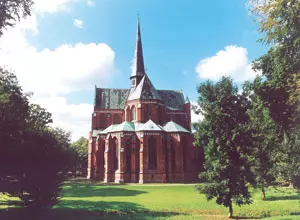 Doberaner Münster
Photo: © Münsterverwaltung
Doberaner Münster
Photo: © Münsterverwaltung
Doberan Minster as a tourist attraction
The monastery church, the minster, is now one of northern Germany's most significant sacred buildings. Its design was inspired by St Mary's churches in Lübeck and Rostock, as well as St Nicholas' Church in Stralsund. Doberan Minster is particularly appealing for its valuable furnishings and the tombs of well-known historical figures. The winged altar dating from 1300 is a notable early example of its kind.
Numerous well-known rulers found their final resting place in Doberan Minster. They include Margaret Sambiria, Queen of Denmark († 1282); Duke Albert II of Mecklenburg; Albert of Sweden; and Adolf Frederick I and Frederick Francis I of Mecklenburg.
The minster is open to visitors every day and also offers an extensive programme of events and information. Guided tours take place daily, explaining the most important and valuable furnishings and their historical context. Numerous special events make the most of the unique historic atmosphere of Doberan Minster, which is also part of the European Route of Brick Gothic. Doberan Minster welcomes up to 200,000 visitors a year.
