
Rügen Healing Chalk
Rügen chalk from the Rügen coast was initially used as a building material. It was only later used for body care, after its health-promoting effects had been demonstrated. The healing chalk mined on the Baltic Sea is a high-quality therapeutic remedy. It consists of 97 percent calcium carbonate (lime). Like the chalk on the Danish island of Møn, Rügen chalk dates from the Late Cretaceous period.
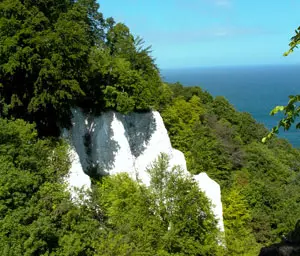 Der Königsstuhl auf Rügen, ein Kreidefelsen
Photo: © nordlicht verlag
Der Königsstuhl auf Rügen, ein Kreidefelsen
Photo: © nordlicht verlag
As early as 1910, various doctors recognized and used the healing properties of Rügen chalk, which were later confirmed scientifically. Alongside the general progress of medicine, the 1960s marked the temporary end of Rügen healing chalk. Its second “life” began only in the mid-1990s. Rügen healing chalk is now also recognized by health insurance funds as a location-specific therapeutic remedy. Its most important effects are initially based on its material properties. Its texture is very fine-grained and binds water exceptionally well. This gives it a high capacity for retaining heat, even surpassing that of fango packs. The healing chalk is white and odorless, further contributing to its reputation as clean and pure.
It is used primarily for full-body baths. Back packs and foot baths are also used. Its effects are also based on its ability to draw waste products from the body. Chalk treatments relieve pain associated with rheumatic diseases, osteoarthritis and sciatica. They also have a beneficial effect on a range of skin conditions. The health-promoting effects of Rügen healing chalk are recognized by health insurance funds, which cover part of the cost of treatment with Rügen healing chalk.
