Island of Rügen
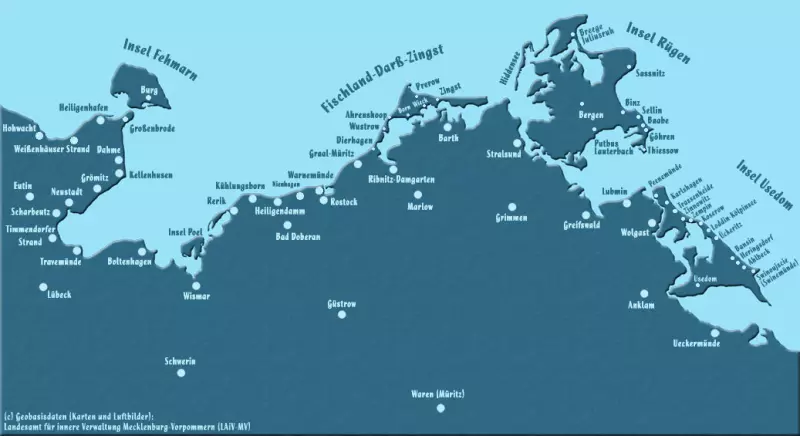
Located off Germany’s northeastern Baltic coast, the island of Rügen is the country’s largest island. The coastline of Rügen, which covers more than 900 square kilometers, is exceptionally varied, with numerous bays, peninsulas and spits, and stretches for a total of 574 kilometers.
The eastern half of the island is the most interesting in terms of scenery and tourism. Its hilly terrain is home to most of the island’s sights and seaside resorts. Binz has now regained its former status as one of the most fashionable seaside resorts on Germany’s Baltic coast and beyond. Visitors will also find long stretches of beach, especially in northern Rügen along the Schaabe, a narrow spit, and almost continuously between Prora and Thiessow in the southeast of the island of Rügen.
Rügen has a number of natural wonders and attractions known throughout Germany and internationally. Chief among them is Jasmund National Park, with its miles-long chalk coastline in the east between Lohme and Sassnitz . Rügen’s landmark is the 116-meter-high Königsstuhl , part of the chalk cliffs. At northern Cape Arkona are the remains of the old Slavic temple fortress of Arkona, most of which has already been lost to coastal erosion.
The smaller islands of Hiddensee and Ummanz lie off Rügen’s western coast; the latter can be reached by bridge.
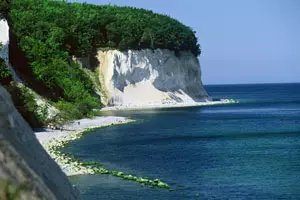 Rügens Wahrzeichen: die Kreidefelsen
Photo: © Nationalpark-Zentrum Königsstuhl
Rügens Wahrzeichen: die Kreidefelsen
Photo: © Nationalpark-Zentrum Königsstuhl