
Baltic Sea Water
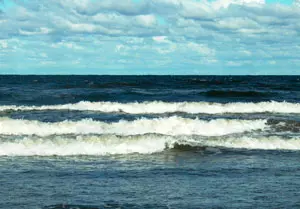 Meerwasser
Photo: © nordlicht verlag
Baltic Sea water: key facts
- HELCOM reports around 15 to 18 PSU in the Sound, 7 to 8 in the central basin, and 0 to 2 in northern and eastern areas.
- In oceanography, salinity is expressed as practical salinity, usually in PSU.
- Dissolved oxygen is a concentration in water and is measured, for example, in milligrams per litre.
- Thalasso offerings can combine seawater, sea air, exercise and other maritime elements.
A brackish sea with regional variation
The Baltic Sea receives freshwater from rivers and precipitation. At the same time, saltier water flows into the Baltic basin from the North Sea and Kattegat through the Danish straits. This mixture creates a spatial transition described by HELCOM in its overview of the state of the Baltic Sea. Typical surface salinity values are around 15 to 18 PSU in the Sound, 7 to 8 PSU in the central Baltic Sea, and 0 to 2 PSU in northern and eastern areas. Higher salinity makes water denser; in some sub-basins, this means that conditions at the surface and at depth also differ.
These values describe conditions across broad areas and cannot be expressed as a single figure for every beach. HELCOM places them in the context of the formation and ecology of the Baltic Sea region. For beachgoers, the salinity gradient is part of the character of this inland sea and helps distinguish its different sub-regions. The varied coastline of Rügen shows how bays, peninsulas and the open Baltic Sea meet on one island.
Salinity and dissolved oxygen: different measurements
Seawater contains dissolved salts, mainly sodium and chloride ions, as well as other minerals and trace elements. Their proportion is described as salinity. Gases such as oxygen dissolve in water; their concentration is expressed, for example, in milligrams per litre. Different measurements are therefore used when comparing water with air. Water temperature, salinity, air pressure, exchange with the atmosphere and biological processes all affect oxygen concentration.
HELCOM identifies oxygen and salinity as important measures of the Baltic Sea’s condition. In stratified waters, deeper layers may have different oxygen conditions from the surface. These measurements help us understand the marine ecosystem. On holiday, Baltic Sea water is primarily for swimming: its quality, temperature and local conditions shape the experience of bathing. Seawater is not suitable for drinking because of its salt content.
What thalassotherapy involves
Thalasso brings together different elements of the marine environment in a structured coastal offering. The quality criteria of the German Spa Association specify locally sourced, suitable seawater, sea air, maritime products such as mud or algae, exposure to the climate and exercise. A provider combines these into a specific programme, for example including a seawater bath, treatments and guided exercise on the coast. The individual elements and schedule may therefore vary between facilities.
The broader overview of natural treatments on the Baltic coast presents seawater, Rügen chalk, peat and brine side by side. They differ both in material and in how they are used: a seawater bath uses coastal water, chalk is processed, peat is used as a heat medium, and brine comes from a mineral-rich spring. For a medically prescribed treatment, the specific indication and applicable regulations are also relevant.
Making seawater part of a Baltic Sea trip
Choosing a stretch of coast brings together the experience of the water, the landscape and the accommodation. On Rügen, the open Baltic coast, bays and Bodden lagoons are close together. The Baltic resort of Göhren combines a fine sandy beach, the wooded Nordperd headland and a circular trail along the high cliffs. The town therefore makes a good base for beach days and walks through the coastal landscape. A stay by the sea can be combined with excursions to other places and natural attractions on Rügen.
A longer stay by the water can also be planned around changing weather and seasons. Water temperatures follow a slower annual cycle than air temperatures because seawater stores heat. In the cooler months, walks and visits to harbours and towns take centre stage; in summer, swimming can be added to the itinerary. A local weather forecast and official water information provide useful guidance for each day.
The page Baltic Sea climate and health describes climate factors such as wind, humidity and sunshine. Those interested in salinity, substances and maritime offerings can then explore the relevant topics. This makes it possible to discover the Baltic Sea from different perspectives—as a habitat, a place to swim and the setting for a coastal holiday.
Frequently asked questions about Baltic Sea water
How salty is the Baltic Sea?
Salinity varies by region. HELCOM gives surface values of around 15 to 18 PSU in the Sound, 7 to 8 in the central Baltic Sea, and 0 to 2 in northern and eastern areas.
How is oxygen measured in seawater?
The amount of dissolved oxygen is expressed as a concentration, for example in milligrams per litre. Temperature, salinity, water exchange and biological processes affect the measurement.
What elements are included in thalasso offerings?
Quality criteria include seawater, sea air, maritime products, exposure to the climate and exercise. Providers combine selected elements in their specific programmes.
