
Cycling on the Baltic Sea
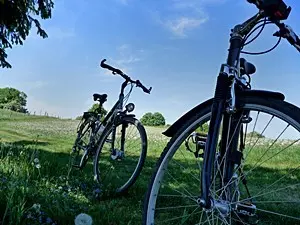
Cycling holidays on the Baltic Sea are among the most popular leisure activities for visitors enjoying an active vacation in the region. All the Baltic Sea countries offer ideal conditions for a cycling holiday, whether right along the coast or in the inland areas close to it. Many kilometers of cycle routes run directly along the Baltic Sea, often with uninterrupted views of the water—an especially powerful motivation for cyclists. When riders can look out across the Baltic Sea’s blue waters, perhaps seeing the ships’ white sails or white clouds against the blue, and islands, opposite cliffs or even the chalk cliffs of Rügen or Møn stretching out in the distance, physical exercise is joined by mental relaxation. That is what makes a cycling holiday on the Baltic Sea such a special experience, one that holidaymakers can treasure for a long time.
.webp "Cycling is an essential part of an active holiday on the Baltic Sea") Family holidays by bike
Family holidays by bike
Families vary greatly in how intensively they want to use their bikes on a Baltic Sea holiday. Depending on the children’s ages, families may prefer rides lasting a few hours or half a day, with plenty of breaks. They can, for example, find out about attractions near their Baltic resort and then choose an easy to moderately challenging cycling route to visit them. Depending on the distance, young children can ride in a bike trailer, where they may even be able to take an afternoon nap. Families with older children and teenagers can also consider full-day rides. It may be possible to take public transport back to their holiday accommodation; many buses and trains in the vacation regions allow bikes on board. A particularly memorable experience for families is to make the journey itself the destination and take a week-long holiday entirely by bike. However, the teenagers should be old enough and, above all, enjoy cycling—otherwise, a romantic bike tour can quickly turn into an annoying obligation.
Explore the Baltic Sea holiday region by bike
Many singles and couples, whatever their age, choose to explore their Baltic Sea vacation region by bike during the day and return to their booked accommodation in the evening. The Baltic resort can serve as a base for exploring the surrounding area, both nearby and farther afield. It is a good idea to find out in advance about the region’s sights and attractions. This makes it possible to plan a route suited to the cyclists’ fitness levels. Breaks can also be used to enjoy cultural attractions. Depending on the vacation destination, rides to neighboring Baltic resorts or Hanseatic cities may also be planned; these offer a wealth of cultural attractions. Alternatively, the return trip can be made by bus, train, boat or ferry, or cyclists can choose a rental service with several locations, allowing them to return their rented bikes somewhere else. Usedom is a pioneer in this field with UsedomRad. The island and the nearby mainland in Western Pomerania have more than 40 rental stations that can serve as convenient pick-up and drop-off points for rental bikes.
 Long-distance cycling routes on the Baltic Sea
Long-distance cycling routes are a great option for serious cyclists and active vacationers looking for a challenge. In the Baltic Sea region, these routes stretch for many hundreds of kilometers. Cyclists can choose sections—or even take on an entire long-distance route—according to their fitness levels. The varied landscapes, flora and fauna, and the Baltic resorts and Hanseatic cities along the way offer new discoveries and provide a lasting source of recreation, fitness and relaxation. The best-known long-distance cycling routes that run entirely or partly along the Baltic Sea include the routes from Berlin to Usedom (approx. 340 km) and, alternatively, from Berlin to Copenhagen (approx. 630 km); the Elbe–Baltic Sea Cycle Route (134 km); the Eider-Treene-Sorge Route (approx. 250 km); the Border Route along the German-Danish border (approx. 130 km); the Hamburg–Rügen Island long-distance cycle route (520 km); routes from the Mecklenburg Lake District to the Hanseatic city of Rostock (160 km) or to Rügen Island (approx. 130 km); the Oder Lagoon Circular Route (110 km); and, as the ultimate challenge, the Baltic Sea Coast Cycle Route through Schleswig-Holstein and Mecklenburg-Western Pomerania (1,082 km).
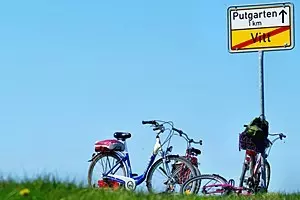 The condition of cycle paths and cycling routes varies considerably across the Baltic Sea vacation regions and depends in part on the natural features of each destination. In recent years, particularly in the vacation states of Schleswig-Holstein and Mecklenburg-Western Pomerania, many cycling routes have been developed to a high standard and clearly signposted. Denmark and Sweden also have well-developed cycle networks. Anyone planning a cycling holiday in Poland should first obtain detailed information from the local tourist offices. For a Baltic Sea holiday that includes occasional bike rides in the surrounding area, travelers do not need to make any special preparations. They can bring their own bike or rent one instead. Avid cyclists, and those whose holiday centers on cycling a long-distance route, should plan their equipment carefully in advance. After all, bikes and gear are put under considerable strain. What’s more, bike bags offer limited space for clothes, tools and equipment. Along with many wonderful experiences, there is one thing we wish everyone on a cycling holiday by the Baltic Sea: sunshine!
