
Baltic Sea Cycling Tours: Routes and Planning
Which Baltic Sea cycling tour is right for your fitness level, available time and preferred scenery? Comparing specific routes is a good way to decide: long coastal cycle paths, regional day rides and tours through islands, lagoons, towns and inland areas differ in surface, elevation profile and return options.
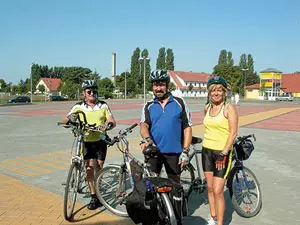 Eine gute Ausrüstung sorgt für Sicherheit und Fahrvergnügen
Photo: nordlicht verlag
Baltic Sea cycling tours at a glance
- The Baltic Sea Cycle Route is a long-distance route with varying surfaces; the overview gives its length as around 1,100 kilometres, including Rügen.
- Usedom has more than 200 kilometres of cycle paths and over 100 rental stations in its regional cycling network.
- For shorter outings, choose individual coastal towns, canals or inland routes as a day trip.
- For longer stages, the surface, elevation profile, return journey and bicycle transport matter just as much as the distance.
Choosing the right route length
A multi-day tour along the coast is ideal for travellers who want to change location each day and structure their holiday around several stages. The overviews of the Baltic Sea Cycle Route in Schleswig-Holstein and its continuation through Mecklenburg-Western Pomerania help you consider the federal states as separate areas for planning stages. The pages on the Baltic Sea Cycle Route in Denmark and the Polish section cover connections to the north and east. The German coastal route is about 1,100 kilometres long and includes Rügen; surfaces vary, and signage is not continuous everywhere. So when planning each day, focus on the specific stage rather than assuming a uniform average.
If you would rather ride from a fixed holiday base, you can choose individual circular or point-to-point routes. The Usedom coastal cycling tour describes a long island route featuring woodland, a promenade and climbs. For a shorter ride along the Mecklenburg coast, the suggested route from Warnemünde to Kühlungsborn runs via Nienhagen and Heiligendamm and covers about 25 kilometres. Usedom’s regional cycling portal lists more than 200 kilometres of routes and over 100 rental stations, making it easy to combine bike hire with route planning during an island holiday.
There are also suitable multi-day tours away from the immediate coast. The tour along the Elbe-Lübeck Canal from Lübeck to Lauenburg follows a waterway inland. If you are looking for a route connecting two major regions, there is a cross-border route between the Baltic and North Seas. The pages on Hamburg and the Baltic Sea and Berlin and Usedom focus on access routes and long-distance connections. Another regional selection is available in cycling in Western Pomerania.
Surfaces, climbs and daily stages
Distance alone says little about how demanding a ride will be. Asphalt, surfaced forest tracks, gravel and sandy sections place different demands on riders and bikes. Even short climbs can change the character of a stage, while exposed coastal stretches can take longer in a headwind. If you are travelling with children or in a group, plan around the slowest riding pace and make time in the day for breaks, beach access and sightseeing.
Before booking, it helps to do a simple stage check: Where are the start and finish? Is there a place to take a break or cut the ride short along the way? Will you return along the same route, by train or via a different route? For example, the approximately 25-kilometre coastal ride from Warnemünde to Kühlungsborn can be treated as a point-to-point outing; the route guide suggests taking the Molli train for part of the return journey. On Usedom, the cycling overview provides guidance on longer routes and additional excursions.
Planning your bike, travel and accommodation
Before setting off, check the brakes, lights, tyres, gears and saddle. For longer stages, it is useful to bring water, weather-appropriate clothing, a repair kit and an offline route. When travelling with people of different fitness levels, agree on a shared daily plan with a shorter alternative instead of setting a rigid kilometre target. Hiring a bike can be an alternative to bringing your own; Usedom’s regional portal lists rental stations. More bike hire providers and holiday offers provide further starting points for planning.
For multi-day routes, choose overnight stops along your intended corridor. In summer and at weekends, it is worth booking stage stops early, especially if luggage transfer or secure bicycle storage is important. As an island base, Heringsdorf offers access to coastal paths, the imperial resorts and excursions; staying in one place turns the trip into individual day rides rather than daily accommodation changes.
Frequently asked questions about cycling tours on the Baltic coast
Which Baltic Sea cycling tour is suitable for a day trip?
It depends on your fitness level and how you plan to return. The suggested Warnemünde–Kühlungsborn route covers about 25 kilometres via Nienhagen and Heiligendamm. On Usedom, you can choose a stage along the coastal towns; the sections vary in terms of woodland, promenade and climbs.
How long is the Baltic Sea Cycle Route?
The overview gives the German coastal route as around 1,100 kilometres, including Rügen. Surfaces and signage vary from one section to another, so each stage should be planned separately.
Can I rent a bike on Usedom?
The regional tourism portal lists more than 100 rental stations and a network of over 200 kilometres of cycle routes. Providers and availability depend on the location and time of year.
What matters most on a multi-day tour?
Stage length, surface, elevation profile, luggage, overnight stops and the return journey all need to be considered together. By coordinating these details in advance, you can adapt each day’s ride to your group and the time of year.
