
Hammarby between water and industrial history
Accommodation in Hammarby
You can get to know Hammarby through two closely intertwined themes: the surrounding waterways and the history of the ironworks. There is also Bruksparken, with its tree trail, a lit running track, and a historic house with collections and exhibitions. You can shape your time around nature, exercise, and cultural history—depending on which of these aspects of the area interests you most.
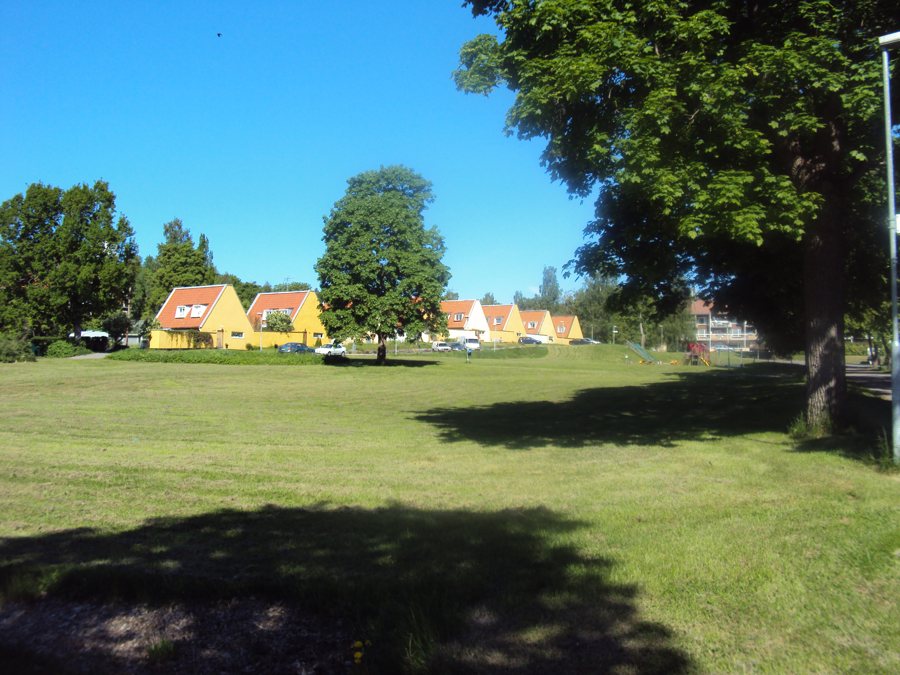 File:Allmänning i Hammarby, Sandvikens kommun.JPG
Photo: User:Grillo via Wikimedia Commons, CC-BY-SA-3.0
Water, park and exercise
The Hammarbyån flows through the area. To the west, it flows out of Ältebosjön and joins the Gavelhytteån. This watercourse was crucial to the development of the ironworks. Those interested in industrial history will therefore also encounter it as part of the area’s history: the waterways are not merely landmarks but have a documented connection to the development of the works.
Bruksparken is an English-style park on Ältebosjön. The park has a tree trail featuring 22 different deciduous trees. You can borrow the small trail brochure from the box at the information board by the bridge from Petres väg. As well as enjoying views of the park, you can use the trail to learn about the different deciduous trees. If you would rather focus on exercise outdoors, Hammarbyheden is another option: the municipality designates the area as a recreational area.
The running track in Hammarbyheden is lit and used year-round. Check its condition on site. Another waterside destination is Jungfruholmens badplats, on the small island of Jungfruholmen in Ältebosjön. If you plan to swim, note the specific restriction at the pier by Jungfruholmen: due to safety deficiencies, swimming is prohibited there throughout 2026. The closure applies to the pier, so take it into account when planning your time by the water.
Ironworks and architectural history
Hammarby Bruk originated as an old ironworks, with roots dating back to the 16th century. The older industrial buildings were later complemented by 1950s architecture by Ralph Erskine. Those interested in the area’s development can explore two distinct historical layers: the long history of the ironworks and the architecture added to the older buildings in the 1950s.
The surroundings of the Gavelhytteån are also part of this historical picture. The old industrial landscape around the watercourse in Hammarby is considered to be of national interest for cultural heritage conservation. Together with the documented importance of the watercourse to the development of the ironworks, this offers a tangible way to explore industrial history: through the buildings, the landscape, and its cultural significance.
Gamla Stenhuset is one of the oldest houses in Gästrike Hammarby and is among the museums listed by Sandviken Municipality. The house has a portrait collection, an archive, and exhibitions about Hammarby’s history. If your visit is focused primarily on local history, the building offers a different emphasis from a walk in the park or time on the running track. Check opening hours before visiting.
Planning your visit
A visit to Hammarby kapell also requires advance planning: it is not open daily, and you need to contact the caretaker to visit. This is an important difference from the attractions you can explore through the park, waterways, and industrial history: visiting the chapel requires contacting the caretaker in advance. If you are planning a trip that combines cultural history with time outdoors, you can therefore take the arrangements for each destination into account separately.
Discover more destinations: Årsunda, Kungsgården, Järbo, Storvik, Österfärnebo, Gysinge, Sandviken
Go to the main travel overview: Sandviken.

