
Discover Staven
Accommodation in Staven
Staven particularly appeals to travelers who want to make historic buildings and routes through the region the focus of their stay. The manor house, church, and dovecote each tell a different story about the town’s past. At the same time, the Mecklenburg Lake District Pilgrimage Route provides practical guidance for anyone wishing to explore Staven on foot. If you are planning a stay, you can weigh up whether architectural history, local history, or a section of the route should be your main focus.
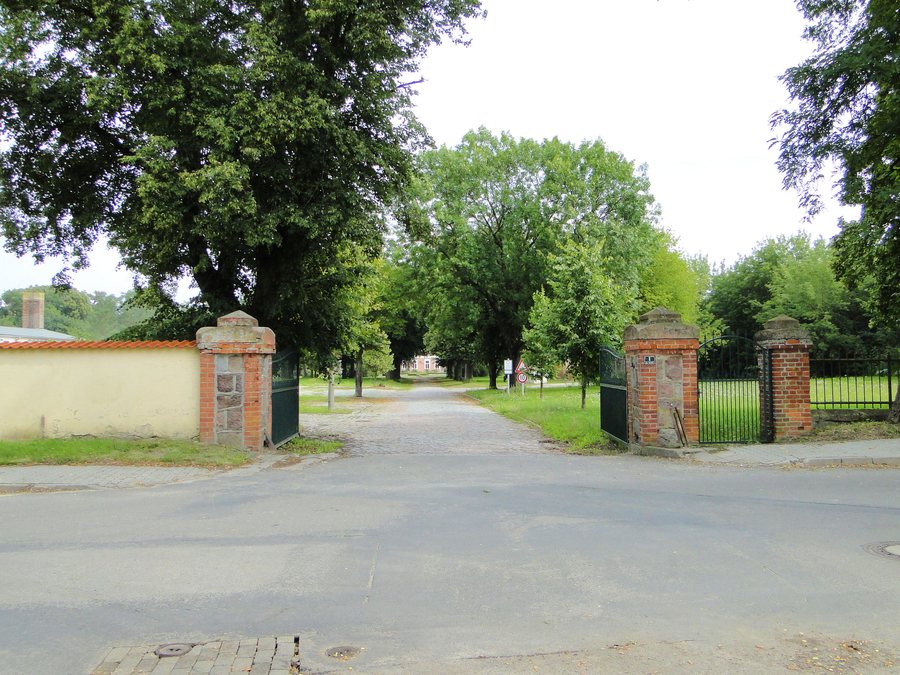 File:Staven Gutshof 2011-08-03 080.JPG
Photo: Niteshift ( talk ) via Wikimedia Commons, CC BY-SA 3.0
Manor House and Estate House
The manor house in Staven is a listed building and dates from the late 18th century. It was frequently remodeled until the mid-19th century. Its architectural history therefore includes both the period in which it was built and a longer phase of repeated changes. Anyone interested in historic buildings can use these two dates as a guide to the house’s development, without treating them as a single construction phase.
A significant later period is also recorded for the estate house in Staven: the von Badewitz and Göhrs families renovated it from 1992 to 1999. These years mark a completed chapter in the building’s history. Together with the manor house’s earlier history of remodeling, they offer a view of the different periods associated with Staven’s historic houses. The details about the manor house and estate house remain attached to their respective buildings.
Church and Other Landmarks of Local History
The church in Staven and the dovecote are surviving landmarks from the town’s past. They offer a different perspective on local history than the manor house’s construction phases: here, the focus is on two surviving buildings associated with Staven. The church in the district of Rossow is a separate building. The present-day church there was built in 1914; this date refers to the present-day church in Rossow, not to the church in Staven.
If you are interested in the town’s history, you can include these buildings as different points of reference in your themed exploration. During your visit, you can consider the histories of the manor house and estate house alongside the surviving landmarks of the church and dovecote. This allows you to organize your visit by building type and period, rather than combining the town’s distinct features into a single story.
Exploring on Foot and by Bike
Staven’s church lies on the Friedland–Staven section of the Mecklenburg Lake District Pilgrimage Route. The Staven–Neubrandenburg section also begins at Staven’s church. This makes the church a named reference point for both sections of the route. Across the wider travel area, the pilgrimage route is signposted from northeast to southwest. If you include the route in your trip, these directional details and the names of the two sections can help you find your way.
Several specific route details are relevant to cyclists. A cycle path runs from Neverin through the district of Rossow toward Brunn, as far as the motorway. After about 1 km, the Staven–Neubrandenburg section joins the road to Warlin and, after a further approximately 350 m, follows the Mecklenburg Lake Cycle Route. These approximate distances apply to the route described.
The combination of local history and named route sections offers different ways to focus your stay: you can concentrate on the historic buildings or make the pilgrimage route and cycling directions your priority.
Other local pages at the same navigation level: Zirzow, Neuenkirchen, Beseritz, Neverin, Blankenhof, Sponholz, Trollenhagen and Neddemin.
To the broader travel overview: Amt Neverin.

