
Heinrichswalde: Church, Village History and Nature
Accommodation in Heinrichswalde
Heinrichswalde combines a church visible from far away and village history with nature experiences nearby. This brings two distinct interests into consideration when planning a trip: local history and architecture on the one hand, and birdwatching and a seasonal crane migration on the other. If you are considering which themes you want to shape your stay, these highlights offer practical guidance.
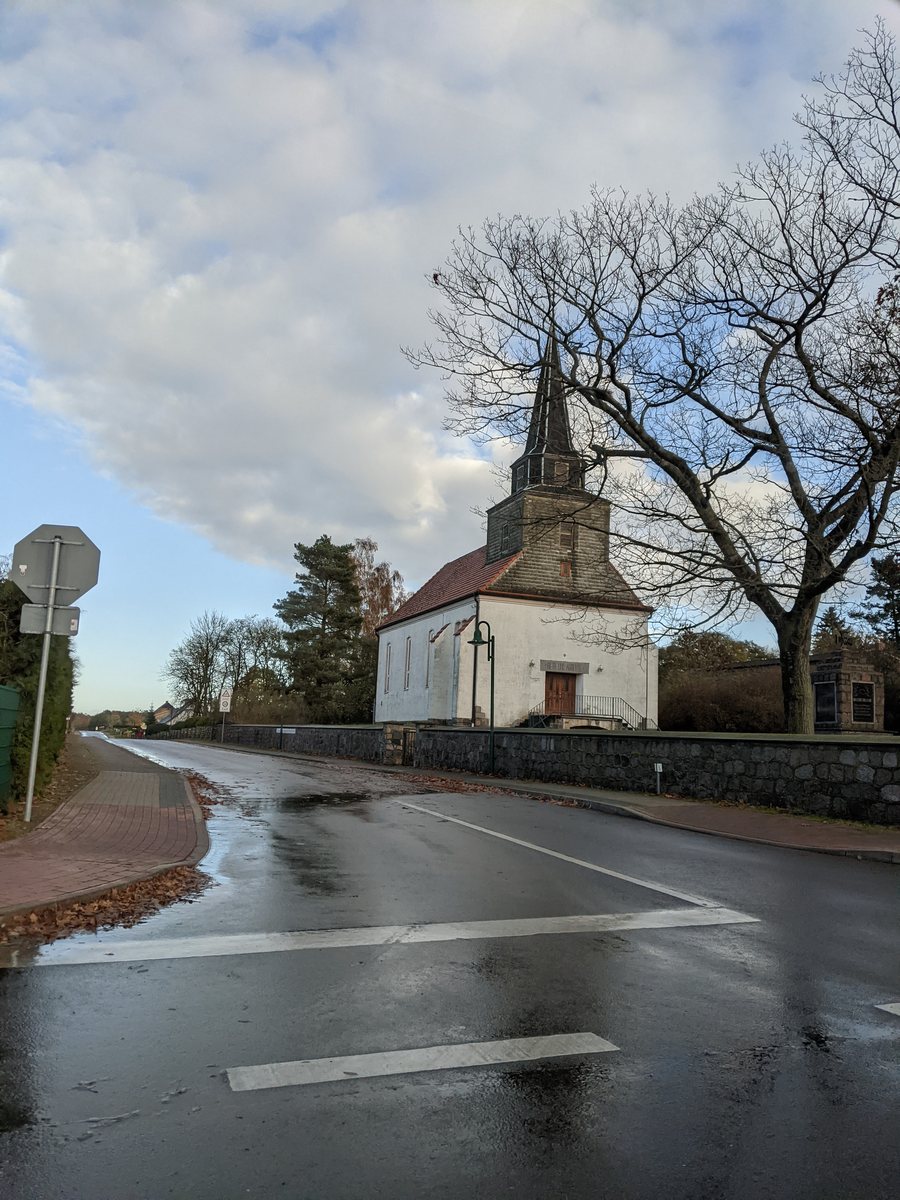
Church and Village History
The church in Heinrichswalde was built in 1934 and has a tower and bells. It is visible far across the Friedländer Wiese and as far as Lake Galenbeck. Those interested in churches will find specific points of interest here: the year it was built and the named features of its tower and bells.
The village’s history dates to a different period: Heinrichswalde was completed between 1748 and 1751 and settled mainly by people from the Palatinate and Mecklenburg. The Heinrichswalde local history room is dedicated to the village’s history and school history. A Dutch windmill is also one of Heinrichswalde’s attractions. The village therefore brings together settlement history, church architecture, school history and the mill as distinct themes.
Birdlife Nearby
Lake Galenbeck is an important breeding ground for rare bird species such as the white-tailed eagle and the kingfisher. Viewing platforms in the nearby villages of Galenbeck and Fleethof are available for birdwatching. This offers a different way to experience nature than the guided hike offered every autumn at Lake Galenbeck to see cranes roosting: the platforms are for birdwatching, while the hike is explicitly a seasonal offering.
The autumn hike dates may vary. If you would like to include it in your plans, check the latest dates in advance. This allows you to plan around the seasonal offering without treating it as an activity available all year round.
Vorpommern-Greifswald in a Broader Context
In the wider destination of Vorpommern-Greifswald, the three nature parks cover almost 40 percent of the district’s area. This figure describes the district as a whole and adds a regional perspective to the birdlife around Lake Galenbeck.
For active days out, the Ueckermünde Heath in the wider destination of Vorpommern-Greifswald invites you to go hiking, cycling and horse riding. The region’s cycling routes also offer various points of interest: the Baltic Sea Cycle Route, part of EuroVelo route EV10, passes through the district. The Szczecin Lagoon Circular Route and the Route of North German Romanticism are among the cycle routes for exploring the district. Check current route conditions and signage when planning a specific tour.
Cultural attractions in Vorpommern-Greifswald include museums in various parts of the district. In Greifswald, the Pomeranian State Museum displays the Croy Tapestry from 1554, a unique historical and cultural artefact from the Reformation period. In Anklam, the Otto Lilienthal Museum is a technical museum dedicated to the life and work of aviation pioneer, mechanical engineer and humanist Otto Lilienthal, who was born in the town. In Peenemünde, the Juliett U-461 is a museum ship in the harbour that visitors can explore on a tour. Visitors can also book guided tours through the historic monument landscape via the Historical-Technical Museum Peenemünde; check current visiting and booking conditions in advance.
Discover more destinations: Rothemühl, Altwigshagen, Hammer An Der Uecker, Wilhelmsburg, Heinrichsruh, Torgelow, Ferdinandshof.
Return to the broader travel overview: Amt Torgelow-Ferdinandshof.

