
Naguszewo – History and Historical Traces
Accommodation in Naguszewo
Those considering Naguszewo as a travel destination will find two distinct historical points of interest: archaeological traces in the village and church architecture in nearby Rumian. The details range from a burial mound and a settlement trace to a Baroque wooden church, its organ, and the ancient small-leaved lime trees around it.
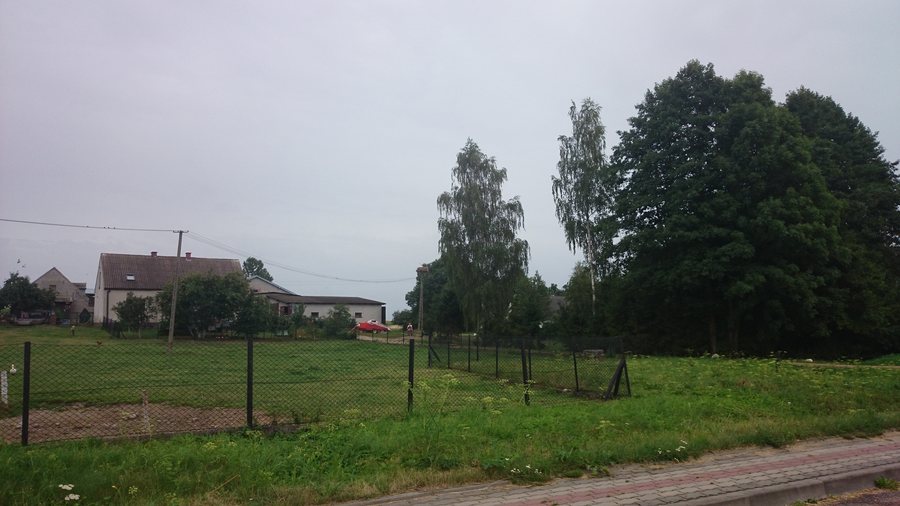
Archaeological Traces in Naguszewo
Naguszewo’s archaeological heritage includes the burial mound known as “Kurhan Naguszewo” and an archaeological settlement trace, site 1. The terms refer to different types of evidence: the kurhan is a burial mound, while site 1 is a settlement trace. Thus, buildings are not the only historical themes; earlier human settlement and burial are also represented.
Rumian: Church, Organ, and Small-Leaved Lime Trees
Nearby Rumian is home to the wooden parish Church of St. Barbara, built in 1714. This Baroque church is listed in the heritage register and heritage inventory. Its three altars bring together different periods in art history: the late Renaissance Holy Cross altar, a Baroque altar, and the main altar from the 18th century. The organ, built by Paul B. Voelkner in 1909, has a Neo-Baroque exterior. Ancient small-leaved lime trees stand around the church and are protected natural monuments; the largest tree has a trunk circumference of 423 cm. This offers a perspective ranging from the history of the building and its furnishings to the natural monuments at the church site.
Historical Connections and Timelines
The connection between Naguszewo and Rumian also has historical depth. During the Thirteen Years’ War of 1454–1466, Naguszewo became part of the Kingdom of Poland, while nearby Groszki remained in the State of the Teutonic Order. The boundary between the two present-day villages was therefore a state border. According to a local account, the renewal of the land grant for Naguszewo was confirmed in Lubawa on January 9, 1609, as a location charter by Bishop Wawrzyniec Gembicki. In connection with the historical land grant, the Nagoszewski family received 30 włóki of land to work hereditarily; this also included fishing rights on Lake Rumiańskie. A bishop’s visitation in 1706 recorded several people from Naguszewo who had each pledged between 10 and 50 florins toward building the parish church in Rumian. Together with the construction date of 1714, this places the events in time: the pledges came eight years before the church was built. Historically, Naguszewo has belonged to the parish in Rumian since 1850. These dates place different historical layers in context: political affiliation, the land grant, and the later ecclesiastical connection to Rumian.
Other Features of the Village
An open activity zone was built in Naguszewo, with equipment for an outdoor fitness area, a rest area, and landscaped green spaces. In 2022, Naguszewo also had a natural-grass sports field. County road 185039N connects Naguszewo and Rumian; it was reconstructed in 2019–2020. Check current route information for your specific journey.
Discover more destinations: Rybno, Działdowo, Lidzbark, Murawki, Kopaniarze, Nowa Wies, Grądy, Uzdowo.
For the broader travel overview: Soldau.

