
Sikory Juskie on Lake Łaśmiady
Accommodation in Sikory Juskie
Sikory Juskie lies on the shore of Lake Łaśmiady. Its waterside location is a clear geographical reference point, but the village’s setting is not defined by the lake alone. South of the lake, within the village, lies the “Torfowisko Sikora” peat bog. Two distinct landscape features therefore stand out: the village’s lakeside location and a specifically named area of bogland. If you choose a place to stay based on its landscape, this distinction helps you consider the lakeshore and the bog as separate features.
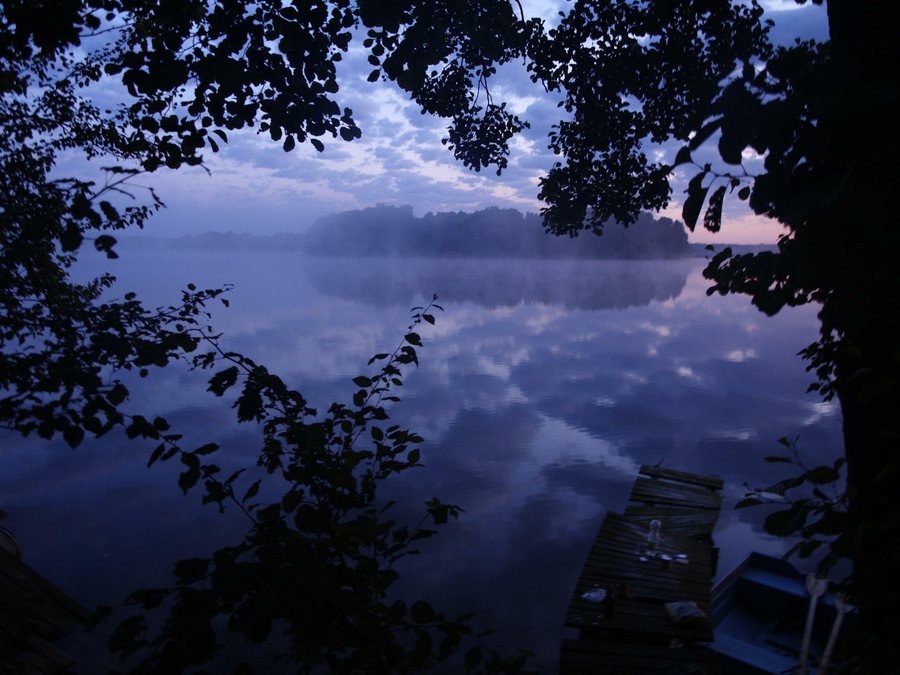 File:Sikory Juskie, fog on the water - panoramio.jpg
Photo: Stanisław Ludwiński via Wikimedia Commons, CC BY-SA 3.0
Lakeshore and peat bog
“Torfowisko Sikora” covers 59.38 ha and lies among fields. It contains a small body of water and is home to numerous protected plant species. Its name, area, location and plant life make the bog a clearly described natural area within Sikory Juskie. These details provide more specific information than a general statement about nature: there is a named area, a precise size and particular landscape features that make the village’s connection with nature tangible.
The stated area refers to the bog, not the lake or the area of the village. The locations are also distinct: the village lies on the lakeshore, while the bog is south of the lake, among fields. The small body of water is part of the description of the bog; it is not the same as Lake Łaśmiady, which defines the village’s location. The protected plants are likewise found in the bog area. This makes it possible to distinguish the village’s location from the features of the peat bog.
The details about the bog landscape answer different questions: the direction locates the bog, the area indicates its size, and the water and protected plants characterize the area. Together, they form a specific picture of the landscape, without any one feature having to represent the whole. Those who consider nature when choosing a travel destination can distinguish the village’s lakeside setting from its named bogland.
Place names through history
The village’s history can also be placed in context through specific dates. Sikory Juskie was probably founded in 1526. In 1540, the village name was Schikora; in 1664, it was Schiekorrn. Until 1927, the village was called Schikorren; from 1927 to 1945, it was called Wellheim. This sequence combines a cautiously worded founding date with several place names, each tied to a particular period. It offers a chronological perspective on Sikory Juskie without conflating the founding date with the name changes.
For travelers interested in local history, the value lies in the dates: the village was probably founded in 1526, while the later dates correspond to the respective place names. This puts the older names in their historical context rather than presenting them as variants used at the same time. The sequence also makes clear that the present-day name should not be assumed to have been used throughout every historical period.
Planning your trip
When choosing a travel destination, you can weigh this information according to your interests. The lakeside location helps situate Sikory Juskie geographically; the bog offers a specific connection with nature, while the changing place names provide a historical perspective. This allows you to get to know the village from more than one angle: through its location by the lake, a clearly described landscape feature, or the historical development of its name. If nature and local history are factors in your travel decision, these different perspectives offer a clear starting point for learning about Sikory Juskie.
Discover more destinations: Mrozy Wielkie, Straduny, Szeligi, Laśmiady, Zawady Ełckie, Rękusy, Ruska Wies, Woszczele.
Return to the main travel overview: Lyck.

