
Węgorzewo: Cycling Routes and Masurian Architecture
Accommodation in Węgorzewo
When planning a trip to Węgorzewo, cycling connections and Masurian architecture offer different starting points. Which one tips the balance depends on whether you want to focus on a cycling tour, historic architectural styles or a cultural event. This makes it possible to explore the town based on specific interests.
Cycling in Węgorzewo
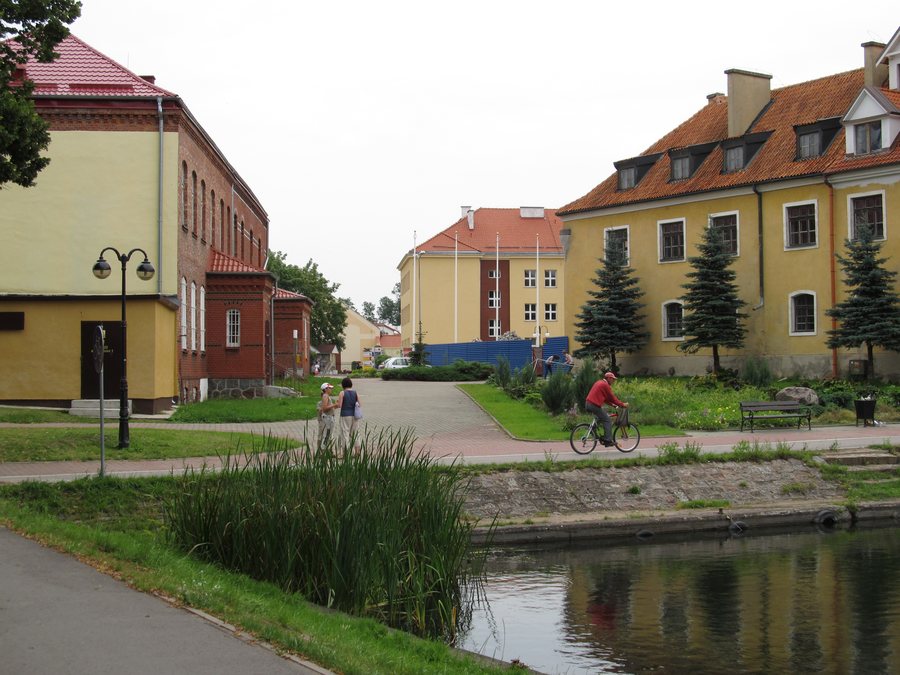
At the Młyński Canal, the Green Velo cycling route connects with the municipal cycle path in Węgorzewo. A family-friendly circular cycling tour can be divided into short sections for sightseeing. Its starting points are the Muzeum Kultury Ludowej and the Park Etnograficzny nad Węgorapą; the park is located right beside the cycle path. The connection at the canal and the tour’s starting points provide different reference points for choosing a route.
The Muzeum Kultury Ludowej brings these two themes together: as a starting point for the circular cycling tour, it forms part of route planning; its grounds are also home to the open-air museum. For anyone thinking about cycling and architecture together, it provides a shared point of reference for both interests.
Masurian architecture and historical periods
The grounds of the Muzeum Kultury Ludowej are home to a small open-air museum featuring examples of traditional Masurian architecture. These include wooden houses from the 18th and 19th centuries. For those interested in architecture, this offers a specific local focus: the architecture is not only broadly identified as Masurian, but is represented by houses from two centuries. The dates provide a timeframe for understanding these examples of architecture.
The Teutonic Castle in Węgorzewo dates back to the 14th century. Together with the wooden houses from the 18th and 19th centuries, it creates a clear contrast in the periods represented by these buildings: the castle belongs to an earlier era than the open-air museum’s houses. Węgorzewo thus offers a historical perspective on different periods, not just one architectural style.
Cultural programme and history
Every year on the first weekend in August, the Muzeum Kultury Ludowej hosts the International Folklore Market. The market features traditional folk art, handicrafts, customs, music and dance. Its fixed weekend timing makes the event especially relevant for travellers who want to plan their stay around the cultural programme. Unlike the historic buildings, the timing of the market itself is a decisive factor when planning a trip. Check the dates directly with the museum before your trip.
A regional perspective on Węgorzewski
In the wider travel destination of Węgorzewski lies the Cmentarz nad jez. Święcajty. The cemetery commemorates soldiers who fell in the First World War; it contains the graves of 344 German and 234 Russian soldiers. This historical connection is distinct from Masurian architecture and the folklore market, and broadens the perspective on Węgorzewski to include the history of the First World War. Travellers considering regional history as part of their trip can treat this site as a separate point of interest.
Discover more destinations: Pawłowo, Olszewo Węgorzewskie, Budry, Przystan, Sobiechy, Kolonia Rybacka, Kuty, Stręgielek
For the wider travel overview: Węgorzewski.

