
Graal-Müritz
Graal-Müritz lies between the Baltic Sea, the Rostock Heath and the Great Ribnitzer Moor. You can plan a visit around your interests, with the 350-metre-long pier, Rhododendron Park and paths through the coastal forest: spend the morning on the beach and by the water, then enjoy the park or forest as a quieter change of pace.
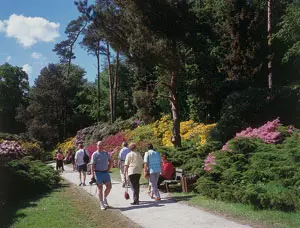 Rhododrendronpark in Graal-Müritz
Photo: © TUK GmbH Graal-Müritz
Graal-Müritz at a glance
- Pier: 350 metres long, with trips aboard the MS “Baltica” and sweeping views over the Baltic Sea.
- Rhododendron Park: 4.5 hectares with around 2,500 plants and some 60 hybrids; the main flowering season is in May and June.
- Natural landscape: The Rostock Heath lies to the west and south, while the Great Ribnitzer Moor borders the town to the east.
- Spa forest: This 13-hectare coastal forest has walking paths, a sound forest, and areas for exercise and relaxation.
- Getting there: Regional train RB12 connects the town with Rostock; Graal-Müritz and Graal-Müritz Koppelweg stations are both within the town.
The pier and Baltic Sea beach
The pier is an easy landmark for a day on the coast: from the forecourt, it extends 350 metres out into the Baltic Sea. At the end, the view opens up across the coastline, beach and open horizon; on a clear day, the contrast between the sheltered coastal forest behind the town and the open water is especially striking. Seasonal trips aboard the MS “Baltica” depart from the pier. Anglers also use it, particularly in the evening. If you’re planning a walk with children, the end of the pier makes a clearly defined destination, after which you can continue along the beach promenade.
Graal-Müritz is a long coastal town, not just a pier. The beach and different parts of town stretch along the coast, so it’s worth deciding what you want to do during the day before choosing where to stay. A walk by the water can be combined with a detour to the town’s historic Büdner houses. The thatched-roof fishermen’s cottages and Büdner houses recall the village’s former layout and contrast with the later buildings of the seaside resort.
Rhododendron Park: blooms, paths and history
Rhododendron Park is just a few steps behind the dunes. The present-day grounds were created on the site of a former sand pit; over several decades, it was transformed into a 4.5-hectare park with around 2,500 plants and some 60 rhododendron hybrids. During the flowering season in May and June, shades of white, red and violet take turns to brighten the park. Some varieties grow up to six metres tall. The park is more than a single flower bed, so it’s worth strolling along the paths between the planting groups, even when some varieties have not yet started blooming or have already finished.
The park is a destination in its own right for a more relaxed visit and is enjoyed by locals and visitors throughout the year. Benches and the concert pavilion offer places to pause, and Hanning-Schuldt-Weg leads into the park. The pavilion serves as a meeting point for events, including guided walks in the Rostock Heath. This makes it easy to combine the park and forest in one day without a long transfer. For photography, flowering season is the most colourful time; if you’re interested in the park’s history, look out for how the landscape has changed from sand pit to park.
The Rostock Heath and Great Ribnitzer Moor
The extensive coastal forest of the Rostock Heath borders the inland side of the town, with walking and cycling trails. To the east lies the Great Ribnitzer Moor, where open bogland, meadows and sparse woodland offer a different experience from the dense trails through the heath. Guided walks through the moor explain what makes the area distinctive and allow visitors to explore its sensitive landscapes along designated paths. The distinction is useful when planning an active day: the forest is suited to longer walks and bike rides, while the moor offers a unique landscape and is often explored on guided tours.
The spa forest within the Baltic Sea resort is a shorter alternative to the larger natural areas. Its 13 hectares include a sound forest, a Green Classroom, and areas for activity and relaxation. It’s a good way to fill half a day without a long bike ride: take a short walk through the spa forest, then head to the pier or town centre. If you’re planning to observe wildlife and plants, stick to the paths and respect the woodland and moorland edges as protected habitats.
Graal-Müritz by train or as part of a coastal tour
Regional train RB12 runs from Rostock via Bentwisch and Rövershagen to Graal-Müritz. It stops at both Graal-Müritz station and Koppelweg; the right station depends on your destination in town. For a day trip from Rostock, it’s a direct alternative to driving.
Graal-Müritz also fits into a longer coastal route. To the west are the wooded stretches and steep coastline near Nienhagen, the seaside resort of Heiligendamm and the Hanseatic city of Rostock. To the east, Dierhagen marks the mainland gateway to the Fischland-Darß-Zingst peninsula. If you’re staying for several days, you can explore the beach, forest and villages on Fischland-Darß-Zingst as separate stages of your trip.
Where to stay depends on your plans for the day: accommodation in Graal-Müritz is convenient if you want to visit the park, pier and Rostock Heath without driving each day. If you’d like to explore more of the peninsula, you could stay in Dierhagen instead, which puts the Saaler Bodden lagoon and the villages of Fischland-Darß-Zingst closer at hand.
Frequently asked questions about Graal-Müritz
When do the rhododendrons bloom?
The main flowering season is in May and June. With around 2,500 plants and some 60 hybrids, the park is large enough for a leisurely stroll; individual varieties may bloom before or after the main season.
Can you take an excursion boat from the pier?
Yes. Trips aboard the MS “Baltica” depart from the 350-metre-long pier. The pier is also a popular viewpoint and is used by anglers.
How do I get to Graal-Müritz without a car?
Regional train RB12 connects the town directly with Rostock. It stops at Graal-Müritz station and Graal-Müritz Koppelweg; the right stop depends on whether you’re heading for the town centre or a destination on the outskirts.
