
Mecklenburg
Mecklenburg’s Baltic coast stretches between Lübeck Bay and Fischland, with its tourist hinterland extending inland to the lake district around Schwerin. It brings together Hanseatic towns, seaside resorts, islands and natural coastal areas; no single base can fully cover this variety.
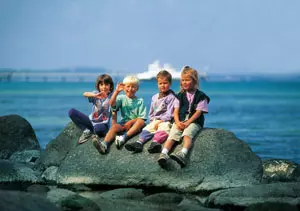 Mecklenburg - ideal für einen Familienurlaub
Photo: © Tourismusverband Mecklenburg-Vorpommern
Key facts about Mecklenburg’s Baltic coast
The best places for beach days may differ from those for Brick Gothic architecture, harbour visits or cycling tours. The best choice depends on whether you want to swim as often as possible, use a town as your base or explore several stretches of coast.
The region has a rich history, but it is also a distinct, continuous coastal landscape: to the west are Wismar Bay and Poel Island, followed eastward by Rerik and the Wustrow Peninsula, Kühlungsborn and Heiligendamm, and then the Rostock coast as far as Graal-Müritz. Inland are towns and lakes, including Schwerin. This sequence is useful when planning a holiday because it reflects the natural and transport links along the coast.
Wismar Bay, Poel and the west
The Hanseatic town of Wismar is a good choice if the old town, harbour and day trips are your main interests. Its historic centre offers a different kind of trip from a traditional seaside resort and also makes a good base in changeable weather. From here, you can reach the coastal landscape of Wismar Bay and Poel Island. Poel is well suited to quieter days spent between beaches, small harbours and the island’s rural landscape; visitors should consider where their accommodation is located and whether they need easy access to shops or evening activities.
Further west, Boltenhagen is a destination focused firmly on beach holidays. The coast here is defined by broad sandy stretches and steeper shorelines, while small villages and country estates lie inland. Boltenhagen is a good fit if beach days and a compact seaside resort matter more to you than daily city visits. Wismar makes a good day trip, but if you plan to visit several coastal towns, check actual travel times rather than assuming that every destination is just around the corner.
A day in Wismar and a day on Poel make a well-balanced two-part itinerary: Brick Gothic architecture, the harbour and urban history on the one hand, and beaches, fields and island scenery on the other. If you would rather focus on the western coast, you can stay in Boltenhagen and add a planned day trip to Wismar. Rerik and the Salzhaff form a distinct stretch farther east. This way of dividing the region prevents the bay, the Wustrow Peninsula and the Rostock coast from blurring together into one vaguely defined beach area when you plan your trip.
Salzhaff, the Wustrow Peninsula and seaside resorts
Rerik lies where the coast meets the Salzhaff, offering a combination of open Baltic Sea shoreline and the more sheltered waters of the lagoon and haff. This gives a holiday here a distinctive character: you can combine the beach and water sports with wildlife watching and trips around the Wustrow Peninsula. When choosing accommodation, check whether it is close to the beach, in the town centre or nearer the haff; distances and the feel of your day-to-day holiday vary depending on the location.
Kühlungsborn is a major seaside resort on the coast. Its long promenade and townscape make it a good fit for visitors looking to combine the beach with a range of amenities. Kühlungsborn and historic Heiligendamm also make a good pairing for a day trip: Heiligendamm was founded in 1793 as Germany’s first seaside resort. Its white Neoclassical architecture by the sea and its connection with nearby Bad Doberan make it an interesting stop for local history and culture, not just a beach day.
Bad Doberan itself lies inland, near Heiligendamm, and makes a good base for exploring the town and monastic landscape. The narrow-gauge Molli railway connects Bad Doberan with Heiligendamm and Kühlungsborn, offering a practical way to arrange a car-free trip along this stretch of coast. If being close to the beach every day is your priority, however, Kühlungsborn or another coastal town is a better choice for your accommodation.
The Rostock coast and trips farther east
The Hanseatic city of Rostock is the region’s urban centre: its harbour, old town, shops and cultural attractions can be combined with trips to the Baltic coast. The seaside resort of Warnemünde lies at the mouth of the Warnow and offers a beach, promenade, harbour views and a maritime atmosphere. The two places are close to one another, but suit different kinds of holiday. Rostock is better for a city base with access to the railway station and cultural attractions; Warnemünde is a better fit if you want the sea and beach right on your doorstep.
West of Warnemünde, Nienhagen offers a quieter stretch of coast, with its Ghost Forest among the area’s most striking landscapes. Graal-Müritz lies farther east, towards Fischland, and combines a Baltic beach with a forested hinterland. If you enjoy longer walks or cycling tours, you can make this transition between the Rostock coast and the peninsula a focus of your trip. It is not simply an extension of a city break, but a shift to a holiday closer to nature.
Schwerin as a base for the hinterland
The state capital, Schwerin, lies inland among several lakes and offers a city break of its own, with a castle, old town and cultural venues. Combining the Baltic coast with Schwerin can work well on a multi-day road trip, but is less practical if you plan to commute every day: the city is not directly on the coast. If you include Schwerin, you can pair a stay there with a second base on the coast. That gives you time for culture and lakes as well as proper beach days without long daily journeys.
For a nature-focused or active holiday, it is worth choosing one stretch of coast as your base. The Baltic Coast Trail follows varying stages through the region, from the western coastline via Wismar, Rerik, Kühlungsborn and Heiligendamm to the cliffs at Nienhagen, Warnemünde and Graal-Müritz. The route shows just how much the landscape can change over only a few stages. For individual hikes, check local trail conditions and notices about cliff edges: erosion and closures can occur, so follow marked paths and heed warning signs.
Getting around and choosing when to visit
The Hanseatic towns of Wismar and Rostock are important railway stops; Kühlungsborn, Bad Doberan and Warnemünde can also be reached by regional connections. For beach accommodation or natural areas farther from the main centres, a bus, bicycle or car is often useful. Routes along the coast do not always take a direct line, and day trips may depend on bridges, transfers and seasonal timetables. If you want to travel without a car, it is best to stay in a town or resort with a railway connection and plan individual day trips from there.
Midsummer is ideal for swimming and long days by the water, but popular seaside resorts are busier at this time. Spring and autumn are better suited to walks, coastal hikes and city visits; wind and changeable weather then need to be taken more into account. In the off-season, some restaurants and beach services may have limited hours or be unavailable. For families and anyone hoping to spend as much time as possible on the beach, the location of your accommodation and what is open during your stay matter more than an abstract comparison of seaside resorts.
For a holiday combining culture and swimming, Rostock or Wismar often make good city bases, with beach trips added as outings. For a traditional beach holiday, accommodation in Boltenhagen, Kühlungsborn, Warnemünde or Graal-Müritz is a more natural choice. Poel and Rerik are a good fit if you want to focus more on island scenery or the haff. Schwerin, meanwhile, is best thought of as a separate inland stay. If you take these differences into account while looking for accommodation, you will spend less time on the road and more time in the kind of landscape that interests you.
For example, Kühlungsborn is worth considering as a base in a seaside resort when searching for accommodation. If you want a stay with a city, harbour or island feel, Rostock, Wismar and Poel are more suitable options. Your choice should match how you plan to spend your days: sea views and daily beach access are quite different from a central city location with day trips.
Frequently asked questions
Where is Mecklenburg’s Baltic coast?
Mecklenburg’s tourist coastline on the Baltic Sea stretches from Boltenhagen in the west to Graal-Müritz in the east. Schwerin and other inland towns are part of the wider travel region, but they are not directly on the Baltic coast.
Which places are suitable for a beach holiday?
Boltenhagen, Kühlungsborn, Warnemünde and Graal-Müritz are good bases on the coast. Poel and Rerik offer different kinds of scenery. The best choice depends on the exact location of your accommodation, the amenities you want and the time of year.
Can I combine Schwerin with a Baltic Sea holiday?
Yes, especially as part of a round trip or if you change accommodation. Schwerin is an inland base for exploring the city and lakes, not a place for daily trips to the beach.
