
Kalundborg: Medieval history, fjord and Røsnæs
Kalundborg lies on the fjord of the same name in the northwest of the Danish island of Zealand. This harbor town combines a medieval town center, marked by the distinctive Vor Frue Kirke, with excursions into the coastal landscape of Røsnæs. It’s easy to plan a visit that takes in history, city walks, and sweeping views across the Great Belt.
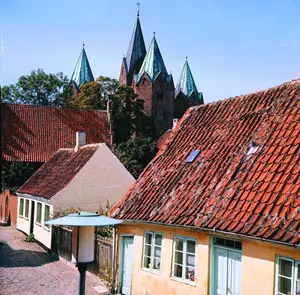 Altstadt von Kalundborg auf der Insel Seeland
Photo: © Lennard Nielsen/VisitDenmark
Kalundborg at a glance
- Location: in northwest Zealand on Kalundborg Fjord.
- Historic center: Højbyen, the medieval upper town.
- Landmark: Vor Frue Kirke, with five towers and a cruciform layout.
- Townscape: narrow historic lanes and preserved half-timbered houses.
- Coastal excursion: the Røsnæs peninsula to the west, with cliffs and grassland.
- Trip style: combine the town’s history and nature as separate activities.
Højbyen: Kalundborg’s medieval center
The upper town of Højbyen sits on the hill above the fjord. Its street layout still follows its medieval pattern, and historic buildings, including half-timbered houses, line its narrow lanes. The best way to explore is on foot: roads rise from the harbor to the older quarter, where the elevated setting repeatedly opens up views of the town and water. Set aside a dedicated block of time for the lanes and church rather than treating the visit as a quick photo stop on the way to the sea.
Vor Frue Kirke defines the skyline of Højbyen. Four corner towers and a central tower create its unusual five-tower profile, while the ground plan follows a Greek cross. The building dates back to the medieval period in Danish history and stands at the heart of the old quarter. If you’d like to visit the church interior, you can combine your visit with the nearby Kalundborg Museum, which tells the story of the town and region. The lanes around the church and museum are ideal for a stroll afterward.
A walk through the old town and its history
A simple route works well for exploring the town: start in the lower town, climb up to Højbyen, and take your time there to visit the church and museum and wander the streets between the historic buildings. This makes the upper town’s elevated location easier to appreciate and brings the connections between the harbor, the town’s founding, and the fjord into view as you walk. The ruins of the former castle add another dimension, highlighting the site’s military and political importance in the Middle Ages.
Shops and everyday life give the lanes as much character as their historic façades. This makes the town especially appealing to travelers who enjoy discovering architecture and history as part of a regular walking tour. For a wider route around the island and its towns, see our overview of Zealand, its towns and coastlines.
Røsnæs: coastal scenery west of town
If you’d like to follow your old-town walk with a day in nature, head west to the Røsnæs peninsula. Here, the landscape shifts from town streets to open grassland and steep stretches of coast. A nature trail leads toward the peninsula’s tip, with views across the Great Belt along the way. Røsnæs Lighthouse stands at the end of the peninsula. This excursion is well suited to a longer stay: the town visit and coastal hike each have their own character and can easily be planned for separate parts of the day.
The terrain on Røsnæs is hilly, and the coast is exposed to the wind. Sturdy footwear and an extra layer of clothing are therefore useful when planning your walk. If you’re setting aside several days for the town and coast, Kalundborg makes a good base; for a quieter coastal base, you could also consider nearby Reersø. Find accommodation options at places to stay in Kalundborg and places to stay on Reersø.
Kalundborg as a base
The town is a good choice for travelers who want to pair a historic center with an excursion to the coast. If you only have a few hours, focus on Højbyen, Vor Frue Kirke, and a walk through the old streets. With more time, you can add Røsnæs. Kalundborg can also be combined with Copenhagen on a trip with several stops around Zealand. The order depends on the weather and your interests: the open peninsula is especially appealing when visibility across the water is clear, while Højbyen also makes a rewarding visit in its own right.
When planning your trip, it’s worth treating the routes between the upper town, harbor, and peninsula separately. The lanes of Højbyen make for a walk through the historic center; Røsnæs is a separate nature excursion outside town. This keeps the day’s schedule realistic and leaves enough time to stop and take in both places.
Frequently asked questions about Kalundborg
What is Kalundborg’s best-known building?
Vor Frue Kirke is the town’s landmark. Its five towers and cruciform layout make it recognizable from a distance.
What’s the best way to explore Højbyen?
On foot: the route from the harbor climbs to the upper town. There, you can combine the church, museum, historic lanes, and castle ruins in one walking tour.
What natural attractions are near Kalundborg?
The Røsnæs peninsula stretches west of town, with coastal cliffs, open grassland, a nature trail, and a lighthouse at its tip.
How much time should I allow for Kalundborg?
Allowing half a day for Højbyen, including the church and museum, is a good starting point. Røsnæs adds a separate excursion, so a longer stay makes sense if you want to experience both.
