
Jastarnia and Jurata on the Hel Peninsula
Jastarnia (Heisternest) lies on the Hel Peninsula between Puck Bay and the open Baltic Sea. The town combines fishing history and harbor life with beaches on two coasts; Jurata is a distinct, historically shaped district within the town. To experience both at a leisurely pace, plan several days rather than a brief beach stop.
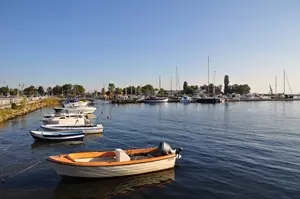 Blick auf den Hafen von Jastarnia
Photo: © nordlicht verlag (3)
Jastarnia and Jurata at a glance
- Location: Jastarnia lies on the narrow Hel Peninsula. At its widest point, Puck Bay and the Baltic Sea are less than two kilometers apart.
- Townscape: Fishermen’s cottages, cobbled streets, and newer vacation homes give the town center its varied character.
- Harbor: The harbor was built between 1926 and 1931 and served fishing, coastal shipping, and sailing instruction.
- Jurata: The seaside resort was founded in 1928 as a summer retreat and is part of the town of Jastarnia.
- Getting there: A railway line runs along the peninsula to Hel; Jastarnia and Jurata both have stations on the route.
- How long to stay: Three to four days is a comfortable amount of time for the harbor, town center, beach, and a trip to Jurata.
Between the Baltic beach and Puck Bay
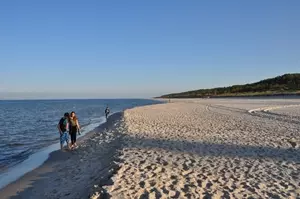
Jastarnia’s location on a narrow spit makes it especially versatile: to the north, the Baltic beach lies beyond a wooded belt of dunes, while Puck Bay opens out to the south. The paths between the two shores are short, making it easy to divide the day between swimming, a stroll through town, and views over the calmer bay. Which beach is best on a given day depends on the wind, the waves, and your plans.
In the town center, narrow cobbled streets and preserved fishermen’s houses tell the story of the older settlement. Hotels and guesthouses nearby reflect its transformation into a seaside resort. You can combine a walk around town with a visit to the harbor, where fishing, sailing, and passenger traffic converge. At the eastern end of the peninsula lies Hel.
A harbor shaped by fishing and sailing
The present-day harbor was built in Jastarnia-Bór between 1926 and 1931. The harbor authority describes it as the first investment of its kind in a fishing harbor in the Second Polish Republic. The basins and waterfront were created by dredging and land reclamation; the excavated material also added land along the shore. Coastal vessels were already calling there from 1927. In the 1930s, the harbor also served as a sailing-training base.
In September 1939, the harbor was the base of a Polish minesweeper flotilla; several ships were sunk in an air raid on September 14. After the war damage, the harbor was rebuilt between 1947 and 1949. Passenger services and training programs were added later. This history makes the harbor more than a backdrop for pleasure boats: it connects the town’s fishing and sailing heritage with the history of coastal shipping. A visit to the quayside is therefore also a good choice for travelers looking to add some local history to their beach vacation.
Jurata: a summer retreat with its own character
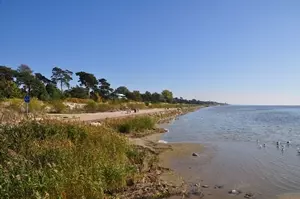
Jurata lies east of the town center and is part of the town of Jastarnia. When the summer resort was founded in 1928, it catered to an upscale vacation crowd. In the 1930s, artists, politicians, and other public figures gathered there. Villas and guesthouses from that era still give the district its historic character. The nickname “Polish Palm Beach” recalls its glamorous interwar image; today, visitors may be most interested in the contrast between the old villas, the green surroundings, and the beach on the open Baltic Sea.
Jastarnia and Jurata are easy to explore on foot and by train as part of the same stay. If you would like to compare and book accommodations in Jastarnia, you can use the town center as your base and plan a trip to Jurata. For a detour to the southern end of the bay, Puck on Puck Bay adds another perspective on the peninsula; Gdynia takes you farther into the port cities of the Bay of Gdańsk.
How long should you spend in Jastarnia?
Three days is a good choice for a first visit: spend one day exploring the town center and harbor, another at the Baltic beach and along the bay, and the third in Jurata. A fourth day leaves room for a more leisurely beach day or a trip along the peninsula.
You can visit Jastarnia, Jurata, and Hel by train without changing accommodations. If you arrive by car, you can combine different stretches of coastline more flexibly. For a trip focused on short distances, three nights in Jastarnia make a practical base; if you also want to see the rest of the peninsula and the area around Puck Bay, plan four nights or more. The right length of stay depends on how much time you want to spend at the beach and how many places you’d like to visit on day trips.
Frequently asked questions about Jastarnia
Is Jurata part of Jastarnia?
Yes. Jurata is a district of the town of Jastarnia on the Hel Peninsula. The seaside resort began as a summer retreat in 1928 and developed the distinctive villa and spa-resort character it still has today during the 1930s.
How many days are ideal for Jastarnia and Jurata?
Three days are enough for the town center, harbor, beach, and a visit to Jurata. Four days give you extra time for a more leisurely beach day or a trip to another town on Puck Bay.
What makes Jastarnia’s harbor special?
It was built as a fishing harbor between 1926 and 1931 and soon also served coastal shipping and sailing instruction. After being destroyed during the Second World War, it was rebuilt between 1947 and 1949.
