
Baltic Sea Cycle Route in Schleswig-Holstein
In Schleswig-Holstein, the Baltic Sea Cycle Route runs from the Flensburg Fjord via the Schlei, Eckernförde Bay and Kiel Fjord to Lübeck Bay. The landscape alternates between harbor towns, dikes, small roads through the hinterland and open coastal stretches. When planning, therefore, the distance, wind and road surface matter just as much as the route itself.
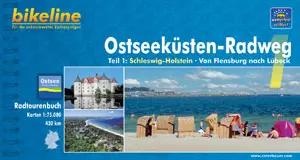 Ostseeküstenradweg Flensburg-Lübeck
Photo: © Verlag Esterbauer
Baltic Sea Cycle Route in Schleswig-Holstein: key facts
- According to NDR, the Flensburg–Kiel section is around 170 kilometers long; the route from Kiel to Travemünde is listed as approximately 260 kilometers.
- Depending on your pace, Flensburg–Kiel can be ridden in two to three days. For Kiel–Travemünde, NDR recommends three days for sporty cyclists and e-bikes, and four to five days for a more leisurely ride.
- The route does not run directly along the water throughout. Between Kappeln and Eckernförde, it mostly follows smaller roads through the hinterland.
- On Fehmarn, cycle tourists can plan a loop around the island that includes unpaved paths, or continue south on the mainland towards Lübeck Bay.
- Wind, sandy or unpaved stretches and signage that varies in clarity all affect how you plan each day.
From the Flensburg Fjord via the Schlei and Eckernförde to Kiel
The northern section starts at the German-Danish border near Harrislee and first reaches Flensburg. From there, the route passes Glücksburg and heads towards the Holnis peninsula. Views across the Flensburg Fjord and small coastal towns are the highlights of this stretch. A detour to the Geltinger Birk nature reserve adds a natural stop along the fjord; allow extra time for this additional loop.
The route continues southeast to Kappeln. The bridge there crosses the Schlei, after which the route passes through Damp and follows smaller roads inland to Eckernförde. This shift between fjord, inlet and farmland defines the character of the section: cycling along the coast here does not mean the sea is constantly beside you. Beyond Eckernförde, the route crosses the quiet countryside of Schwedeneck, between Eckernförde Bay and Kiel Fjord, and continues to central Kiel.
Flensburg–Kiel covers about 170 kilometers. For a relaxed multi-day trip, you can spread the route over two or three days. A shorter trip can focus on the fjords or on Kappeln and the Schlei. This leaves time for breaks and sightseeing, without squeezing the entire route into a short weekend. Other cycling tours along the Baltic Sea offer different distances and landscapes to compare.
From Kiel to Lübeck Bay and Travemünde
South of Kiel, the route first follows the eastern shore of the fjord and the coast of Kiel Bay. Between Laboe and Schönberger Strand, it runs along the dike towards Fehmarn. The Graswarder nature reserve lies close to the route near Heiligenhafen. After that, there is a clear choice: a loop around Fehmarn extends the ride and includes many unpaved paths, while those wanting a shorter trip can head straight south towards Lübeck Bay.
On the mainland, the route runs from Dahme via Grömitz, Neustadt in Holstein, Scharbeutz and Timmendorfer Strand to Niendorf. The final coastal kilometers before Travemünde pass the Brodten Cliffs. In quick succession, this stretch showcases several characteristic Baltic Sea landscapes: dikes, seaside resorts, beach towns and cliffs. The Hanseatic city of Lübeck is not directly on the cycling route, but makes a good planned detour if you set aside extra time to explore its old town.
Kiel–Travemünde is a longer section. NDR estimates around three days for sporty cyclists or e-bikes, and four to five days at a more leisurely pace. If you want to spend longer visiting individual towns, plan additional overnight stays. Accommodation in Travemünde is located at the southern end of the section and is a good option for a stay at the end of the ride. The route continues east across the Priwall; the next section runs through Mecklenburg-Western Pomerania.
Choose stages to suit your pace and the terrain
The distance you cover each day should suit your group and the time you want to spend along the way. A map showing elevation profile and road surface helps distinguish longer road and coastal stretches from unpaved sections. On Fehmarn in particular, the terrain can take more time than a similarly long stretch of asphalt. Wind is another factor on the coast: a headwind increases the effort required, even though the distance stays the same.
If you ride the entire route, plan overnight stops so there is time for breaks and visits to local towns. For a weekend trip, you can combine individual sections with a fixed overnight base. The overview of Baltic Sea cycling tours and planning can help you compare these options. A reliable map or navigation system is also useful on the Baltic Sea Cycle Route. NDR describes the route markers as having a blue logo, but notes that signage varies in clarity from one region to another. Before setting off, make sure you have a suitable route map, water, weather-appropriate clothing and enough time for the route you have chosen.
Frequently asked questions about the Baltic Sea Cycle Route in Schleswig-Holstein
How long is the Baltic Sea Cycle Route from Flensburg to Kiel?
NDR lists this section as around 170 kilometers. Depending on your pace, you can spread it over two to three days.
Does the route on Fehmarn run directly alongside the sea?
Many stretches on Fehmarn follow unpaved paths. The island loop is an optional part of the trip; if you skip it, you can continue south towards Lübeck Bay.
Is Lübeck directly on the Baltic Sea Cycle Route?
No. The route passes through Timmendorfer Strand and Travemünde; Lübeck lies off the route and can be planned as a separate detour.
How long does it take to cycle from Kiel to Travemünde?
NDR recommends around three days for sporty cyclists and e-bikes. At a more relaxed pace, four to five days is a better estimate; allow extra time for visits to local towns.
