
Holiday properties on the Baltic Sea: location and use
A holiday property on the Baltic Sea is a good fit for your plans when its location, permitted use and ongoing costs all align. What matters is not just the sea view and proximity to the beach, but also accessibility, infrastructure, building and usage rights, and whether you intend to stay there yourself or accommodate guests.
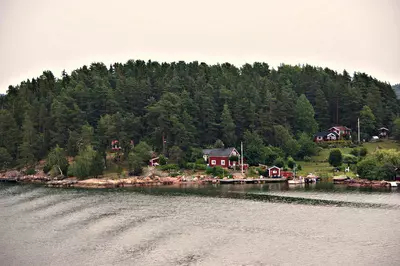 Schwedische Stuga
Photo: © Katharina Wieland Müller / pixelio.de
Holiday properties on the Baltic Sea: key facts
- Distinguish between personal use, occasional rentals and commercial holiday rentals: each involves different requirements and calculations.
- Distance to the beach says little about road access, public paths, parking, shopping and year-round services.
- On the German coast, whether holiday apartments are permitted also depends on the land-use planning classification of the specific property.
- Special purchase rules apply to real estate in Denmark; residence and previous periods of stay can be decisive.
- The purchase price and furnishings account for only part of the total costs: maintenance, heating, insurance, taxes and management belong in the annual budget.
- Offers from providers and estate agents on the linked sales pages are advertisements.
Which location suits your plans?
If you plan to stay there often, getting there matters just as much as day-to-day life at the property. An apartment in a seaside resort may offer easy access to shops, restaurants and the beach; a house inland often comes with more land and greater distance from the promenade, but also longer drives to the coast and local services. Compare the actual distance to the beach, access via public paths and how easy it is to get around outside the peak season. Before deciding to buy, you could plan a stay in Grömitz or on the island of Poel and compare the routes from your accommodation to the places that matter to you, as well as what day-to-day life is like there.
Even within a stretch of coast, town centres, outskirts and inland areas differ. A central location makes it easier to pop out to shops and restaurants; a quieter spot on the outskirts may offer more privacy, but calls for realistic planning around shopping, doctor’s appointments and travel. For a comparison of coastal and lake-district locations, see the overview of Plön. On Usedom, seaside resorts, the Achterland and different distances from the water sit side by side.
Calculate personal use and rentals separately
Before you start looking, write down when you want to use the property yourself and which periods you intend to make available to guests. This will determine requirements for size, privacy, storage, furnishings and management. A rental calculation should account for realistic periods without bookings, cleaning, maintenance, platform or agency fees, and taxes. Also allow for seasonal fluctuations and set aside reserves for the roof, façade, heating and technical systems.
In Germany, Section 13a of the Federal Land Utilisation Ordinance (Baunutzungsverordnung) classifies holiday apartments under different types of use. The provisions of the Federal Building Code also apply to structural alterations or changes of use; the specific land-use planning classification depends, among other things, on the property and local regulations. That is why the building file, approved use and municipal requirements should all be checked as part of the property assessment before you include rental income in your yield calculation. The legal provisions are set out in Section 13a BauNVO and Section 29 BauGB.
Country-specific requirements also apply when buying beyond the German coast. Denmark has special rules for houses, building plots and holiday homes. Anyone who neither lives in Denmark nor has lived there for at least five years generally needs a permit to purchase property; this rule also covers holiday homes. The Danish guide Purchasing real property sets out the conditions for purchase.
Documents and ongoing costs to check before buying
A reliable comparison requires more than a sales brochure and floor plan. Match the property boundaries, proof of ownership and encumbrances, building specifications, approved use, renovations and energy information to the specific property. For apartments, also check the community rules, reserve funds and planned work on jointly owned areas. For houses, the condition and age of the roof, windows, pipes and heating system matter. Also ask which paths, parking spaces and utility facilities are actually part of the property or are permanently accessible.
Compare the purchase price with one-off acquisition costs and an annual total-cost calculation. Include financing, insurance, property and utility taxes, energy, water, waste collection, cleaning and management. For a coastal property, pay particular attention to damp, wind exposure, salty air and the exact location in relation to the water or protected areas. For an inland apartment, longer journeys and services that are limited seasonally may matter more. An independent surveyor can assess the building’s condition; tax and legal matters depend on the location, form of ownership and intended use.
Holiday complex or individual property?
A holiday complex often brings management and shared facilities together, but also involves shared costs, rules on use and reliance on the operator. With an individual apartment or house, you have more freedom over furnishings and maintenance; in return, you organise these tasks yourself or hire service providers. Compare the documents provided by the owners’ association or operator with your plans for personal use and rentals. Offers for holiday home complexes and individual property providers are marked as advertisements and represent different types of offerings.
Frequently asked questions about holiday properties on the Baltic Sea
Is a holiday apartment automatically approved for rental?
No. What matters is the approved use of the specific building, the land-use planning situation and local requirements. Include these documents in your purchase decision before estimating expected rental income.
What location is best for rentals?
It depends on your target guests and the season. Proximity to the beach, access to services and leisure activities, transport links and the size of the property should suit the guests you want to attract. Your choice of location will be better informed if you compare these factors with the times you plan to use the property yourself and its ongoing costs.
What is different about buying in Denmark?
Anyone who neither lives in Denmark nor has lived there for at least five years generally needs a permit to purchase property; this rule also applies to holiday homes.
