
Canoe Touring on the Baltic Sea
Canoe touring on the Baltic Sea ranges from sheltered rivers and lakes to challenging trips on open coastal waters. The right route depends above all on paddling experience, boat, daily distance and preferred scenery: lagoons and fjords, rivers and lakes each offer different conditions and stages.
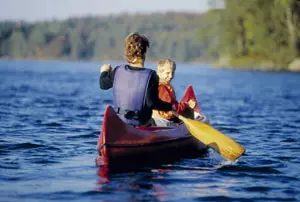 Kanuwandern im Ostseeurlaub
Photo: © skane.com / Business Region Skane
Canoe touring on the Baltic Sea: key facts
- River and lake trips call for different planning than journeys along open coasts.
- The Peene, the Mecklenburg Lake District and Holstein Switzerland are among the inland areas mentioned in the Baltic Sea region.
- Fjords and lagoons combine maritime scenery with sheltered shores and waters.
- For multi-day trips, consider daily stages, launch and landing points, and overnight options along the route.
- Before setting off, check the weather, water levels, current navigation rules and protected areas.
Choose the right area for your type of trip
For relaxed stages on a river or lake, an inland area is a good starting point. The Peene and Western Pomerania are known for their river landscapes in the northeast; farther inland, the Mecklenburg Lake District brings together lakes and connecting waterways. In Schleswig-Holstein, Holstein Switzerland offers a contrast between lake scenery and the nearby Baltic coast. One specific example is the trip from the Stolpe water-tourism rest area to the Anklam water-tourism rest area. The Peene is a federal waterway and may be navigated. In the Peenetal nature reserve, from Jarmen to Anklam, landing is restricted to the officially designated water-tourism rest areas at Kanuverein Gützkow, Liepen, Stolpe and Anklam. In this protected stretch, anchoring is permitted only outside areas of floating-leaf vegetation; resting and camping are not allowed in the reserve. The Anklam rest area can be reached via Demminer Straße and Entensteig.
A coastal trip involves different considerations. On the open Baltic Sea, wind, waves and the distance to suitable landing points determine how you plan your stages. Even on a fjord or lagoon, the right route depends on the wind, waves, boat and your own experience. Kiel Fjord illustrates how close the city, harbor and paddling area are to one another. If you paddle there, take your experience, boat and local conditions into account together.
Day trip or multi-day tour?
For a day trip, the available paddling time and an easy-to-reach start and finish point determine the route. Choose a distance that suits your pace, breaks and return options. On a circular route, you finish where you started; for a one-way trip, plan from the outset how you will get back by land, public transport or pickup.
A multi-day canoe tour needs stages that can be linked to overnight spots and possible exit points. Don’t just set your daily mileage; also plan alternatives for a shorter stage. Your luggage, drinking water, food and weather protection should be suited to the boat and the trip’s duration. If camping overnight, use authorized sites and follow local rules; in protected areas, certain shores and waters may be subject to specific restrictions.
Match your boat, equipment and experience
Kayaks and canoes differ in seating position, handling and luggage capacity. A lightly loaded boat handles differently from a fully equipped touring boat. So when choosing, consider not only the boat’s length and shape, but also the waterway, trip length and experience of everyone paddling. If you’re new to paddling, choose a short, manageable route with an introductory lesson, and practice the basics before taking a longer trip.
Touring equipment should include a properly fitted buoyancy aid, weather-appropriate clothing, protection for spare clothes and your mobile phone, and enough drinking water. On longer routes, a map or reliable navigation is useful, especially if the route includes junctions, harbors or portage points. Pack your gear so essentials remain within reach and nothing is loose in the boat. On group trips, everyone should know who is leading the route and how breaks and meeting points will be arranged.
Plan for weather, waterways and nature conservation
Weather and water conditions are integral to choosing your route. Wind can make paddling across open water more strenuous; thunderstorms, poor visibility or conditions beyond your ability are reasons to choose a shorter or more sheltered alternative. On the day, adapt your trip to the wind, visibility and your own abilities, and plan so that getting back does not depend on a tight time margin.
The Western Pomeranian Lagoon Area combines lagoons, dynamic coastal areas and sensitive habitats. Watercraft are prohibited in the national park’s red zones. The designated green zones may be navigated only by muscle- or wind-powered craft, not motorboats; keep 50 meters away from reed beds and breeding and resting sites. Marked channels and direct access to authorized harbors and landing sites are the only designated exceptions. Overnight anchoring is not permitted. These rules do not amount to blanket permission to paddle any route through the lagoons.
How to turn an area into the right route
Start with the scenery you want, then put together your route: river, lake, lagoon or open fjord. Coordinate your start, destination, possible exit points and return journey, then plan breaks and overnight stays. For a coastal trip, factor the weather into this decision. For a first outing, a short route with an easily reached landing point is usually more manageable than a long crossing.
If you want to paddle from one base for several days, choose accommodation based on how close it is to the paddling area and launch point. On the fjord, Kiel as an overnight base provides a starting point for planning in the region; the specific route depends on the waterway, your ability and conditions on the day. For a trip on the Peene or in a lake district, choose accommodation that suits the relevant start and finish points.
Frequently asked questions about canoe touring on the Baltic Sea
Is paddling on the open Baltic Sea suitable for beginners?
Open coastal waters require careful assessment of wind, waves, distance, boat and your own experience. For beginners, a short, sheltered route with accessible landing points and expert instruction is a better choice.
What’s the difference between paddling in a lagoon and a coastal trip?
The lagoons are part of the Baltic Sea and have their own distinctive shoreline and natural landscape. An open coastal trip, by contrast, takes you across larger stretches of water that are more exposed to the wind. Both areas call for an appropriate route and adherence to local rules.
What should I plan first for a multi-day trip?
Start with your daily stages and link them to authorized overnight spots, launch and landing points, and a way to get back. Then match your boat, luggage, food and alternative routes to the trip.
