
Østermarie on Bornholm: Church and E-bike Route
Accommodation in Østermarie
Church, architectural history and features
Anyone looking to combine architectural history with active days on Bornholm will find two specific themes in Østermarie: its twin churches and the Hilly Billy E-bike Route. The townscape includes a pair of churches, one of which is a ruin. Østermarie Church was consecrated on 18 October 1891. It was designed by Andreas Clemmensen and built from Paradis granite. Its consecration date, architect and building material give the church a clearly defined architectural history.
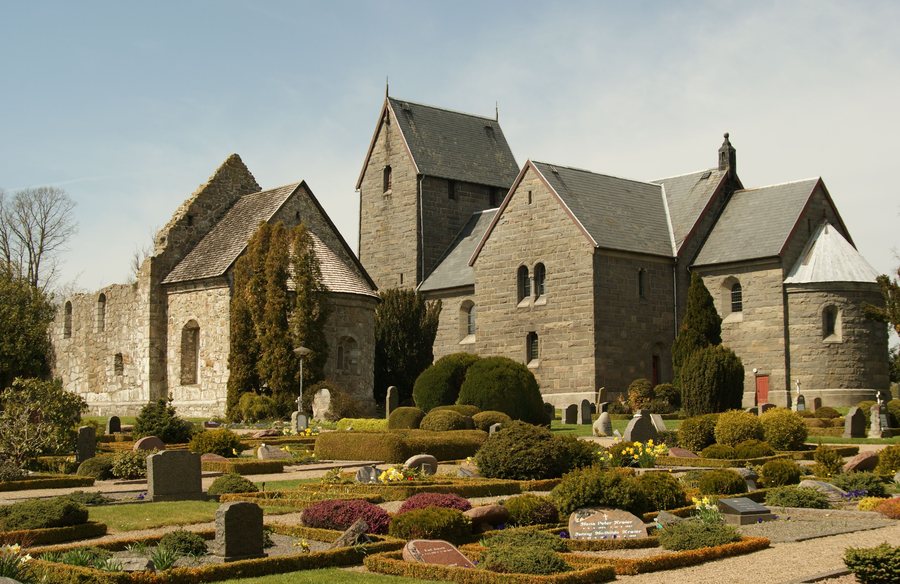 Østermarie church (1891) and ruins of the old church (approx 1200)
Photo: Jens Cederskjold via Wikimedia Commons, CC BY 3.0
Its furnishings also bring together different periods and places of origin. The granite baptismal font dates from around 1250 and was made on Gotland. The baptismal dish was made around 1575 in Nuremberg and depicts the Annunciation to Mary. The two baptismal objects can therefore be distinguished by both their dates and their origins. The altar displays the colour scheme created by Bornholm artist Poul Høm during the church’s restoration. The building’s history, baptismal objects and altar each make their own contribution, rather than representing just one period.
To Østermarie by E-bike
The Hilly Billy E-bike Route passes through gently rolling terrain to Østermarie, linking the destination with its twin churches. For travellers who want to combine cycling stages with cultural interests, it offers a specific way to include the landscape and local history in their travel plans. Check current route conditions before setting out.
Further along, Hilly Billy heads towards Paradisbakkerne and passes through the fishing village of Årsdale on the east coast. There, you can stop for a beer or smoked herring. This adds a possible stop along the route, but does not confirm current availability. If you plan this section, check in advance whether the place to stop is open.
Bornholm as a regional context
Beyond Østermarie’s church and route, Bornholm offers a range of other travel interests. The NaturBornholm experience centre features dinosaurs, live crocodiles, an aquarium and a bison exhibition. As exhibitions may change, check what is currently on offer before visiting. Bornholm’s Medieval Centre is a 15-hectare open-air museum that presents Bornholm in the 14th century in an engaging, interactive way. Bornholm therefore also offers nature-related attractions and a historical portrayal of the island.
Bornholm’s smoking tradition connects a historic milestone with a distinctive traditional method. Bornholm’s first smokehouse opened in Gudhjem in 1866, and herring has been smoked there ever since. Hasle Smokehouse is the last smokehouse on Bornholm where fish is smoked in the traditional way, using open chimneys and alder wood. Gudhjem marks the historic beginning, while Hasle represents this specific smoking method.
For views of Bornholm’s landscape, there are other places to explore: Ekkodalen in Almindingen is Bornholm’s largest rift valley. The visitor centre at Hammershus offers panoramic views of Hammershus. From the cliffs above Opalsøen, you can look out across the surrounding area, the Baltic Sea and the Hammershus castle ruins. These examples complement Østermarie’s local history with distinct landscapes and viewpoints on Bornholm.
You can also plan your journey to the island using the available transport options: Bornholm can be reached by ferry, plane, bus or train. The ferry crossing from Ystad in Sweden to Bornholm takes one hour and 20 minutes. Check current timetables if you are planning your journey around this crossing.
Discover more destinations: Nylars, Gudhjem, Bodilsker, Knudsker, Tejn, Rø, Sandkås, Østerlars
For the broader travel overview: Bornholm.

