
Kuhstorf: The Sude and local history
Accommodation in Kuhstorf
A route along the Sude described as the most popular starts at the weir in Kuhstorf and usually leads via stops in Redefin and Gößlow to the old water mill in Brömsenberg. Kuhstorf therefore offers a specific starting point for a trip following the course of the Sude and taking in the places mentioned. The sequence of stops helps you plan your own trip without specifying a particular duration or mode of transport. Those interested in river landscapes and regional architectural history will find two distinct points of interest for their stay here.
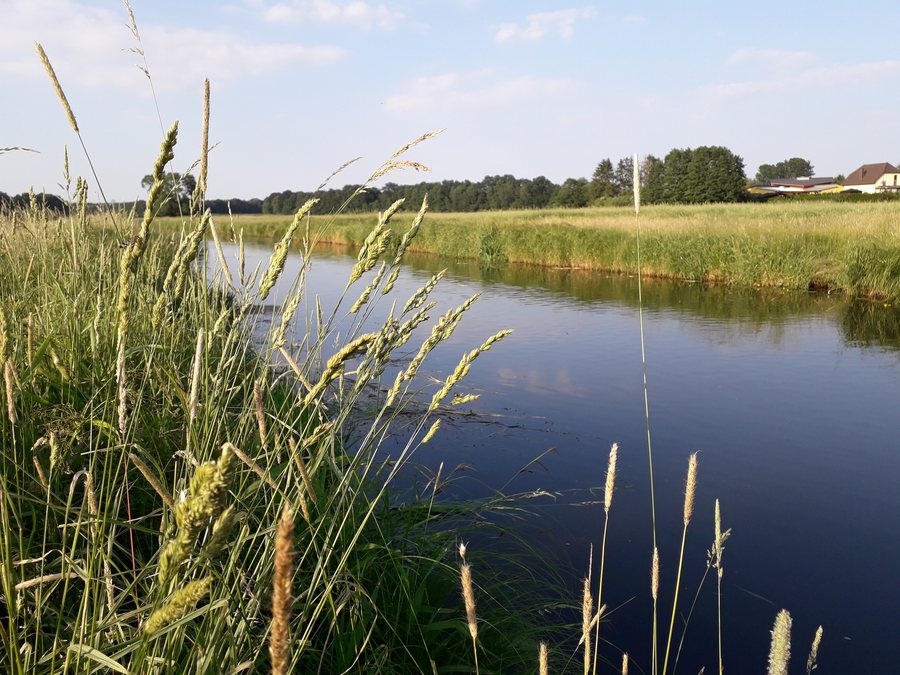
The Sude and the rural surroundings
The Sude divides the main settlement into Kuhstorf and Eichhof. Eichhof was probably independent in the past; this historical classification is explicitly a supposition. Fields and extensive woodland shape the landscape around Kuhstorf. Together with the Sude route, they form a picture of the area in which the river, the settlement and the rural surroundings are key themes. The route runs from Kuhstorf via Redefin and Gößlow to Brömsenberg, where the old water mill is named as the destination.
Local history and protected buildings
Kuhstorf was first mentioned in a document in 1363 under the name Curdestorp. In terms of its settlement form, the village was a Rundling. These two details provide a brief historical context before turning to specific buildings. The listed buildings include a wide variety of examples in the village and in Eichhof. Those interested in rural architectural history can make the range of building types mentioned here a focus of their exploration of Kuhstorf.
At Mecklenburger Ende 1, the former children's home is among the listed buildings. It was built in 1925 and used until 1992. Also on Mecklenburger Ende, at number 36, is a Low German hall house. At Schulstraße 7, the former school and a half-timbered building are among the protected buildings. A memorial stone on the village green is another example. The specific addresses distinguish the individual entries, while the buildings together represent Kuhstorf's historic building stock.
Other listed buildings include a farmhouse at Bauernende 6, a hall house at Bauernende 7 and a Querbüdnerei at Bauernende 22. A residential building at Bleiche 8 is also included. At Eichhof 77, a horse gin, a half-timbered barn and machinery are listed; these examples are part of the protected building stock of Kuhstorf/Eichhof. The terms range from residential and hall houses to a horse gin and machinery. They offer different ways to explore the area's architectural and rural character.
Farm-fresh beef
In Kuhstorf near Hagenow, in the Ludwigslust-Parchim district of Mecklenburg-Western Pomerania, Bewusst Fleisch offers fresh beef for collection on the day of slaughter. Vacuum-packed and frozen beef is available from the farm, subject to availability. Those who want to include regional food in their travel plans will find a specific option here, with availability expressly subject to conditions.
Other places at the same level
The local overview also includes Alt Zachun, Bobzin, Moraas, Toddin, Hoort, Kirch Jesar, Setzin and Pätow-Steegen.
For the higher-level travel overview: Amt Hagenow-Land.

