
Goldberg Between Lakes, Nature and History
Accommodation in Goldberg
Goldberg offers several reasons to visit: a bathing beach on Lake Goldberg, a landscape shaped by lakes and forests, and buildings and memorial sites with their own histories. When deciding which aspect of the town should shape your trip, you can choose between swimming, nature and culture rather than focusing on just one theme.
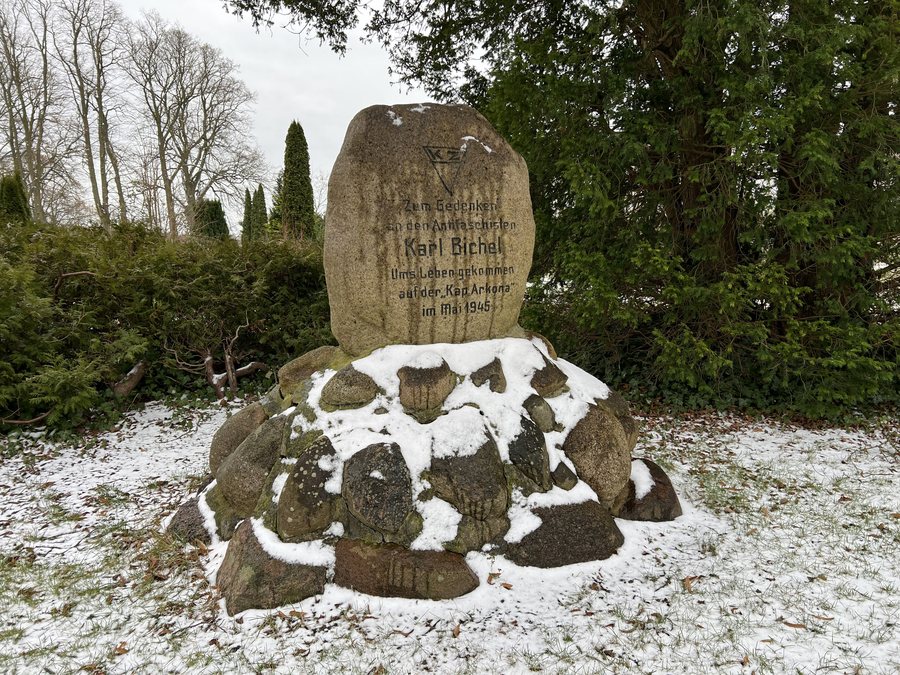 File:Goldberg Friedhof lub 2025-02-14 img02 Gedenkstein Karl Bichel.jpg
Photo: Lukas Beck via Wikimedia Commons, CC BY 4.0
Lakes, forests and landscape
The area around the town of Goldberg is shaped by numerous lakes, attractive forests, and varied meadows and fields. This combination gives the surroundings their diverse character: open spaces and woodland are part of the town’s landscape, alongside its bodies of water. When choosing where to go, it may therefore be important to consider whether you mainly want to experience the landscape or also explore historic buildings and cultural themes.
Large parts of the town’s area belong to Nossentiner/Schwinzer Heide Nature Park, making it an important landscape feature of Goldberg. If you would like to include nature in your trip, there is also a specific place to visit at Hellberg: In summer, the observation tower there is considered a worthwhile destination for family outings and hikes. Its steel structure offers views of the oldest cherry avenue in Mecklenburg-Western Pomerania and the expanse of Schwinzer Heide.
A day of swimming may also factor into your decision: there is a bathing beach on Lake Goldberg. This means Goldberg offers several options, including time by the water, a hike or a trip to the observation tower. The tower is described as a destination for summer outings in particular; the bathing beach is another point of interest for anyone who would like to include the lake in their trip.
Buildings and local history
Goldberg Town Hall was built in 1828. Its small Neo-Gothic tower was added 25 years after the town hall was built. The building therefore shows the original construction and a later addition from different periods. Goldberg Church reflects another era: it was built in 1290 in the Brick Gothic style. Those interested in historic architecture will find buildings in Goldberg with distinctly different construction dates and stylistic influences.
The Goldberg Nature Museum is housed in a former watermill, which is a protected technical monument. Here, a nature museum and the historic use of a mill building come together. Goldberg Gallery Dutch Mill is another notable building: it is one of the largest Dutch windmills in Mecklenburg. The mill and town hall offer different points of interest from the church, so Goldberg can be explored not only through its landscape but also through its different building types and their histories.
Two memorials relate to different wars. The memorial commemorating the Franco-Prussian War features a Victoria by sculptor Christian Daniel Rauch. The war memorial “The Mourner,” by contrast, honors the people of Goldberg who fell in the First World War. The dedications and depictions give each memorial its own historical context; they should therefore not be understood as a single, shared memorial site.
You can therefore choose different priorities when planning your trip: the bathing beach on Lake Goldberg is suited to a stay centered on the water, while the nature park, landscape and observation tower appeal to nature lovers. The town hall, church, mills and memorials offer further cultural and historical themes. If you would also like to explore other places at the same broader level, you can find Mestlin, Dobbertin, Neu Poserin and Techentin here.
For the broader travel overview: Goldberg-Mildenitz Administrative District.

