
Hiddensee Island
Accommodation in Hiddensee Island
On Hiddensee, you can combine your stay with nature experiences along the coast, hikes through forests and meadows, or insights into the island’s history. Beach walks offer views of the Baltic Sea and the surrounding islands. At the same time, distinctive landscapes such as the dune heath shape the island’s character. This gives you a clear focus on nature and culture when planning your trip.
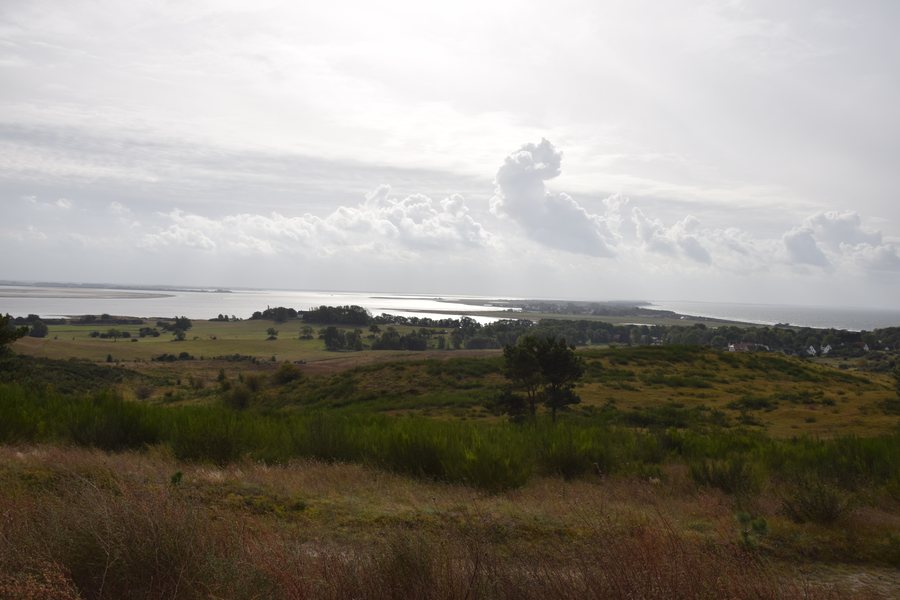
Dune Heath Between Vitte and Neuendorf
The dune heath on Hiddensee is one of the last large coastal dune heaths on Germany’s Baltic coast. It covers 120 hectares between Vitte and Neuendorf and is crisscrossed by numerous small sandy paths. Anyone interested in the landscape will find a large-scale natural area here, with a clearly specified location on the island. The dune heath is part of the European protected area “Westrügensche Boddenlandschaft mit Hiddensee” (EU code DE 1544-302). Its protected-area status and its extent of 120 hectares give the heath particular significance for understanding Hiddensee’s natural environment. The many small sandy paths shape the network of trails within this landscape; they should not be confused with the separately described hiking trails through forests and across meadows.
Hiking Trails and Beach Walks
Hiddensee has well-signposted and marked hiking trails through forests and across meadows. When planning an outing, you can therefore consider a route through a variety of landscapes. Beach walks offer a different kind of nature experience: they follow the coast and provide views of the Baltic Sea and the surrounding islands. If sea views are important to you, the beach walks offer just that; for routes through forests and meadows, the marked hiking trails are the best guide. In Vitte, the “De Lütt Küst” nature trail also runs right beside the Hiddensee National Park Centre.
Getting There and Getting Around
Hiddensee can only be reached by water. Reederei Hiddensee connects the island with Schaprode on Rügen and directly with Stralsund. The boat connection is therefore an essential part of planning your journey. Private car traffic is not permitted on Hiddensee. Two large car parks are available to visitors in Schaprode: one at the entrance to the village with a shuttle service, and one right at the harbour. If you are travelling by car, you can factor these two parking options into your plans.
Island History and Gerhart Hauptmann
The Gerhart Hauptmann House in Kloster on Hiddensee hosts a permanent exhibition about the poet’s life and work and his connection to Hiddensee. The exhibition also covers works created on the island and current theatre productions of Hauptmann’s plays. The visit is therefore suited to anyone interested in literature, Hauptmann’s connection to the island, or stage interpretations of his works. Another historical highlight is Hiddensee Island Church: monks from the Cistercian monastery built it in the early 14th century, and it was consecrated in 1332. These two sites offer different ways to explore Hiddensee’s cultural history, from literature and theatre to medieval church history.
If you would like to view other local pages in this topic area, you can also visit Samtens, Dreschvitz, Rambin, Altefähr, Trent, Gingst and Schaprode.
For the broader travel overview: Amt West-Rügen.
More about the destination
Useful information for planning your trip:

