
Lassan on the Peenestrom: Harbor, Mill and St. John’s Church
Accommodation in Lassan
Situated on the Peenestrom, Lassan combines local maritime history with evidence of its church, crafts and agriculture. Travelers looking for a destination rich in historical impressions will find several distinct themes here.
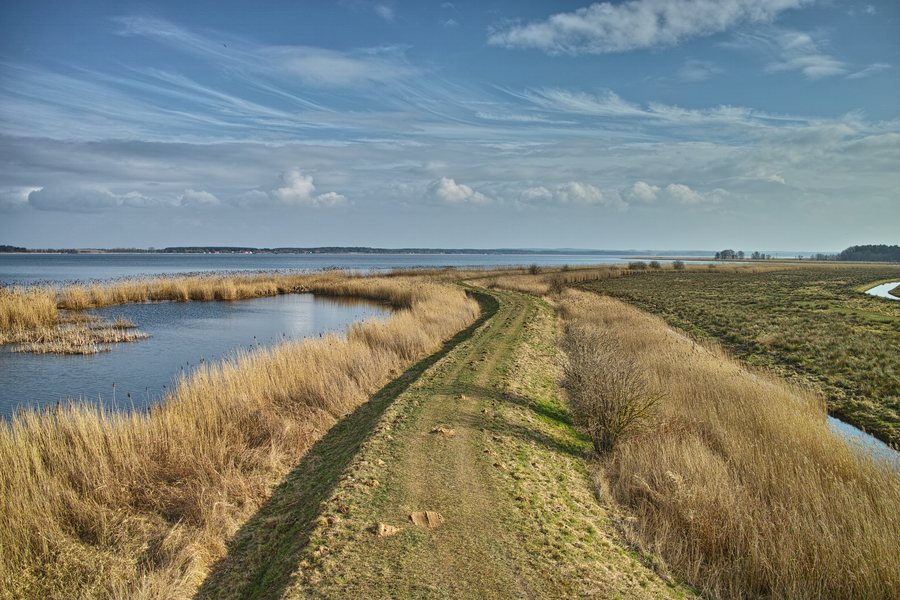
A harbor town with a history
The old harbor was once a trading center and mooring place; today, water sports enthusiasts come to Lassan. This change over time makes the town interesting to travelers who connect maritime life not only with leisure but also with the history of a harbor. Lassan lies directly on the Peenestrom. The harbor is part of the town’s history, while the church and surviving sections of wall offer further traces of the historic town.
St. John’s Church and medieval traces
The oldest masonry sections of St. John’s Church in Lassan are about 750 years old. Remains of the medieval town wall survive to the west of the church and were recently restored. The church and town wall thus offer two different glimpses into Lassan’s early architectural history: the age of the masonry can be seen at the church, while sections of the former fortifications are visible on the west side.
Concerts, events and exhibitions are regularly held at St. John’s in summer. Specific dates are not set out here, so anyone planning a visit around an event should check the latest information. The parish office can provide information about church visiting hours at 038374-80147. This makes it easier to fit a church visit into your plans.
The mill and the agricultural collection
The Lassan Mill Museum is housed in a former watermill that has shaped the small town’s appearance since the 15th century. It displays original machine parts and evidence of the town’s history up to 1945. The collection also showcases the variety of traditional crafts and fishing occupations. Everyday life and working history thus complement the architectural traces that shape the town.
Across from the Lassan Mill, the Friedrich von Lösewitz Hall is part of the museum complex. Its collection focuses on agriculture: the historic machines and equipment include threshing machines, plows and early tractors. Unlike the mill, whose exhibitions cover machine parts, town history and former occupations, the hall focuses on agricultural technology. Those interested in these subjects can view both collections as different ways of exploring Lassan’s working history. Check current visiting options before your visit.
Lassan and the wider travel destination of Vorpommern-Greifswald
If you are planning a trip beyond Lassan, you can also consider Vorpommern-Greifswald as a broader travel destination. The district’s three nature parks cover almost 40 percent of its area. For cyclists, the Baltic Sea Cycle Route, part of the EuroVelo EV10 route, runs through the district. Regional cycling routes for exploring Vorpommern-Greifswald also include the Szczecin Lagoon Circular Route and the Northern German Romanticism Route. These routes offer a broader framework for planning without being described here as routes through Lassan. Check the current route and signage before setting off on a cycling trip.
Choose the focus that suits your trip
If you want Lassan itself to be the focus, the harbor, church, town wall and two distinct collections offer concrete themes to plan around. If you are considering a cycling trip through the district, you can also take the regional routes into account.
Discover more destinations: Sauzin, Lütow, Wolgast, Buggenhagen, Krummin, Zemitz.
View the wider travel overview: Amt Am Peenestrom.

