
Discover Lütow: Nature, Megalithic Tomb and Circular Route
Accommodation in Lütow
Nature and history stand side by side in Lütow: The landscape of the Südspitze Gnitz and the Achterwasser provides the setting for a nature reserve, circular route and viewpoints. At the same time, the megalithic tomb and Netzelkow village church point to very different historical periods. When planning your stay, you can decide whether nature experiences or archaeological and ecclesiastical history should be the main focus.
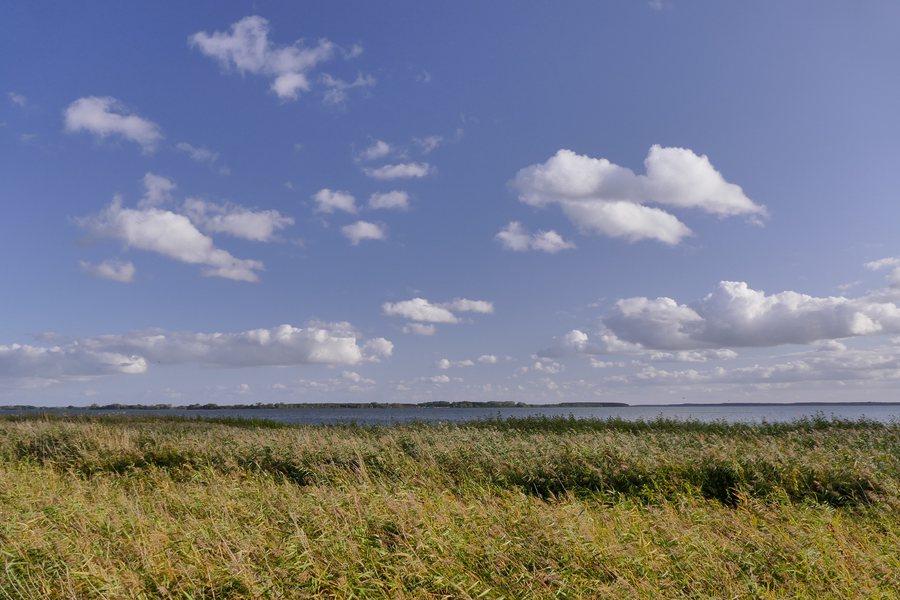 Naturpark Usedom - Blick von Lütow auf das Achterwasser
Photo: André Fleckenstein via Wikimedia Commons, CC BY-SA 4.0
Nature at the Südspitze Gnitz
The Südspitze Gnitz nature reserve is home to botanical rarities, including orchids, silver grass and sand everlasting flowers. The area also provides a habitat for otters, moor and grass frogs, grass snakes and white-tailed eagles. The plant life and wildlife habitats give the peninsula’s southern tip many different facets for nature lovers to discover.
Another point of interest is the 32 m-high Weiße Berg on the Gnitz peninsula. From there, the view extends across the Achterwasser and takes in Krumminer Wiek and the Peenestrom. Ancient pines characterize the hill; it is also home to Usedom’s largest colony of sand martins. The views and landscape make Weiße Berg a natural attraction in its own right, alongside the habitats in the nature reserve.
Circular route and bathing area
The Südspitze Gnitz circular route starts in Lütow, follows the Achterwasser to Mövenort and is 5 km long. Along the Achterwasser section, reed beds provide important refuges for otters, tufted ducks and Eurasian coots; white-tailed eagles can also be spotted there. The route length is a useful planning detail. As route conditions may change, please check them before setting out.
There is a bathing area in Lütow at the southern tip of the Gnitz peninsula, right in the middle of the nature reserve. Bathing conditions and local access may change; please check both before your visit. On the circular route, the “Pott & Pann” restaurant is located at the nature campsite. As a place to stop for a break, it serves regional dishes, coffee and homemade cake. Please check whether the restaurant is open before visiting.
Megalithic tomb and village church
The Lütow megalithic tomb is the oldest megalithic tomb on Usedom and dates from the Neolithic period, around 3000 BC. It is a passage grave, enclosed by a rectangular mound. An excavation in 1936 uncovered numerous weapons and flint objects, as well as amber jewelry from the Funnel Beaker culture and Bronze Age. The tomb’s form and its finds give the site an archaeological dimension that reaches far beyond more recent history.
The bells in the free-standing bell tower at Netzelkow village church date from the 15th century. Lütow is thus home to both Neolithic archaeological traces and medieval bells. The parish barn and a yacht mooring on the Achterwasser are also among Lütow’s places of interest for visitors.
The difference can be summed up simply for planning purposes: Lütow’s natural attractions combine a nature reserve, viewpoints and a 5 km circular route; its cultural history spans the period from the megalithic tomb to the village church bells.
Discover more destinations
Discover more destinations: Buggenhagen, Wolgast, Krummin, Zemitz, Sauzin, Lassan.
Back to the regional travel overview: Amt Am Peenestrom.

