
Wendisch Baggendorf: A look at manor history
Accommodation in Wendisch Baggendorf
Wendisch Baggendorf offers a tangible point of interest for travelers interested in manor history and historic village layouts. The surviving core of the estate, several milestones in its architectural history, and the landscape within the municipality give the place a clearly defined character. The wider travel destination of Vorpommern-Rügen broadens the picture to include other cultural and landscape themes.
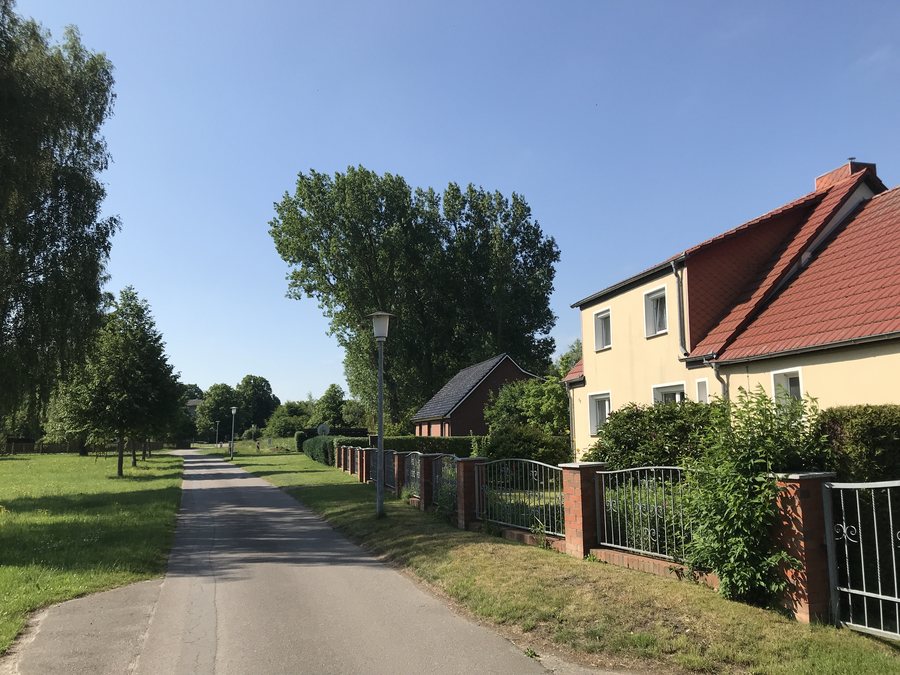
The estate and the history of the manor house
The core of the Wendisch Baggendorf estate has been preserved. It includes the rebuilt manor house, partially ruined wings of the farm buildings, open spaces in the estate courtyard, and one of the two bodies of water. Together, these features make the estate legible as more than just a single building.
Wendisch Baggendorf was first mentioned in 1648; the place has been documented as a noble estate with four farmsteads since the 17th century. The manor house was first mentioned in writing in 1719, redesigned in 1762, and renovated around 1922. These dates refer to different points of reference: the first mention of the place and the written history and later redesign of the manor house.
Another building phase followed the fire of 1991: the manor house was rebuilt on its foundations and extended by one full story. Its architectural history therefore includes both historic redesigns and a later reconstruction.
Landscape within the municipality
The Trebel lowland valley forms the northern boundary of the municipality of Wendisch Baggendorf. The area, which is used as grassland, has a difference in elevation of about 12 meters. Within the municipality, flowing waters are concentrated in the south, in and around Bassiner Wald, and in the north, in the Trebel area. There are also numerous small bodies of still water. The Trebel to the north and Bassiner Wald to the south thus provide contrasting points of reference.
Getting around and cycling in the wider area
The L19 state road and the A20 cross the municipality from west to east; the A20 has its own interchange. At the latitude of the Wendisch Baggendorf district, the L27 state road branches off to the south. The road information therefore refers to different spatial points of reference: the west-to-east routes relate to the municipality, while the L27 turnoff is at the latitude of the district.
Another activity in the wider travel destination of Vorpommern-Rügen is the 32 km “Trebel Impressions” cycling tour, which passes through Bassin. It offers a regional cycling option alongside the local focus on the manor house and estate.
A wider perspective: Vorpommern-Rügen
There are an estimated 60 or so museums in Vorpommern-Rügen district. The district includes the island of Rügen and the nearby islands of Hiddensee and Ummanz; the Fischland-Darß-Zingst peninsula chain is also part of it. The old town of the Hanseatic city of Stralsund is part of the UNESCO World Heritage Site “Historic Centres of Stralsund and Wismar.” On Rügen, the beech forests in Jasmund National Park are part of the UNESCO World Heritage Site “Primeval Beech Forests of the Carpathians and Other Regions of Europe.”
The gallery at the monastery in Ribnitz-Damgarten offers another cultural perspective. The art collection of Vorpommern-Rügen district is preserved, cared for, and administered there. It comprises around 500 works of painting, graphic art, sculpture, ceramics, silk painting, and textile design, dating from the late 19th century to the present day. The gallery also has a permanent exhibition of graphic works by Lyonel Feininger. Check the current visitor information before your visit.
Discover more destinations: Velgast, Glewitz, Weitenhagen, Gremersdorf-Buchholz, Franzburg, Splietsdorf, Millienhagen-Oebelitz, Papenhagen.
Back to the wider travel overview: Amt Franzburg-Richtenberg.

