
Deyelsdorf: Castle Church and Trebel Valley
Accommodation in Deyelsdorf
In Deyelsdorf, the architectural and organ history of the Castle Church sits alongside nature experiences in Fäsekow and Bassendorf. This offers different focuses for planning a trip: cultural and historical details, a hiking trail with themed stops, or ways to connect with nature and water.
Castle Church: Architectural History and Organ
The Renaissance church was built between 1601 and 1606 in the style of Protestant palace churches, under the responsibility of the church’s patron at the time, Caspar Behr. In 1872, Wismar architect Heinrich Thormann gave it its present appearance in the Neo-Renaissance style. The construction and later redesign therefore mark different chapters: the church’s current appearance dates from a later period than its original construction.
The organ also brings together several stages of its history. Arp Schnitger built it in 1694 as a house organ for Dr. Johann Friedrich Mayer, then senior pastor at St. Jacobi in Hamburg. A manual keyboard by Friedrich Friese I was originally built for the Friese I organ in Spornitz. In 1878, Friedrich Albert Mehmel incorporated it into the Deyelsdorf organ in an expanded form during the organ’s enlargement. Today, the organ has eight stops, distributed across one manual and one pedal. Its original purpose, the keyboard added later, and its present configuration thus represent different aspects of the instrument’s history.
The interior features flat cross-ribbed vaults with ornamental painting. A marble sculpture of the blessing Christ in the style of Thorvaldsen is set into the gallery as part of the altar design. The vaults, sculpture, and organ make the church an interesting subject for visitors with an interest in cultural history, beyond its architectural history.
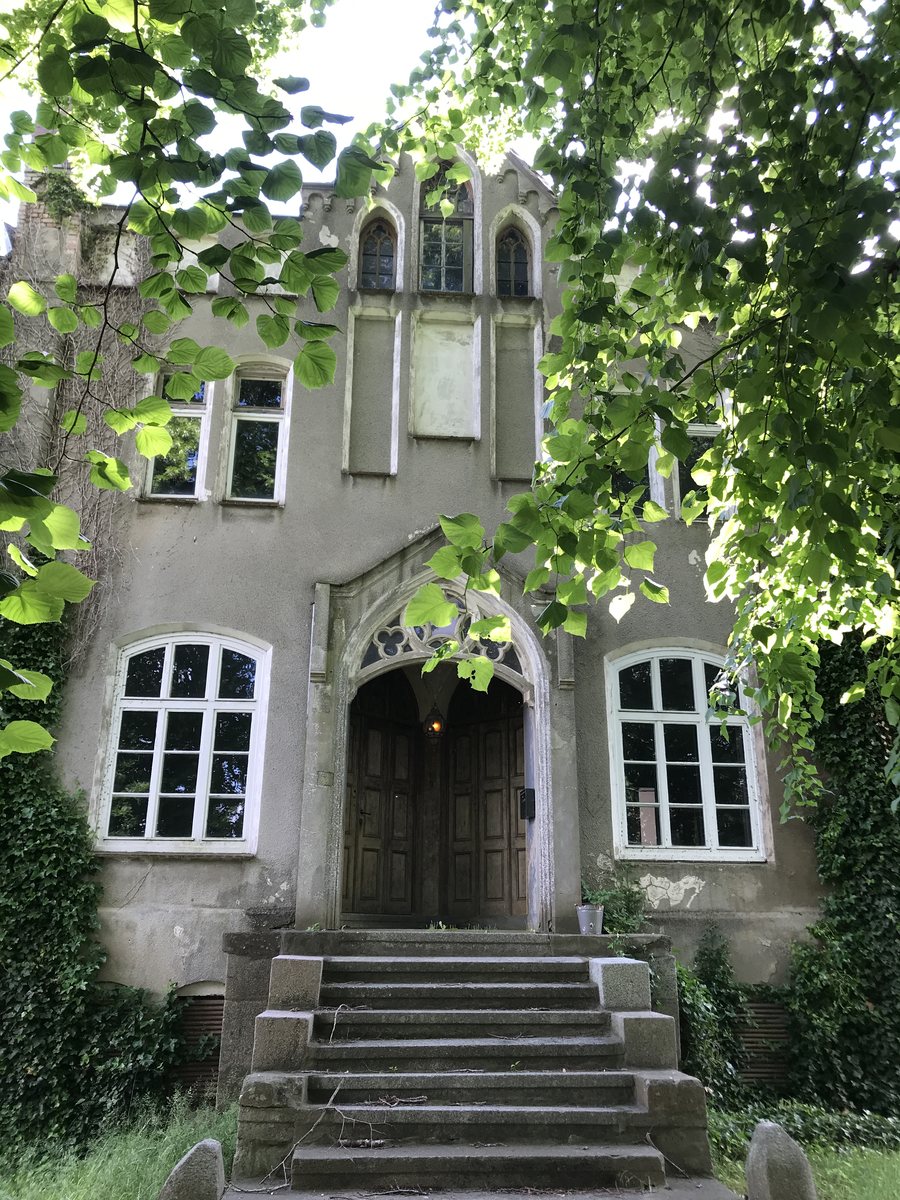
Another architectural point of interest is in Bassendorf, a district of Deyelsdorf: the manor house was built around 1780 and has preserved its Baroque character to this day. The church’s Renaissance and Neo-Renaissance history thus stands alongside the manor house’s preserved Baroque character as a contrasting architectural theme.
Hiking Trails and Nature Experiences
In the wooded area in the district of Fäsekow, the Trebel Valley Adventure Trail includes a hiking route with five stops and a length of about three kilometers. There are things to discover and explore at each stop, and the white-tailed eagle “SIGGI” sets a task at each one. The signs also contain QR codes with further information about the respective topics. So this trail is about more than just the distance: the tasks and additional information shape the experience along the route.
Bassendorf also has a nature trail. There is also a landing stage for paddle boats on the Trebel. The nature experiences therefore offer different highlights: Fäsekow has a hiking trail of approximately three kilometers with five stops, while Bassendorf offers a nature trail and a paddle-boat landing stage on the Trebel.
If accessibility or use is important to your specific plans, check the latest visitor and usage information for the church, adventure trails, and paddle-boat landing stage in advance.
Discover More Destinations
Tribsees, Bad Sülze, Gransebieth, Grammendorf, Drechow, Dettmannsdorf, Hugoldsdorf, Eixen
For the higher-level travel overview: Amt Recknitz-Trebeltal.

