
Wejherowo: Promenade along the Cedron and cultural history
Accommodation in Wejherowo
Wejherowo can be explored through several specific interests: a paved promenade along the Cedron, recreated historic interiors in the town hall, a Baroque brick church with Rococo furnishings, and Kashubian literature and a trail marker in the streets of the city centre. When planning your trip, you might ask whether you would rather focus on a short walk or bike ride, architecture, historical room settings, or literature. These themes offer different ways to experience the city.
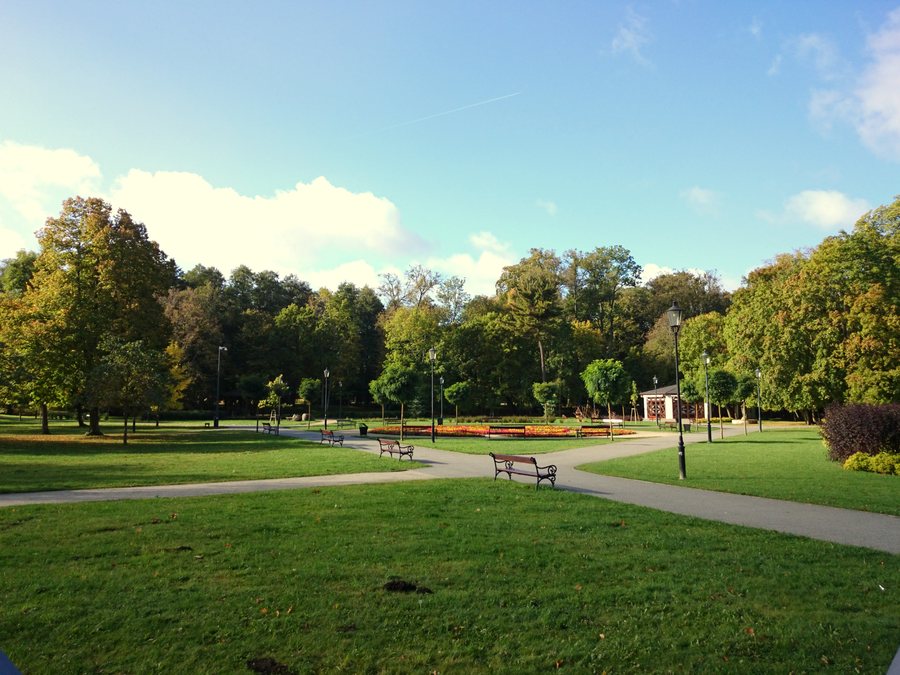
Walking or cycling along the Cedron
A 600-metre paved walking and cycling promenade runs along the Cedron stream between Rzeźnicka Street and Partyzantów Street. Its length, surface, and intended use give this stretch a clear character: it follows the stream and is designated for pedestrians and cyclists. If you would like to include an active break in your time in the city, you can consider this route as a separate option. At 600 metres, it is a short, clearly defined stretch. Unlike a visit to a church, museum, or town hall, the focus here is on an outdoor route rather than architecture, interiors, or collection items.
Historic rooms in the town hall
The multimedia historical room “Wejherowo okresu międzywojennego” is located in Wejherowo’s town hall. Its recreated interiors include the mayor’s office, a carpenter’s workshop, a hair salon, and a café. The examples thus range from a municipal administration space to places of craft and everyday life. If you are interested in the period between the world wars, you can explore the theme through different types of interiors rather than limiting your attention to just one function. Its historical focus and the variety of recreated settings give this place a different character from the church architecture or a literature exhibition.
Brick church and Rococo furnishings
The parish Church of the Holy Trinity was built between 1754 and 1755 as a Baroque brick church and has Rococo furnishings. When comparing architecture, the building and its furnishings are two different aspects to consider: the material and Baroque style characterise the church building, while the Rococo furnishings draw attention to the interior. If you are interested in religious architecture, you can consider this precisely dated building and its stylistic decoration together. The two stylistic terms refer to different aspects of the church.
Kashubian literature and the cityscape
The Museum of Kashubian-Pomeranian Writing and Music holds original works of Kashubian literature from the 19th and 20th centuries, including first editions and later editions. The collection can be explored both in terms of its chronological range and the different forms of publication. The focus is therefore on literature and its forms of publication; this differs from the recreated rooms in the town hall and the church’s historic furnishings.
Another cultural trace can be found in the streets of the city centre: the Szlak Alfabetu Kaszubskiego “kaszubskich nutek” is marked there with granite slabs. Its format differs from that of a museum room or a church, as the markers run through the urban landscape. If you prefer to explore cultural themes in the context of streets and paths, this marked trail offers a different approach from interiors, architecture, or a collection. Together, these examples show that Wejherowo can be explored through a range of interests: along a short stretch of the Cedron, through historic rooms and architecture, or through Kashubian literature and its traces in the cityscape.
Discover more destinations: Rumia, Łężyce, Zamostne, Luzino, Reda, Kopalino, Kłosówko, Szemud
For the broader travel overview: Wejherowo.

